

Religious & Spiritual PlacesMosques
Bergama Ulu (Yıldırım) Camii
No ratings yet
Sign in to like and rate
Bergama Grand (Yıldırım) Mosque
About Venue
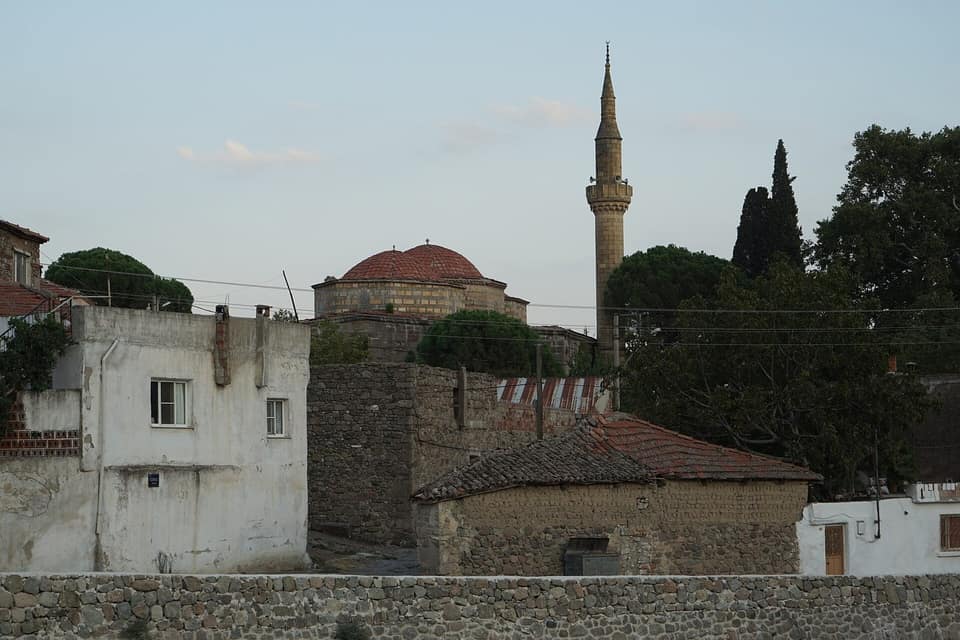
The Bergama Ulu (Yıldırım) Camii is an Ottoman-period building in the Bergama district of İzmir, standing at the foot of the citadel on the bank of the Selinos stream. According to the page of Bergama Municipality, the foundation inscription above the portal records that the mosque was built by Sultan Bayezid in 1398-1399. The İzmir Provincial Directorate of Culture and Tourism likewise dates the building to 1399 and says it was built by Yıldırım Bayezid. As for the building history, the text of the Bergama Site Management Directorate also records that a structure formerly used as a church on the same spot was converted into a mosque in this period. The mosque is one of the early Ottoman buildings whose construction date is known.
Because it was built at a time when the multi-unit basilical plan was starting to be abandoned, it is important in Ottoman architectural history and is counted among the last examples of this plan type. The rectangular prayer hall is divided into nine bays, with three domes in the middle and barrel vaults on the sides. The interior measures 24 by 26 metres, four pier-like columns carry the roof, and the central dome stands 17 metres above the floor. In its architectural style and size it shows features resembling its namesake in Bursa. The mihrab has rich marble decoration that carries the influence of Seljuk art.
Of its two doors, one is the large marble door on the north, and the other is the pointed-arched, stone-carved door on the west. The inscribed stone portal draws attention with its careful workmanship. On the east front, inside the wall narrowed by two windows, there are stairs leading up to the lead-covered roof. The original minaret was attached to the west wall and was demolished in 1949 because it was leaning. The calligraphy on the stone fountain that adorns the courtyard belongs to the Bergama poet Aşki Efendi.
In the Ottoman period Bergama took on the look of a settlement without city walls, spreading across the plain; in the 17th century the town grew east and west at the foot of a large citadel. The mosque was placed, during the town's transition to Turkish rule, right next to the settlement area of that day. Opposite the Ulu Cami stands the Tabaklar Hamamı, which took its name from the tanneries that once stood nearby; sources think the bath was built together with the mosque. If you want to see the surrounding Ottoman buildings together, the Küplü Hamam of 1427, the Taşhan of 1432 and the Kurşunlu Camii of 1439 complete the 15th-century fabric of the same town. To reach the mosque, the address given by Bergama Municipality, İslamsaray Mahallesi, Kınık Caddesi, is enough. The mosque is a place of worship, so visitors should dress appropriately, remove their shoes and avoid disturbing those at prayer. Visiting hours may change with prayer times, so check current information with Bergama Municipality or local sources.
Comments
Loading...
Location - Bergama Ulu (Yıldırım) Camii
Venue Info
Addressİslamsaray Mahallesi Kınık Caddesi No:120 Bergama / İZMİR
VenueBergama, İzmir
TypeReligious & Spiritual Places