

Historical & Cultural SitesArchaeological Sites
Arslantepe Höyüğü
9
No ratings yet
Sign in to like and rate
Arslantepe Mound
About Venue
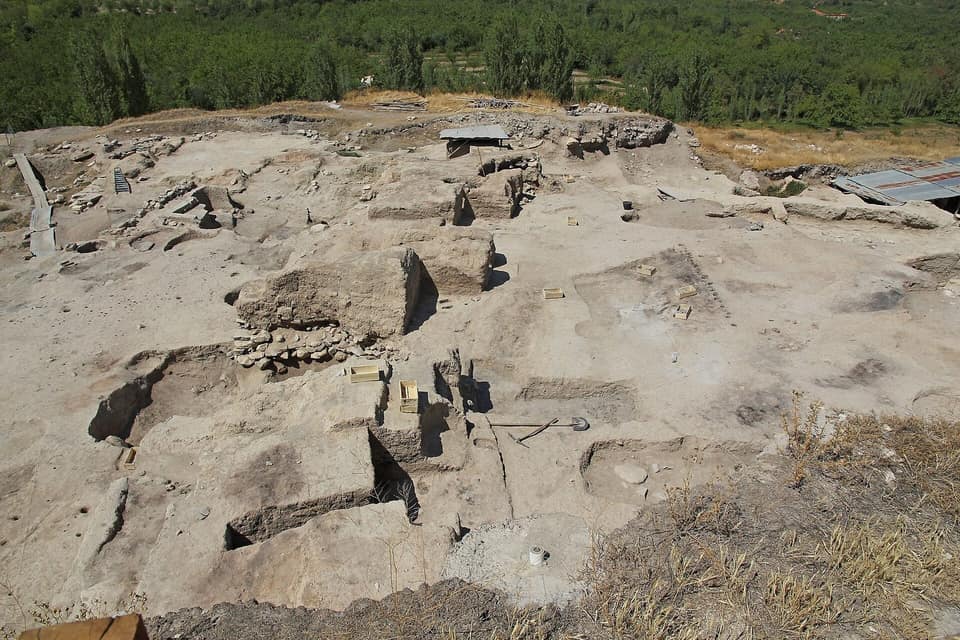
Arslantepe Höyüğü is a large settlement mound rising in Orduzu, in the Battalgazi district, about 7 kilometres northeast of Malatya city centre. The mound stands in a fertile plain surrounded by orchards, close to the western shore of the Karakaya Dam Lake on the Euphrates. The Malatya Provincial Directorate of Culture and Tourism writes that the cultural deposit of the mound reaches a height of 30 metres. According to the same source, the site was inhabited from around 5000 BC until the 11th century AD. Sapienza University of Rome, which runs the excavations, states that the history of the settlement goes back to at least 5300 BC. Battalgazi Municipality explains that the area is rich in water sources yet lies outside the floodplain of the often overflowing Euphrates. Combined with soil well suited to farming, these two features allowed the hill to be settled almost without interruption for thousands of years.
Excavations have identified six separate settlement and cultural layers from top to bottom. Remains from the Islamic period lie on the surface, followed beneath by the Byzantine and Roman ages, the second half of the Iron Age, the Late Hittite period and the Hittite Imperial period. Deeper still are Bronze Age settlements, and at the very bottom lie structures from the Late Chalcolithic period. The Directorate records that the hill was used as a Roman village in the 5th and 6th centuries AD and later became a Byzantine cemetery. The urban centre of the region, meanwhile, moved in the Roman period to present-day Battalgazi, Old Malatya, closer to the Euphrates.
What makes the mound important on a world scale is the mud-brick complex dating to the end of the 4th millennium BC. Sapienza University writes that the monumental palatial complex was built around 3400 BC and brought administrative, economic and political activities together in a single structure. According to Battalgazi Municipality, these mud-brick buildings spread over an area of at least 2600 square metres on the southwestern slope of the hill. The corridor walls of the palace are decorated with impressions, geometric motifs and wall paintings. The large number of seal impressions found in different parts of the building shows that many officials worked there, taking goods out of storerooms and sealing them. The Directorate notes that more than two thousand seal impressions were found in the excavations. The ministry museum website explains that these sealings, called bullae, were broken open once goods brought to the city by caravans had been received, and that goods leaving the city were sealed in the same way. According to Sapienza, this centralised organisation emerged before writing, which developed at about the same time in neighbouring Mesopotamia. This phase ended roughly two centuries later in a great fire, after which communities living from herding settled on the hill.
Swords and daggers made of arsenical copper alloy and inlaid with silver were also found in the palatial complex. The Directorate writes that nine swords and twelve spearheads came to light in these excavations, and that the swords are regarded as the oldest examples known to date. Battalgazi Municipality adds that high-footed fruit bowls and tall Mesopotamian-type vases were found in the palace area.
In the 2nd millennium BC Arslantepe came within the sphere of the Hittite Empire as it expanded towards the Euphrates, and it was known by the name Melid. Sapienza writes that during the second great period of development, between 1600 and 700 BC, the settlement was a centre tied first to the Hittite Empire and then to an independent kingdom. This period closed when the city was conquered by the Neo-Assyrians. Battalgazi Municipality describes a city gate and courtyard opening onto the northeastern slope of the Late Hittite city, which was enclosed by earthen walls.
The first excavations were carried out in 1932 by a French team led by Louis Delaporte. That work uncovered a Late Hittite palace with its courtyard and its Lion Gate, decorated with low-relief stone orthostats. Because there was no museum in Malatya at the time, 15 reliefs, two lion statues and the statue of King Tarhunza were taken to Ankara, and they are displayed today in the Museum of Anatolian Civilizations. Continuous excavations began in 1961 with a team from Sapienza University of Rome and have continued without interruption ever since. The mound opened to visitors as an open-air museum in 2011 and was inscribed on the UNESCO World Heritage List on 26 July 2021.
At the entrance, visitors are greeted by full-size copies of the lion statues, the statue of King Tarhunza and the reliefs that were taken to Ankara. Battalgazi Municipality also writes that the traditional houses along the street leading up to the open-air museum were restored and that a Bronze Age house was built. Right next to the mound is the Arslantepe Mound Visitor and Welcome Centre, opened on 4 October 2025. According to the Directorate, the centre offers visuals and a film presentation prepared jointly by Sapienza and the ministry, a simulation area and an exhibition hall. If you start your visit at this centre, you will find the mud-brick walls in the excavation area far easier to read. Sapienza announced that a new visitor route was opened on 8 August 2026 and that the protective roof over the palatial complex was extended. The new route has walkways and information panels in Turkish, English and Italian. Parts of the palace still preserve their original plaster, so keep to the open walkways and do not step into protected areas. The ministry museum website notes that guidance services and an audio guide are available at the site. There is little shade on the hilltop, so do not forget a hat and water in summer.
The mound can be reached from central Malatya by public transport running along the ring road. Since most of the finds are displayed at the Malatya Museum in the city centre, visiting both places on the same day completes the story. Check opening hours and visiting conditions on the official ministry museum website before you go.
Comments
Loading...
Location - Arslantepe Höyüğü
Venue Info
AddressOrduzu, Battalgazi/Malatya
VenueBattalgazi, Malatya
TypeHistorical & Cultural Sites