

Historical & Cultural SitesCastles & Palaces
Ardahan Kalesi
10
No ratings yet
Sign in to like and rate
Ardahan Castle
About Venue
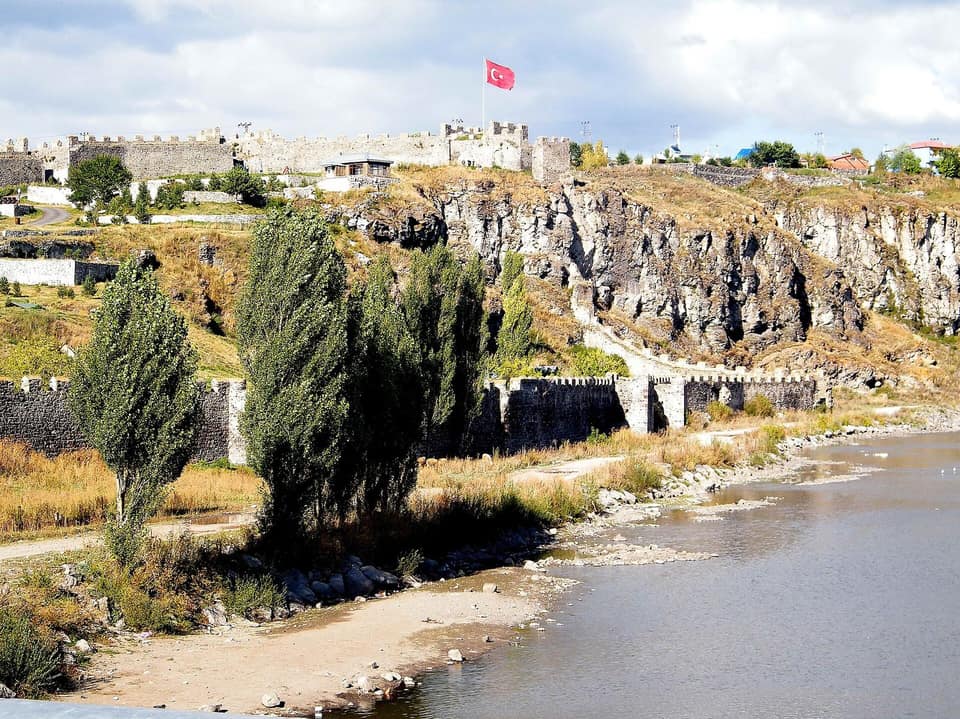
Ardahan Castle is a large fortress rising on the left bank of the Kura River in the Halil Efendi neighbourhood, to the north of Ardahan city centre. The Ardahan Governorship notes that the Kura separates the Halil Efendi neighbourhood in the north from the city centre, and that the castle stands right on the bank of this river. Seen from inside the town, the walls look like a long line of stone stretching along the slope on the far side of the river.
The first building phase of the castle is not known for certain. The Governorship and the Serhat Development Agency write that the castle was built by the Seljuks and was in continuous use during the Ottoman period. The Governorship and the Provincial Directorate of Culture and Tourism also state that the structure seen today was built in the middle of the 16th century on the order of Suleiman the Magnificent. For this reason the sources do not tie the castle to a single period, and the building carries the traces of several eras together.
An Arabic inscription sits above the large gate on the western side of the castle. According to the text quoted by the Governorship, the inscription says the building was made in the name of Sultan Suleiman, son of Selim Khan, and closes with a prayer that the realm may last until the end of time. Because the date of the inscription is read in different ways in the sources, this phase of the castle is generally placed in the middle of the 16th century, in the reign of Suleiman.
The castle has a rectangular plan. The Ardahan Provincial Directorate of Culture and Tourism states that the walls forming this plan are 745 metres long. Along their whole length the walls are reinforced by numerous towers with square bases and polygonal plans. Dressed ashlar was used at the corners of the towers, and Khorasan mortar was used as the binding material. The Governorship writes that with its masonry technique, its polygonal towers and its setting, the castle recalls Rumeli Hisarı in Istanbul. The Serhat Development Agency uses the same comparison and presents the castle as an example of Rumeli Hisarı in terms of construction.
The history of the site is much older than the building itself. Prehistoric surveys around the castle have revealed a settlement belonging to the Early Bronze Age. The provincial directorate of culture and tourism dates this settlement to between 3500 and 2000 BC. The same institution states that excavations at the castle show that the region came under the rule of various kingdoms over the course of history.
A study on the tourism potential of Ardahan by Hürriyet Çimen of Ardahan University's Çıldır Vocational School recalls that the province is known as a city of castles and towers. According to the study, this architecture began to emerge in the Urartian period and continued with repairs and extensions up to the Ottoman era. The Serhat Development Agency's list for Ardahan also counts many castles stretching from Göle to Posof, and Ardahan Castle in the provincial centre heads that list.
The best place to see the castle as a whole is the opposite bank of the Kura River. From there you can clearly make out how the walls and towers climb with the slope of the ground. Comparing the dressed stones at the tower corners with the masonry of the rest of the wall is an easy way to understand how the castle was built. If you can reach the western gate, the inscription above it is the detail you should not miss at the castle.
The official sources do not set out visiting arrangements for the castle, the days it is open or the conditions for entering the interior. If you plan to walk inside the castle, check the current situation with the Ardahan Governorship or the Provincial Directorate of Culture and Tourism before you go. To view the walls from outside, a short walk from the city centre towards the riverbank is enough.
Ardahan is reached by intercity bus, and since the castle is in the city centre you can walk to it once you arrive in town. The Serhat Development Agency writes that the Kura River flows through Ardahan, reaches Azerbaijan, joins the Aras River there and empties into the Caspian Sea. The river draws meanders within the provincial borders, and the stretch passing in front of the castle is part of that landscape.
A visit to the castle can be rounded off with the town's more recent defensive works. The Serhat Development Agency also lists redoubts in the provincial centre built during the Ottoman-Russian War of 1877-1878. Of these, Ahali Redoubt was built by the townspeople during the war, and Senger Redoubt was built to its south. Kötenelik Redoubt lies in the eastern part of the city, next to the Kura River.
According to Çimen's study, every district of Ardahan except Posof, as well as the provincial centre, was founded above 1900 metres, and a continental climate prevails in the province. So keep a warm layer with you even in the summer months. Ardahan Castle is a good starting point for getting to know the stone architecture of the region before moving on to the province's castles in Çıldır and Posof.
Comments
Loading...
Location - Ardahan Kalesi
Venue Info
AddressHalil Efendi Mahallesi, Ardahan Merkez, Ardahan
VenueArdahan Merkez, Ardahan
TypeHistorical & Cultural Sites