

Historical & Cultural SitesArchaeological Sites
Anemurium Antik Kenti
No ratings yet
Sign in to like and rate
Anemurium Ancient City
About Venue
Anemurium was one of the important harbour cities in the western part of Rough Cilicia in antiquity, and its remains spread today around Cape Anamur. Ancient sources record that its name was used in the sense of a windy place. Lying on the eastern Mediterranean sea trade route, the city served as one of the gateways to the sea for settlements in inner Anatolia and, thanks to its closeness to Cyprus, gained strategic importance in the Roman and Byzantine periods. Although it is not known when settlement began, the appearance of its name in a list of harbours shows that the city existed in the 4th century BC. In the 1st century AD the city was part of the Kingdom of Commagene, coins were struck in the name of King Antiochus IV, and walls of about one and a half kilometres in the local blue limestone were raised in this period.
The city's heyday was interrupted when Persian armies captured it in AD 260, and a new period of prosperity came in the 5th century under the Isaurian Zeno. After the Arab raids of the 7th century the city was abandoned completely. Anemurium became known in the 19th century through the coastal survey of the British naval officer Francis Beaufort; in the 1960s Elisabeth Alföldi of the University of Toronto began research here, and excavation and restoration work led by James Russell of the University of British Columbia continued until the end of 1998.
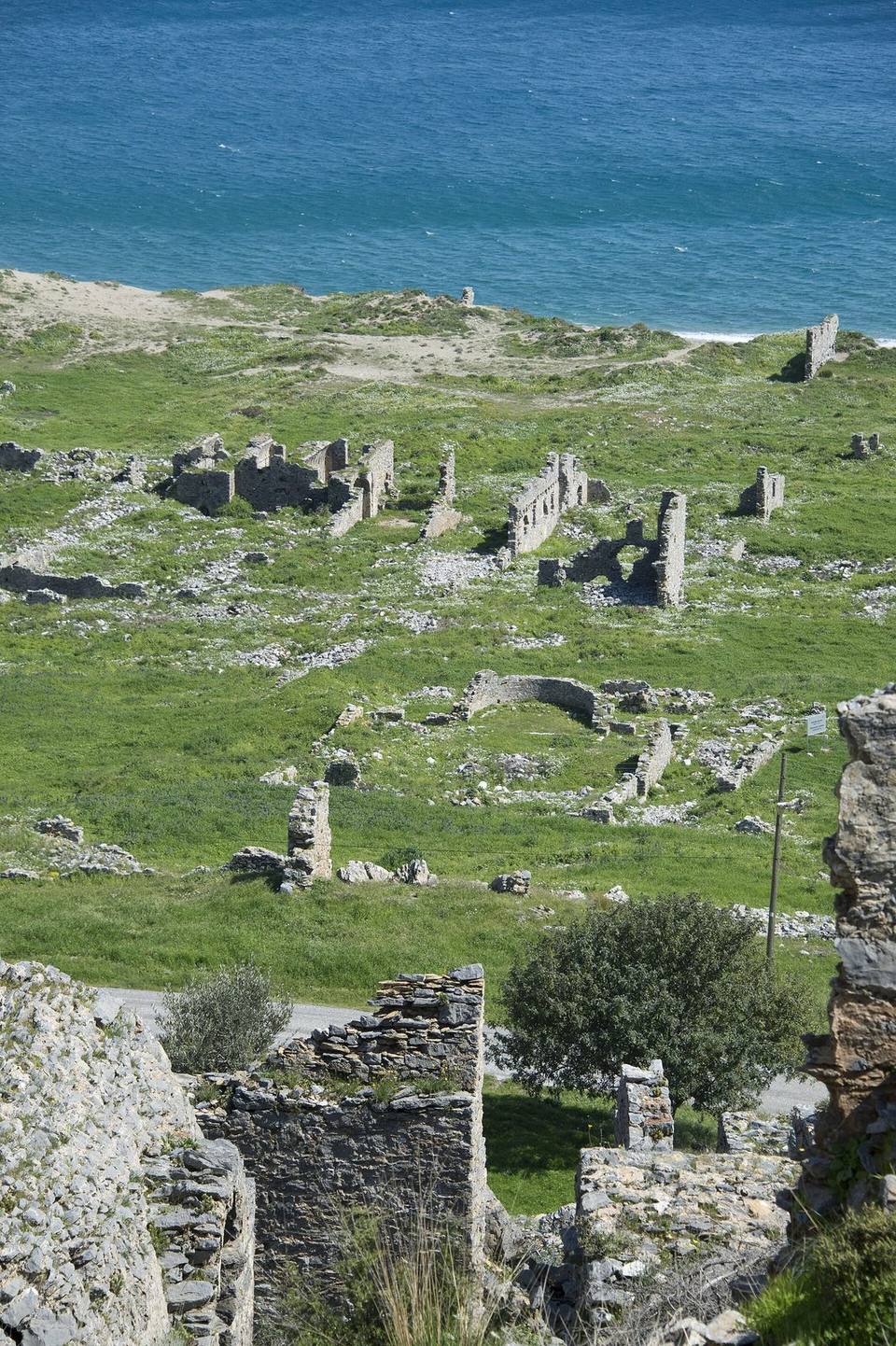
The number of buildings standing up to their roofs at the site is remarkable. To the south, on the steep cape reaching into the sea, lie the acropolis and walls repaired in the Middle Ages; this cape is known as the southernmost tip of Turkey reaching into the Mediterranean. On the plain to the north, in the lower city near the shore, are the odeon, theatre, basilica, palaestra, baths, church remains and aqueducts running in two rows. The odeon, with two entrances, is counted among the best preserved examples in Anatolia, and its orchestra and lower gallery are covered with blue and white geometric mosaics. The two-storey public bath is the largest bath at the site, and the floor of the gymnasium southwest of the odeon is covered throughout with geometric mosaics.
The necropolis on the slope of the mountain that bounds the city to the west is one of the largest in Cilicia and counts among the best preserved Roman cemeteries in Anatolia. Many of the roughly 350 tombs built between the 1st and 4th centuries AD still stand up to their roofs, and barrel vaulted, domed and mausoleum type examples stand side by side. Starting the walk at the necropolis, going down to the odeon and baths in the lower city and then walking towards the cape lets you see the site in a sensible order. The area is large and has little shade, so in summer it is wise to come early in the morning and bring a hat and water. The site is reached by a road branching off towards the sea from the Anamur-Gazipaşa highway, and a taxi or private car is the most practical option. For current visiting hours and entry conditions, see the archaeological site page of the Ministry of Culture and Tourism.
Comments
Loading...
Location - Anemurium Antik Kenti
Venue Info
AddressÖren (Batıkent) Mahallesi, Anamur
VenueAnamur, Mersin
TypeHistorical & Cultural Sites