

Historical & Cultural SitesMuseums
Amasra Müzesi
6
No ratings yet
Sign in to like and rate
Amasra Museum
About Venue
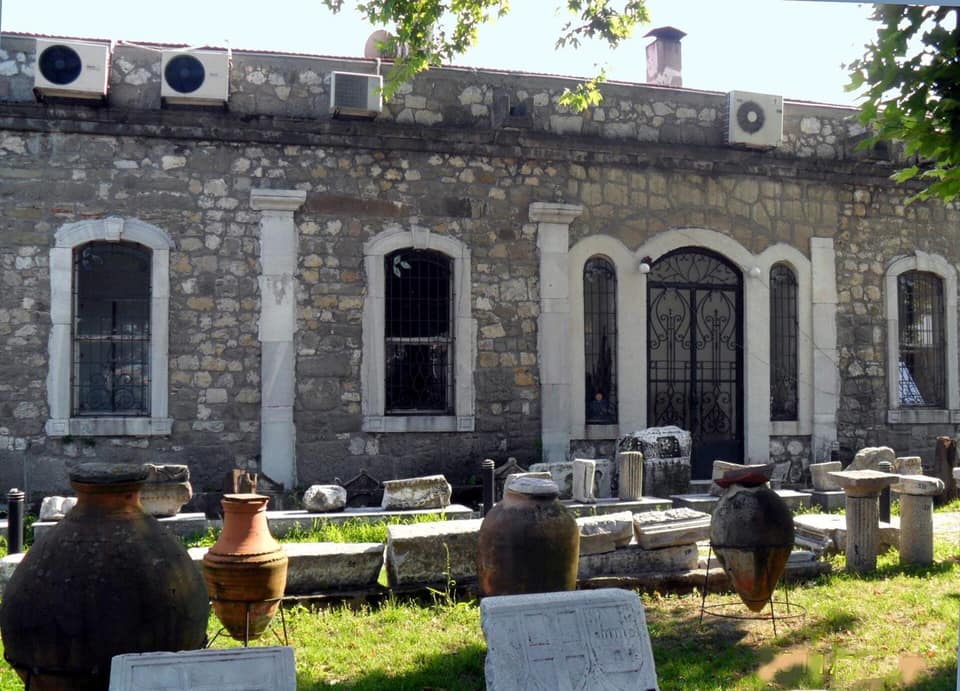
Amasra Museum serves in a historic building in the center of Amasra that has Ottoman-period architectural features. The building has an elongated rectangular plan and a single floor. The Bartın Provincial Directorate of Culture and Tourism states that the structure is a registered historic building. The museum's story begins with old artifacts frequently coming to light in Amasra, an ancient settlement. These finds made founding a museum here necessary.
According to the District Governorate page, the first museum was opened in 1955 in a small hall of the Municipality Building. In 1969 the museum moved to the old primary school building. When the primary school building could not meet the need, the present structure came onto the agenda. This building had begun to be built in 1884 as a Naval School by Ismail Kemal Bey, the Governor of Bolu, but its construction was left unfinished. The provincial directorate calls the same building a Maritime School. The Ministry of Culture bought the building in the mid-1970s, and the sources give this date differently as 1975 and 1976. The restoration was completed in 1982, and the museum was opened to visitors. Restoration of the museum began again in 2014, and it was made ready to operate with a new display arrangement. This long story shows an unfinished school building turning into a museum.
The number of halls is described differently in the sources. The provincial directorate counts four display halls. The District Governorate speaks of six halls and lists among them a cinevision room and a shipwreck re-creation. Because of the new display arrangement after 2014 this difference is understandable, and it is wise to check the current hall layout on the museum page before your visit. In the archaeological halls you find terracotta and glass perfume bottles from the Hellenistic, Roman and Byzantine periods, gold and bronze ornaments, amphorae, jugs and small bronze statues. According to the same source, weapons, oil lamps, vessels and gold and bronze coins from the Hellenistic, Roman, Byzantine and Ottoman periods are also displayed. The second archaeology hall is devoted to marble works, where you see statues, statue heads, grave stelae and relief fragments from the Hellenistic period to the Genoese period. In the ethnography halls there are Ottoman-period copper kitchen vessels, writing sets, candlesticks, seals, steelyards, ceramics and rings. Vessels reflecting the wood-turning craft specific to the Amasra region are also in this section. In the other ethnography hall, clothing that shows the dress taste of the region, silver ornaments, bed and pillow covers, rugs, pouches and old wall clocks are displayed.
In the corridor of the museum there is a Mediterranean map dated 1852 and printed at the Imperial Press. In the garden, stone works from the Hellenistic, Roman, Byzantine, Genoese and Ottoman periods are displayed. Some columns from the acropolis are also exhibited in the museum. Set aside time for the garden as well, because the stone works are a section that can be viewed comfortably before or after the indoor halls. While examining the works, keeping the order of the periods in mind makes it easier to understand that Amasra is a settlement built up layer by layer from the Hellenistic period to the Ottoman period.
According to the District Governorate page, the museum is closed on Mondays and open on the other days. Because opening and closing hours may change, check current information on muze.gov.tr and the Amasra District Governorate page. The same page states that the Museum Card is valid at the museum. For the ticket price, too, look at the official pages. The museum's address is on Çeşm-i Cihan 1 Street in the Kaleşah neighborhood. Choosing the museum as the first stop on the route and then climbing to the castle and the walls is a logical order. With the information you gain in the museum, you recognize the Genoese and Roman-period traces at the castle more easily. While moving between halls, asking the staff about the photography rules is a good habit. On rainy days the museum is a suitable option for continuing your Amasra visit indoors. Setting aside one hour is enough for most visitors.
Comments
Loading...
Location - Amasra Müzesi
Venue Info
AddressKaleşah Mahallesi Çeşm-i Cihan 1 Sokak No:2 Amasra/Bartın
VenueAmasra, Bartın
TypeHistorical & Cultural Sites