

Religious & Spiritual PlacesMosques
Alaeddin Camii (Niğde Ulucamii)
No ratings yet
Sign in to like and rate
Alaeddin Mosque (Nigde Grand Mosque)
About Venue
Alaeddin Mosque stands on Alaeddin Hill, regarded as the historic centre of Niğde, south of the inner citadel of Niğde Castle, and is also known in the city as the Great Mosque of Niğde. According to the three-line marble inscription over the door, the mosque was built in 1223 during the reign of the Anatolian Seljuk sultan Alaeddin Keykubad I, in his name, by Zeynüddin Beşare, the emir of Niğde. Zeynüddin Beşare's rule over Niğde ended in that same year, after which the city was tied directly to the sultan. A second inscription on the main portal introduces the builders as two brothers, Sıddık and Gazi, the sons of Mahmud. An inscription above an arch inside shows that the chief architect was master Sıddık.
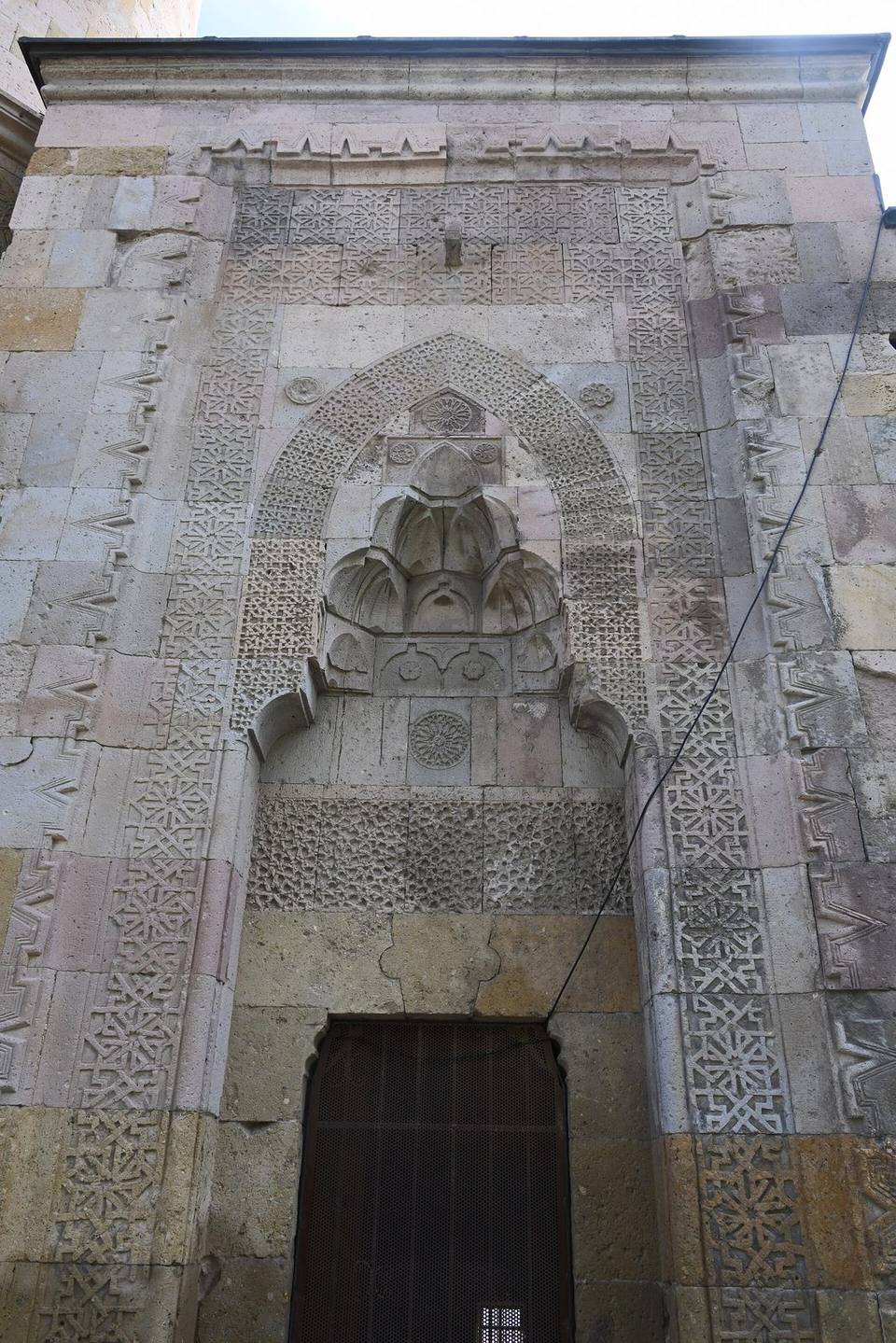
Built entirely of finely dressed stone, the mosque is notable for its monumental main portal, which is set on the eastern side rather than on the axis. This portal rises above the height of the building and is decorated from top to bottom with geometric motifs, and the mosque's place in art history rests above all on this stonework. On the north side, at the lower corner of the minaret, there is a second door in the form of a classic Seljuk niche. Set slightly higher, this door opens onto a private gallery with timber beams, and it is counted among the early examples of the sultan's galleries found in Anatolian mosques. The single-balcony minaret at the north-east corner has a cylindrical shaft and is an original Seljuk example built of two-coloured dressed stone. To break the monolithic look of the building, two windows were opened on the south front and one on each of the other fronts.
Inside, three domes of different diameters, heights and shapes stand side by side along the mihrab wall. This section is separated from the northern parts by three wide arches with thick, stepped mouldings, forming a main space that develops crosswise in front of the mihrab. The remaining parts are arranged as three naves covered with vaults perpendicular to the mihrab wall, around a small inner court in the middle. Art historians see this plan as an experiment combining traces of the Great Seljuk mosque tradition with the crosswise layout and domes in front of the mihrab. The mihrab and the minbar are also made of stone. Although the mosque has undergone many repairs over time, it has largely kept its original character.
The most often told feature of the mosque is that when sunlight falls on the portal at the right angle, the play of light and shadow brings out the silhouette of a young girl wearing a crown, with braided hair hanging down at her sides. The mosque shares the hill with the castle, the clock tower, Rahmaniye Mosque and Hatıroğlu Fountain, and these monuments were added to the UNESCO World Heritage Tentative List in 2012 under the name Historical Monuments of Niğde. The hill is reached on foot from the city centre, and the visit is easily combined with a walk around the castle and the clock tower. As the mosque is a place of worship, visitors should avoid prayer times, take off their shoes before entering and wear clothing that covers the shoulders and knees.
Comments
Loading...
Location - Alaeddin Camii (Niğde Ulucamii)
Venue Info
AddressAlaeddin Tepesi, Niğde Merkez
VenueNiğde Merkez, Niğde
TypeReligious & Spiritual Places