

Religious & Spiritual PlacesMosques
Afyonkarahisar Ulu Camii
No ratings yet
Sign in to like and rate
Afyonkarahisar Grand Mosque
Camiikebir Caddesi, Çavuşbaş Mahallesi, Afyonkarahisar
Afyonkarahisar Merkez, Afyonkarahisar
Get DirectionsApple MapsAbout Venue
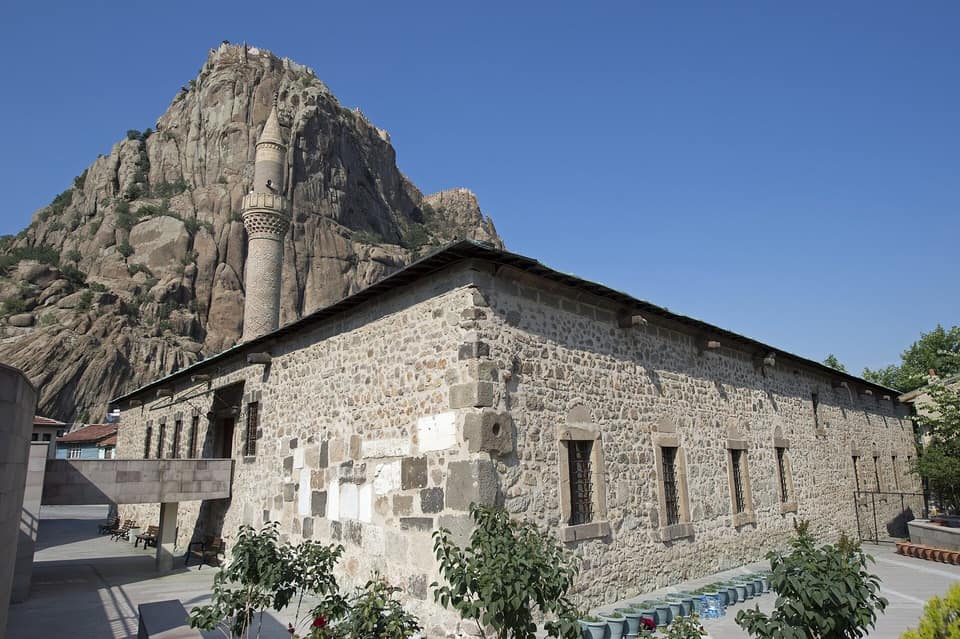
The Grand Mosque of Afyonkarahisar is a Seljuk-period building that rises on Camiikebir Avenue in the Çavuşbaş neighbourhood, right at the foot of the black rock that is the symbol of the city. Municipal records state that the mosque was built between 1272 and 1277 by Nusretiddin Hasan, the Anatolian Seljuk governor of the district; the Provincial Directorate of Culture and Tourism gives 1273 as the year of construction. Its patron was the son of the Seljuk vizier Sahip Ata Fahrettin Ali, and he governed the Afyon district in those years. Locally the building is also known as the Kırk Direkli Cami, the Mosque of Forty Columns, because its roof rests on forty wooden columns and capitals.
Sources name Emir Hacı Bey (Emirhaç Bey) in connection with the woodwork and the minbar, and Hacı Murat, son of Nakkaş Mahmut, in connection with the decoration. The municipality notes that the wooden structural system was assembled without nails, using an interlocking technique. The column capitals are decorated with stalactite and lozenge motifs; the mihrab is of stone, while the minbar is of wood with geometric patterns. The building has three doors facing east, north and west, and its minaret is built of brick. The mosque, which originally had a flat earthen roof, was repaired in 1341.
The Wooden Hypostyle Mosques of Medieval Anatolia, inscribed on the UNESCO World Heritage List in 2023 as a serial property, include this building. The five mosques on the list were built in different provinces between the late 13th and the mid 14th century. All of them have rows of wooden columns carrying a flat wooden ceiling and roof, while their outer walls are of masonry. The Grand Mosque of Sivrihisar in Eskişehir, the Ahi Şerefettin Mosque in Ankara and the Eşrefoğlu Mosque in Konya are also part of the same listing.
Once inside, you can walk along the narrow aisles formed by the columns and look closely at the wooden carving on the capitals. Outside, when you step back across the courtyard, the steep rock of the castle appears behind the building, and this angle best shows the relationship between the mosque and the city. The Provincial Directorate of Culture and Tourism states that the mosque can be visited only just before and just after prayer times. As the mosque is open for worship, visitors should keep quiet inside, take off their shoes and wear clothing that covers the shoulders and knees. A visit can be combined with a walk up to the castle and through the historic quarter of old houses around it.
Comments
Loading...
Location - Afyonkarahisar Ulu Camii
Venue Info
AddressCamiikebir Caddesi, Çavuşbaş Mahallesi, Afyonkarahisar
VenueAfyonkarahisar Merkez, Afyonkarahisar
TypeReligious & Spiritual Places