

Historical & Cultural SitesArchaeological Sites
Acemhöyük
23
No ratings yet
Sign in to like and rate
About Venue
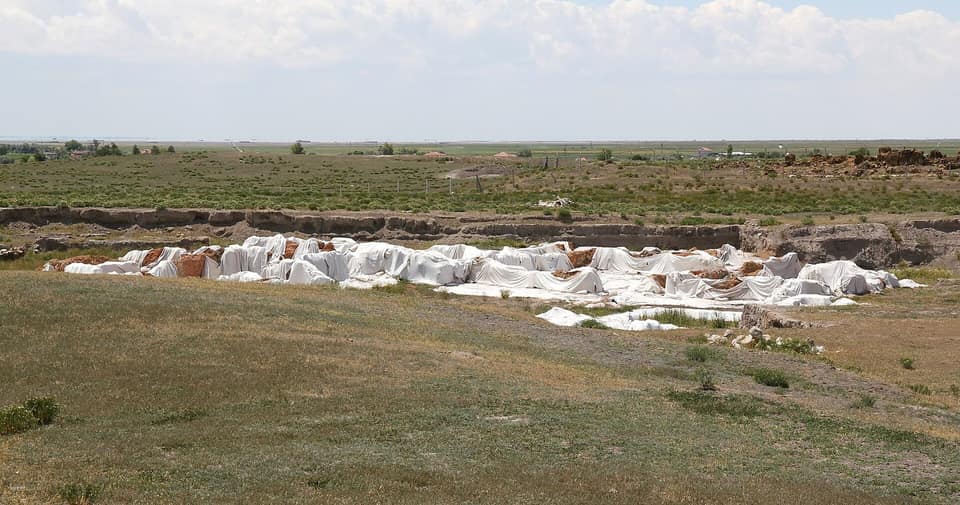
Acemhöyük is a Bronze Age settlement mound northwest of the centre of Aksaray, within the town of Yeşilova. The oval mound, measuring about 700 by 600 metres, and the Lower Town surrounding it together form a single ancient settlement. Today's Yeşilova is a town founded at the foot of the mound, and the ancient settlement lies within the fabric of the town.
The story of the excavations
Acemhöyük was the first archaeological site in Aksaray to be excavated. Excavations began in 1962 under the direction of Nimet Özgüç and from 1989 onwards were continued by Aliye Öztan. Özgüç's work revealed at least twelve building levels on the mound belonging to the Early Bronze Age and the Assyrian Trade Colonies Period. The same excavations showed that the Lower Town was inhabited only during the Assyrian Trade Colonies Period.
Four thousand years of settlement
According to the provincial directorate, the mound has been inhabited since around 3000 BC. The city grew steadily from the Early Bronze II period, around 2500 BC, and lived its most brilliant era in the Assyrian Trade Colonies Period, around the 1800s BC. In this period Acemhöyük was the centre of one of the important kingdoms of Anatolia. In the 18th century BC a violent fire, whose cause is still unknown, engulfed the whole city and ended this brilliant era. Survivors rebuilt the city twice more, but the settlement was completely abandoned in the 17th century BC. After a long gap, the last settlements, reaching into the Hellenistic and Roman periods, were founded on the western and southern rises of the mound.
The city's name in the Bronze Age is not known for certain. According to some researchers it is the city of Purushanda or Purushattum mentioned in cuneiform documents, and Aksaray University sources note that it has also been identified with Ulama. The present name goes back to a much more recent past. According to the provincial directorate, in 1517 three nomadic groups from the city of Khoy in Iranian Azerbaijan settled at the foot of the mound and founded today's Yeşilova, and the name Acemhöyük comes from these newcomers.
Palaces and finds
The two palaces uncovered in the level of the Colony Period are significant for the history of Anatolian architecture. The building in the south of the mound has been named the Sarıkaya Palace, and the one in the northwest the Hatipler Palace. The Sarıkaya Palace covers an area of about 3600 square metres, has two storeys, and its surviving ground floor contains fifty rooms. The Hatipler Palace is the second monumental building, very similar in plan to Sarıkaya. The encyclopaedia entry of Aksaray University also mentions a third monumental building called the Service Building.
The most striking finds from the palaces are bullae, lumps of clay bearing seal impressions that were attached to the knots of the cords tied around packages. Most of the bullae were found stored in the rooms of the Sarıkaya Palace. Most of the impressions belong to stamp seals in the local Anatolian style, and the others to Old Assyrian, Old Babylonian and Old Syrian styles. According to the university source, some bullae carry seal impressions of the Assyrian king Shamshi-Adad I, of Aplahanda, king of Carchemish, and of Nagihanum, daughter of Yahdun-Lim, king of Mari. Short notes on the edges of some bullae bearing Aplahanda's seal show that textiles were sent to the palace. These documents point to close relations between the city and the city-states of Mesopotamia and Syria.
Thanks to its closeness to ore deposits and trade routes, Acemhöyük became an important centre of metal production and trade. The silver and copper ingots found in the Sarıkaya Palace and in contemporary houses had been stored so that they could be used as money when needed and alloyed to produce new objects. The excavations also yielded stamp and cylinder seals, pottery of various shapes and decoration, textile traces, beads, gold ornaments, ivory works and a game board. You can see a substantial part of the finds in the Acemhöyük hall of Aksaray Museum.
Visiting
As there are excavation areas on the mound, do not enter the trenches and do not step on the earth sections or wall remains. While walking around the site, keep in mind that the Sarıkaya Palace lies in the southern part and the Hatipler Palace in the northwestern part, which helps you find your bearings. Since you will be walking on open ground, choosing the morning or late afternoon in summer and carrying a hat and water will make things easier. According to the provincial directorate, Yeşilova can be reached by public transport at certain times of the day. However, no official visiting arrangement has been published for the mound, so confirm the visiting conditions with the Aksaray Museum Directorate before you go.
Comments
Loading...
Location - Acemhöyük
Venue Info
AddressYeşilova, Aksaray Merkez/Aksaray
VenueAksaray Merkez, Aksaray
TypeHistorical & Cultural Sites