📚 BooksPaid
Proteinmaxxing Çağında Kaç Gram Yeter? | Protein 101 Seminerleri
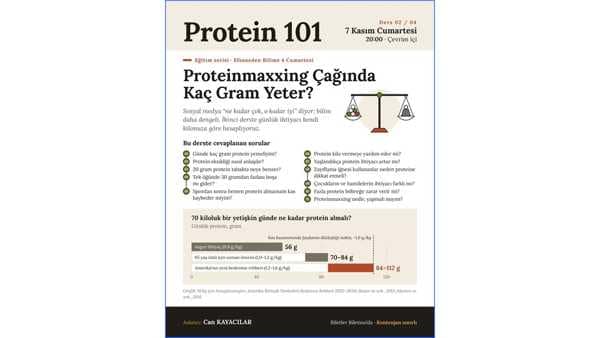
Protein coffee, protein water, protein popcorn... The latest trend on social media, "proteinmaxxing," suggests that "the more, the better." The U.S. dietary guidelines, published in January 2026, also recommend a daily intake of 1.2–1.6 grams of protein per kilogram of body weight. But how much do you *really* need? Does consuming more than 30 grams in a single meal actually go to waste? Does excessive protein intake strain the kidneys? This seminar will examine the most common protein myths, separating fact from fiction. We'll learn how to calculate your daily protein needs based on your individual weight and lifestyle. Here are some of the questions we'll address: How much protein should I eat per day? How can I tell if I'm not getting enough protein? What does 20 grams of protein look like on a plate? Is it a waste to consume more than 30 grams in one meal? Will I lose muscle if I don't consume protein immediately after exercise? Does protein help with weight loss? Does protein need increase with age? Why should people using weight loss injections pay attention to their protein intake? Are the protein needs of children and pregnant women different? Does excessive protein intake harm the kidneys? What is "proteinmaxxing," and should I do it? What does the science say? Basic needs: The internationally recognized minimum requirement for healthy adults is approximately 0.8 grams of protein per kilogram of body weight. Older adults: Expert groups recommend 1.0–1.2 grams. This is because, as we age, our muscles become less responsive to protein; this is known as anabolic resistance. Upper limit for muscle gain: An analysis of 49 studies found that in people who lift weights, the contribution of protein to muscle gain plateaus at approximately 1.6 grams per kilogram of body weight. The 30-gram myth: A study published in 2023 found that in people who consumed 100 grams of protein after exercise, muscle protein synthesis was both stronger and lasted longer (over 12 hours) compared to those who consumed only 25 grams. Satiety: Protein is the macronutrient that requires the most energy to digest. Approximately 20–30% of the energy it provides is used in digestion, compared to 5–10% for carbohydrates and 0–3% for fats. This is one reason why protein is so satiating. Kidneys: A meta-analysis of studies comparing high and normal protein intake in healthy individuals found no difference in kidney function. However, the situation is different for people with kidney disease. Weight loss injections: When losing weight with glucagon-like peptide-1 (GLP-1) medications, a significant portion of the weight loss can come from lean tissue, including muscle. This is why adequate protein intake and resistance exercise are recommended. Proteinmaxxing: This trend lacks a scientific definition. The body cannot store excess amino acids as muscle. Protein that exceeds your needs is either used for energy or stored as fat. By the end of this seminar, you will be able to: Calculate your daily protein needs based on your weight and lifestyle. Evaluate the protein claims you see on social media with scientific data. Who is this for? Anyone who wants to expand their knowledge, especially athletes, people trying to lose weight, those caring for elderly relatives, and people using weight loss injections. How to participate: This seminar is online. The link to participate will be sent to the email address you provided when purchasing your ticket before the seminar. Each seminar is 60 minutes long: approximately 45 minutes of presentation and 15 minutes for questions and answers. The "Protein 101" certificate consists of four seminars. Each seminar is a complete unit in itself; you can attend them individually: October 1st: Rebuilding Yourself Every Day November 1st: How Much Protein is Enough in the Age of "Proteinmaxxing"? November 15th: Can Peas Build Muscle? November 15th: Lentils, Mushrooms, Microalgae: The Protein of Tomorrow. Participants who attend all four seminars will receive a certificate signed by Can Kayacılar. Who is giving the seminars? Can Kayacılar is a biologist, neuroscientist, and industrial scientist. He was the winner of the "Technopreneur" competition in Turkey in 2012 and founded Turkey's first nanobiotechnology company. He develops biorefinery technologies that extract valuable components from agricultural byproducts using supercritical carbon dioxide, as well as plant-based protein formulations. One of his recent projects is a water-soluble formulation containing 35 grams of plant-based peptides per 100 milliliters. He introduced the concept of the "Pulp Economy" and the idea of "Protein Farming" and spoke on the main stage at WorldFood Istanbul 2025. His bioeconomy articles reach over 88,000 followers on LinkedIn, and Favikon ranked him among Turkey's top 20 LinkedIn content creators in 2025 and 2026. Important Note: These seminars are for general informational purposes only and do not constitute personal dietary or medical advice. Consult your doctor or dietitian for any decisions related to your health.
Date & Time
7 November 2026, Saturday
20:00 – 21:00
Ticketed Event
This event has ended