🎭 TheatrePaid
Hocapaşa Mevlevileri - Sema Ayini - Kasım Ayı Etkinlikleri
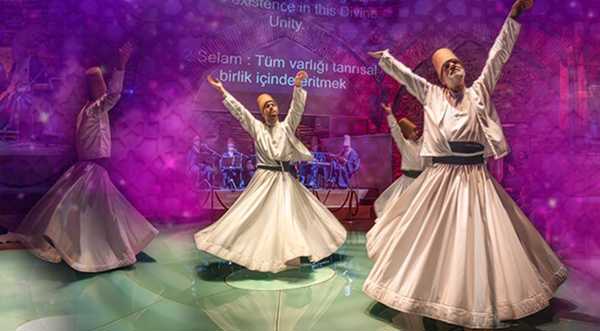
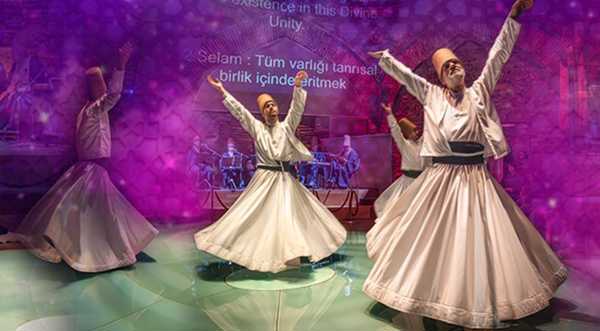
The whirling dervishes of the Galata Mevlevi Order are presenting a Sema ceremony and an exhibition showcasing the world of the whirling dervishes at the Hocapaşa Cultural Center.
Experience a captivating atmosphere where a mesmerizing whirling dervish ceremony, accompanied by live Sufi music, is presented alongside a unique exhibition that explores the spiritual perspective of this ancient tradition.
This exhibition offers a comprehensive look at Sufi culture, featuring everything from dervish accessories to sculptures, clothing, and musical instruments, making the Sema ceremony even more meaningful and enriching.
Sufism and the Sema Ceremony.
Mevlevism, also known as the Mevlevi Order, takes its name and its principles from its founder, Jalaluddin Rumi (known as Mevlana). "Sema," a word derived from Persian and adopted into Arabic, refers to the whirling dervish ceremony that is a central part of Mevlevi rituals.
The term "sema" is used to refer to prayer, the person who prays, a song, and dance activities. The Mevlevi philosophy has been passed down to future generations for over 800 years through the practice of "sema."
Rumi's Sufism is a path that completely transcends individual desires, representing an unbounded love in social life, a humanistic perspective, and absolute unity, symbolizing a journey towards goodness, beauty, and virtue. Inspired by this Sufism, the Sema ceremony represents a spiritual journey towards perfection, a coming and going. Each of the seven sections of the Sema has its own meaning, but the fundamental principle is that "rotation is the essential condition of existence." The commonality between every entity in the universe, from the smallest particle to the most distant stars, is their rotation around their own axis. Starting from this fundamental principle, the Sema symbolizes the devotee's turning towards truth, their elevation through reason and love, their abandonment of the ego, and their ultimate union with the Divine, culminating in their return to servitude as a perfected, complete human being. This rotation, performed by turning around the heart from right to left, represents embracing all beings and all creations with a renewed spirit and with love and affection from the whole heart.
The hat worn by the whirling dervishes symbolizes the tombstone, the cloak on their back represents the grave, and the skirt they wear signifies the shroud. The whirling dervishes begin their whirling ceremony after performing traditional and sacred rituals. With their arms crossed, forming the number "1," which represents the oneness of God, the dervish whirls, extending their right hand upwards (as if in prayer towards the heavens) and their left hand downwards (towards the earth, representing the "Eye of God"). This posture represents Mevlana's teaching that one should deliver what they receive from God to the people, while remaining humble and insignificant in their own being.
Date & Time
Start
22 November 2026, Sunday
19:00
End
30 November 2026, Monday
19:00
Location - Hodjapasha Gösteri Ve Etkinlik Merkezi
Ticketed Event