⚽ SportsPaid
BEYKOZ ORMANLARI,ALİBAHADIR KÖYÜ-ANADOLU KAVAĞI DOĞA YÜRÜYÜŞÜ
Meeting Point: Şirinevler Neighborhood, Meriç Street No: 27/1, Bahçelievler, Istanbul.
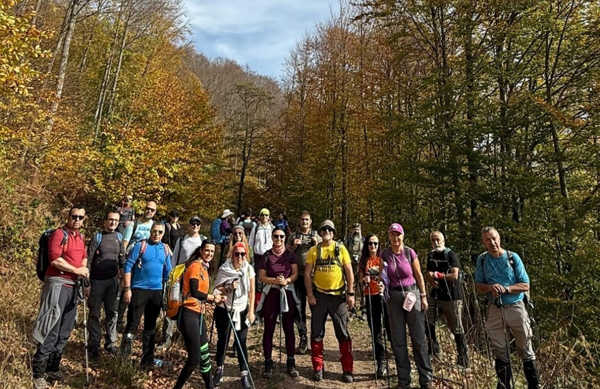
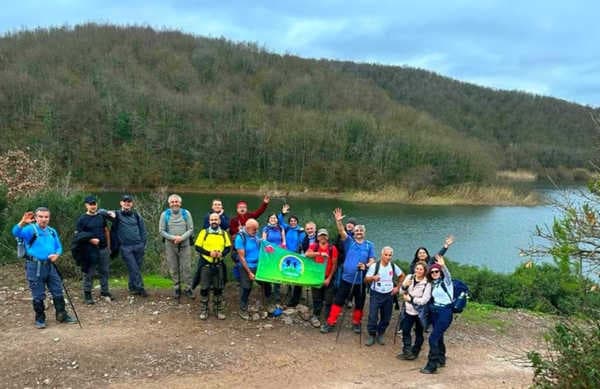
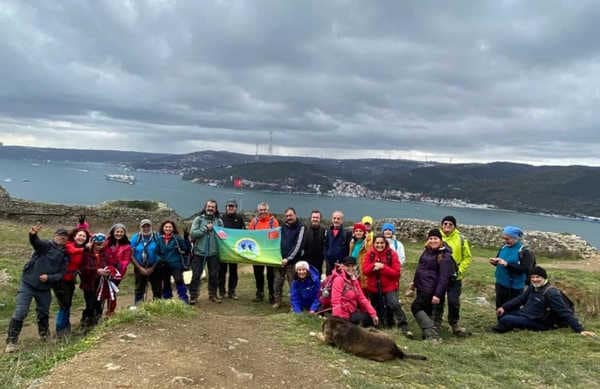
BEYKOZ FORESTS, ALİBAHADIR VILLAGE - ANADOLU KAVAĞI NATURE WALK November 18, Wednesday Trail Length: 13 km Easy Hike Hike Leader: ESAT ÇOBAN - 0 535 324 32 17 Program: 09:00 We meet at Beykoz Square, next to the Beykoz ferry terminal. Those arriving by car can park at the İSPARK in Beykoz. 09:25 We board the bus departing from SULTANİYE. We travel to Alibahadır village, where we will have a shopping break. We begin our hike from Alibahadır village. We complete our 15 km trail in Anadolu Kavağı. In Anadolu Kavağı, we will have fish with a view of the Bosphorus and then return home. Transportation: Those coming from the European side can take the Beşiktaş-Yeniköy minibus to Yeniköy and then take a ferry from Yeniköy to Beykoz. Ferries depart every 20 minutes. It is also possible to reach Beykoz by municipal buses from Mecidiyeköy and Üsküdar. Note: Please wear hiking boots suitable for walking near the Bosphorus. These boots help prevent ankle sprains. An injury to one person can delay the entire group. During the hike, please bring snacks (nuts, fruit, sandwiches), and 1.5 liters of water. Dress according to the weather conditions. Note: Please wear hiking boots suitable for walking near the Bosphorus. These boots help prevent ankle sprains. An injury to one person can delay the entire group. YOROS CASTLE Located on the Anatolian side and on the eastern side of the Bosphorus' entrance to the Black Sea, this castle was built to control the entrance to the Bosphorus, along with the Imros Castle located above Rumeli Kavağı. This castle, also known as Anadolu Kavağı Castle or Genoese Castle, is believed by many to be named after "Hieron," which means "sacred place." It is also possible that the name "Yoros" comes directly from "oros," meaning "mountain," and this view may be more accurate. It is believed that Yoros Castle is a Genoese structure. However, this is not the case. A Greek inscription written in brick letters found in one of its towers indicates that this is a Byzantine construction. In the early 14th century, in 1305, the castle, along with Şile Castle, came under Turkish control, but it was not held for long. From 1348 onwards, the Genoese, who controlled the Black Sea trade route, gained control of the castle. However, at the end of the 14th century, it was recaptured by the Ottomans, who completely controlled the Anatolian side of the Bosphorus. It is clear that Yoros has changed hands frequently throughout history. One document indicating its Genoese administration is a Latin inscription copied from the top of the castle gate by a person named Prof. Multedo and included in the book about Genoese administration written by L. Sauli in 1831. This inscription, whose date is unreadable, states that "Genoese Vincenzo Lercari repaired the castle above the sacred nose." According to Âşıkpaşazâde, Yıldırım Bayezid arrived in Yoros with a large force by land from Kocaeli in 1391, This is considered one of the most important preparations for the conquest of Constantinople. In the forested area near the fortress, there is a cemetery containing the graves of those who died during the capture of the area. By 1399, Marshal Boucicault, during a raid at the entrance to the Black Sea Strait, did not dare to attack the fortress of Yoros, which was already under Turkish control. The most he could do was to burn the village at the foot of the fortress before retreating. After the Battle of Ankara in 1402, Çelebi Mehmed, one of Sultan Bayezid I's sons, sought help from the Byzantine emperor to cross into Thrace in 1414, during his campaign against his brother Musa. He himself left Bursa and arrived at Yoros, where he stayed. Between 1391 and 1414, the fortress of Yoros remained under Turkish control. Ruy Gonzales de Clavijo, the Spanish king's envoy sent to Timur, called the fortress he saw while sailing into the Black Sea "El Guirol de la Turquia." He reported that it was well-maintained and housed a Turkish garrison. In contrast, the fortress opposite was in ruins and abandoned; there was a tower surrounded by walls at the foot of the fortress. According to Clavijo, there was a rumor that a chain was stretched from this tower to a tower on the opposite shore, but no one had actually seen the chain. With the conquest of Istanbul, Yoros also came under Turkish rule. Sultan Bayezid II, who ordered the repair or construction of coastal fortresses throughout the Ottoman Empire, also had Yoros repaired and built a place of worship called the Yoros Fortress Mosque inside. Later, Mehmed Ağa, the fortress commander, also had a bathhouse built. A document dated 28 Recep 984/1576, found in the Ottoman Archives of the Prime Ministry, states that the fortress, along with the mosque, fountain, and bathhouse, were repaired. The German traveler M. Heberer, who arrived in Istanbul around 1580, found the fortress in good condition and included a very accurate engraving of it in his travelogue. The Armenian writer P. Ğ. İnciciyan reported that in the late 18th and early 19th centuries, there was a Turkish neighborhood of 25 houses inside the fortress of Yoros, and that a detachment of 20 soldiers, under the command of a fortress commander, was stationed there. Since 2010, excavation and restoration work has been ongoing at the fortress of Yoros, led by Professor Dr. Asnu Bilban Yalçın, head of the Istanbul University Yoros Fortress Excavation, along with representatives from the Ministry of Culture and Tourism, archaeologists, and art historians.
Date & Time
18 November 2026, Wednesday
09:00 – 19:00
Location - YUDOSK
Ticketed Event
This event has ended