

Winter in Rize, Snow and Festivities in the Foothills of the Kaçkars
Two different winters Winter in Rize is two different seasons, depending on where you look from. On the coast it is rainy and mild, in the mountains snowy and long.
 Radar TürkiyeNovember 24, 2026
Sign in to like and rate
Two different winters
Winter in Rize is two different seasons, depending on where you look from. On the coast it is rainy and mild, in the mountains snowy and long. The Rize Provincial Directorate of Culture and Tourism writes that the region has a Black Sea climate, with cool summers, mild winters and rain in every season. According to the directorate, the main reason for this is that the mountains run parallel to the coast. Moist air coming from the sea strikes this wall, rises and turns into rain and snow.
The figures given by the directorate complete the picture. The average annual temperature in Rize is around 14 degrees. The lowest temperature recorded so far is minus 7 degrees and the highest is 38 degrees. The coldest month is January and the warmest is July. Annual rainfall is over 2300 millimetres, and Rize is the province with the highest rainfall in Türkiye. Rainfall is spread evenly over the seasons and there is no dry season; the least rain falls in spring and the most in autumn. Humidity is always above 75 percent.
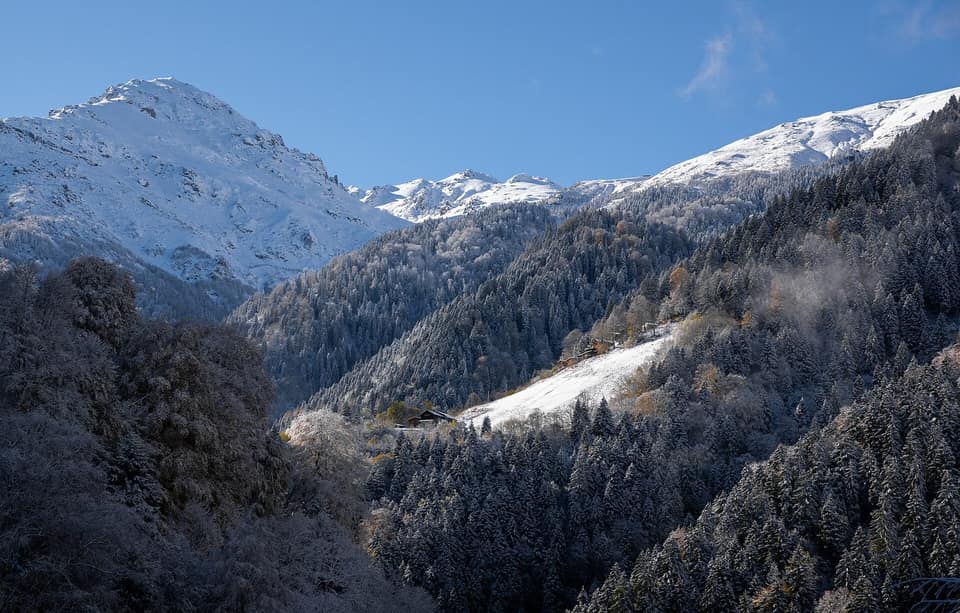
The geography page of the directorate explains why these two winters lie so close to each other. Right behind the coastline rise hills of 150-200 metres, the valleys continue steep and narrow up to 2000 metres, and beyond them begin rugged areas rising above 3000 metres. The highest point is the Kaçkar summit. In terrain that climbs so high over such a short distance, the winter that the coast experiences as rain turns into a blanket of snow in the mountains.
Snow and the highland calendar
In the high country of Rize, snow sets the rhythm of life. The 1993 study of Kaçkar by Doğu and colleagues explains that altitude increases rapidly over short distances, and that for this reason the snow clears from the ground at different times. This directly affects highland pastoralism. Several highland settlements belonging to the same village, especially on the north facing slopes, have been built on different altitude steps; the snow melts early below and late above.
The calendar described in the study also explains why the highlands empty in winter. All the villages that move up to the highlands lie below 1000 metres. Local people first come to Ayder in mid April, stay there for 10-15 days and then move up to the lower highlands. The upper highlands can only be reached in June, because the snow has not yet cleared before then. At the end of August people come down to the lower highlands, at the beginning of October to Ayder, and then return to their villages. So from October to April the high pastures lie under snow and largely silent.
The highland houses are built for this long winter too. According to the 1993 study, the lower floors of the houses in the Kavran and Ceymakcur highlands, dug into the slope, are stables built of stone, while the living quarters above are made entirely of wood. The windows have shutters that are closed at the end of the highland season to protect the building against dangers from outside. The roofs were once covered with a covering called hartama or bedevra, and today these have mostly been replaced by zinc sheets. When the highland season ends and the families go down, these houses stand empty until the snow clears.
Highland villages under the snow
The Eastern Black Sea Cultural Inventory writes that in the highland villages of Rize the snow reaches a depth of 1.5-2 metres in the winter months. Roads closed by snowfall cut off transport, the snow confines people to their homes and life becomes hard. According to the inventory, when the roads were closed, the sick and the elderly used to be carried on wooden sledges resembling stretchers.
Snow brings not only hardship but also its own games. The best known example described in the inventory comes from the Petran highland in İkizdere. When Petran was covered in snow, the village children began to slide on the snow with the sledges used as stretchers and with the boards found in every house. In time the adults joined in this fun too, and skiing turned into an entertainment for the whole village. Local people call the wooden ski board uzme tahtası; these authentic skis are known today as Lazbord or Petranbord. The inventory reports that this village pastime, said to go back centuries, is organised every year in January or February as the Petran Ski Festival by the İkizdere District Governorship, the municipality and the Meşeköy village head.
A snow festival in Ayder
For those who want to see a lively festival in the highlands in winter, the inventory points to Ayder. Every year in January or February the Snowman Festival is held at the Ayder highland. According to the inventory, alongside the kemençe and the horon, the indispensable elements of local celebrations, the festival includes contests such as building the biggest snowman, skiing and tug of war. The inventory notes that the number of highland festivals has increased with the growth of tourism, and that festivals are now also held in the winter months at highlands such as Ayder and Petran that want to benefit from winter tourism.
Ayder's winter is famous for another reason as well. According to the thermal springs page of the provincial directorate, the water of the spring in Ayder has a temperature of 55 degrees and is colourless, odourless and clear, and the directorate writes that this water is preferred as a complementary treatment for complaints such as rheumatic and joint pains. Having hot water in a highland surrounded by snow makes Ayder a place that is visited in the winter months as well.
Skiing by helicopter
One of the most unusual activities of the Rize winter is heliskiing. According to the provincial directorate, until recently this sport was practised only in the Swiss Alps, the Himalayas and the mountains of Canada. From 2004 onwards, tours to the Kaçkar Mountains began to be organised for European skiing enthusiasts. Skiers and snowboarders staying at the Ayder highland are flown by helicopter to the steep peaks of the Kaçkars and descend freestyle towards the foot of the mountain.
The directorate stresses that heliskiing is done only by professional skiers and requires special equipment and experience. It takes place every year between January and April in the foothills of the Kaçkars, in high altitude areas such as Ayder, İkizdere and Ovit. Ovit is listed on the directorate's İkizdere page among the well known highlands of the district, together with Anzer and Çağrankaya. According to the directorate, about 500 skiing enthusiasts come to Rize each year for heliskiing, and this has led to important efforts to develop skiing in the region.
Snow walks and winter views
Winter in Rize does not belong to skiers alone. The provincial directorate writes that Çamlıhemşin is suitable not only for nature walks, camping, photo safaris and heliskiing but also for snow walks, and that the Ayder highland, with festivals held in every season, is a place visitors always stop at. After snowfall, views of forested valleys turning white, with snowy summits rising behind them, offer a special opportunity for winter photography.
On snow walks it is important to know the limits. The study by Doğu and colleagues records that avalanche chutes and avalanche cones stand out on both slopes of the Kavran valley, from the exit of the glacial valley down to Kalerin Düzü. According to the study, in 1988 an avalanche coming down the western slope of the valley destroyed around 50 highland houses at the Yukarı Kavran highland. For this reason, do not enter the high valleys in winter without a guide; make your snow walks with local guides who know the snow conditions, on routes away from avalanche chutes.
Winter on the coast
Winter on the coast of Rize is gentler. The climate page of the provincial directorate writes that winters are mild and that the lowest temperature ever recorded in the city is minus 7 degrees. On the coast the real companion of winter is rain rather than cold, because rainfall is spread across every season and reaches its peak in autumn. Humidity that always stays above 75 percent means that the cool days on the coast are damp as well.
Before setting out in winter
If you are heading for the high parts of Rize in winter, first find out about road conditions. As the inventory describes, snowfall can close roads; get up to date information from the General Directorate of Highways or from the announcements of the Rize Governorship. Because the dates of the Petran Ski Festival and the Snowman Festival can change from year to year, check the announcements of the district governorship and the municipality.
For heliskiing, go only with authorised operators and with programmes suited to your experience. When using the thermal spring, take your own state of health into account. Dress in layers when going up from the coast to the highlands, and bring waterproof shoes and a rain jacket, because you should expect rain on the coast and snow in the highlands.
Sources
- Rize Provincial Directorate of Culture and Tourism, Climate, https://rize.ktb.gov.tr/TR-55289/iklim.html
- Rize Provincial Directorate of Culture and Tourism, Heliskiing, https://rize.ktb.gov.tr/TR-112804/heliski-helikopterle-kayak.html
- Rize Provincial Directorate of Culture and Tourism, Çamlıhemşin, https://rize.ktb.gov.tr/TR-256714/camlihemsin.html
- Rize Provincial Directorate of Culture and Tourism, Geographical Location, https://rize.ktb.gov.tr/TR-55288/cografi-konumu.html
- Rize Provincial Directorate of Culture and Tourism, Thermal Springs, https://rize.ktb.gov.tr/TR-112784/kaplicalar.html
- Rize Provincial Directorate of Culture and Tourism, İkizdere, https://rize.ktb.gov.tr/TR-256719/ikizdere.html
- Eastern Black Sea Cultural Inventory (DOKA), Entertainment in Rize, https://www.karadeniz.gov.tr/eglence-unsurlari-2/
- Ali Fuat Doğu et al., Glacier Shapes on the Kaçkar Mountains, Yaylalar and Tourism, 1993, https://dergipark.org.tr/tr/download/article-file/2153048
Comments
Be the first to comment