

The Trail of Paper in Yalova, from the Yalakabad Mill to the Museum
Most people know Yalova for its hot springs, its gulf shore and its closeness to Istanbul.

Sign in to like and rate
Most people know Yalova for its hot springs, its gulf shore and its closeness to Istanbul. Yet the town's name also appears in the history of the Ottoman book: the state's first known paper workshop was founded here in the middle of the eighteenth century. This article explains why that paper mill opened in Yalova, how short its life was, and how the town keeps the story alive today. We begin with the long journey of paper, move on to the paper shortage of the first Turkish printing house in Istanbul, and end at the museum in the Raif Dinçkök Cultural Centre.
The road of paper from the East
The paper entry of the TDV Encyclopedia of Islam notes that the general view dates the invention of paper to the year 105 AD and credits Ts'ai Lun in China. For centuries paper remained a Chinese monopoly, then it travelled west along the Silk Road. Some researchers argue that production in Samarkand began in 756 through prisoners taken at the Battle of Talas. Samarkand paper soon became famous and was sold far and wide.
The first paper workshop in the Near East opened in Baghdad in 794-795, and similar ones followed in Damascus, Tripoli in Syria, Hama, Yemen and Egypt. The encyclopedia stresses how much the abundant production of paper contributed to learning in this region during the Middle Ages. Shortly after production began in Europe, makers started to add marks to the sheets that can be seen when held against the light, the watermarks. These signs, such as a crown, an eagle, an anchor, a fish or three crescents, help to tell on which country's paper an archival document was written.
The Ottomans wrote on imported paper
Documents in the Topkapı Palace archive show that both Eastern and Western papers were used at court in the fifteenth century. According to Gelibolulu Mustafa Ali, in the sixteenth century papers from Damascus, Samarkand, China, Iran and India reached Ottoman lands. Western paper first arrived through Italian merchants, and most of the watermarks in the archive are of Italian origin. In the late seventeenth century French paper took over a large share of the market, followed in the nineteenth century by English and Dutch papers.
Paper was not only a material to be bought; preparing it for writing was a craft in itself. In calligraphy, miniature and illumination, a liquid called ahar was brushed onto the sheet so that the ink would not spread, and the surface was then burnished with a stone or glass tool. Ahar was prepared in different recipes from materials such as starch, egg white, alum or fish glue. The surface became smooth and a wrongly written letter could easily be erased. In short, Ottoman writing culture knew very well how to treat paper, but it largely bought the paper itself from abroad.
The printing press needs paper
What upset this balance was the first Turkish printing house in Istanbul. According to the entry on İbrahim Müteferrika in the TDV Encyclopedia of Islam, permission to found the press was granted in the summer of 1727. The printing of the first book was completed at the beginning of 1729, and until Müteferrika's death seventeen books, twenty-three volumes in all, were printed there. The first books were printed in runs of one thousand to twelve hundred copies, while later ones dropped to five hundred. The subjects were history, geography, language and military affairs.
The paper entry describes the practical side of the matter clearly: the watermarks of the works printed at the press show that their paper was imported from different places, meaning the press had no regular stock of paper. Finding enough paper of the same quality for each book was a separate struggle every time. Müteferrika tried to solve the problem by producing his own paper. According to TDV, the workshop began operating in the years when he served as historian of the Imperial Council, and it worked directly under his supervision. Müteferrika died at the beginning of 1747; the encyclopedia also notes that the date on his gravestone differs from the salary record in the archive.
The Yalakabad paper mill
According to the encyclopedia, in 1741 Müteferrika set out to found a paper workshop in Yalova, called Yalakabad in the documents, and brought papermakers from Poland. The people of Saruhanlı, that is Elmalı village, were exempted from taxes in return for maintaining the water channels feeding the mill opened at Çardaklı. An order dated 18 April 1745 asked for a second wheel to be built and for the mill's needs to be supplied by the Naval Arsenal, the Armoury and the Cannon Foundry. Paper of every kind and quality bearing a lion watermark was produced here.
Why was the mill in Yalova? The Wikipedia entry on the museum cites the easy supply of wood and the easy connection with Istanbul. Water mattered too, because the wheels that beat the paper pulp were turned by running water. The name Yalakabad comes from Yalova's own history. The town history page of the Provincial Directorate of Culture and Tourism writes that historians of the fifteenth and sixteenth centuries used the names Yalakova and Yalakabad for the area. The TDV entry on Yalova notes that the name Yalakova may have belonged to the Yalakdere delta further east, so the name described a district rather than a single town.
The mill had a short life. The paper entry states that after working productively for ten to fifteen years it closed because of a lack of water, a shortage of skilled staff and its inability to compete with foreign paper. The museum entry says the factory kept working for at least thirteen more years after Müteferrika's death; the sources do not fully agree on the period. The location of the mill was also long debated. The municipality's introduction and news reports from 2013 place it in Elmalık village. In a statement reported by Restorasyon Haber in 2025, however, the museum's curator Aytekin Vural says, on the basis of new archive documents, that the mill stood in the town centre, a few hundred metres from the museum building, on the Hırka stream. According to Vural, the mill in question was still standing until 1994.
Paper after Yalova
The Yalova attempt was not the only one, but it was the first. According to TDV, a workshop was founded at Kağıthane in Istanbul under Selim III and closed when it could not cover its costs; a document dated 1793 records that some materials for papermaking were placed in the Sadabad Pavilion. A factory opened in Beykoz in 1805 supplied paper for government offices and the army, and closed in 1832 when prices fell in the West. In 1846 a steam-powered factory began production in İzmir, and in 1893 the Hamidiye Paper Factory opened in Beykoz. Both were short-lived. In the Republican period the first major step was the İzmit Paper Factory of 1936. In this chain stretching over two hundred years, the first link is Yalova.
Paper returned to the town's industrial life. The TDV entry on Yalova counts paper production among the large plants founded east of the town after 1970. This time, however, it was modern industry; the tradition of making paper by hand came back to life in the town only through a museum.
Paper reborn at the museum
The İbrahim Müteferrika Paper Museum was founded to keep alive the memory of the historic Yalakabad paper mill. According to Wikipedia, the idea came onto the municipality's agenda in 2011, and the research of the founding expert Aytekin Vural led to the decision to open a production workshop alongside the museum. Hürriyet Daily News reports that the museum opened at the Raif Dinçkök Cultural Centre on 25 May 2013 and that it is Turkey's first paper museum. The municipality stresses the same point and presents the museum as a set of displays on the history of paper, production techniques, paper arts and book culture.
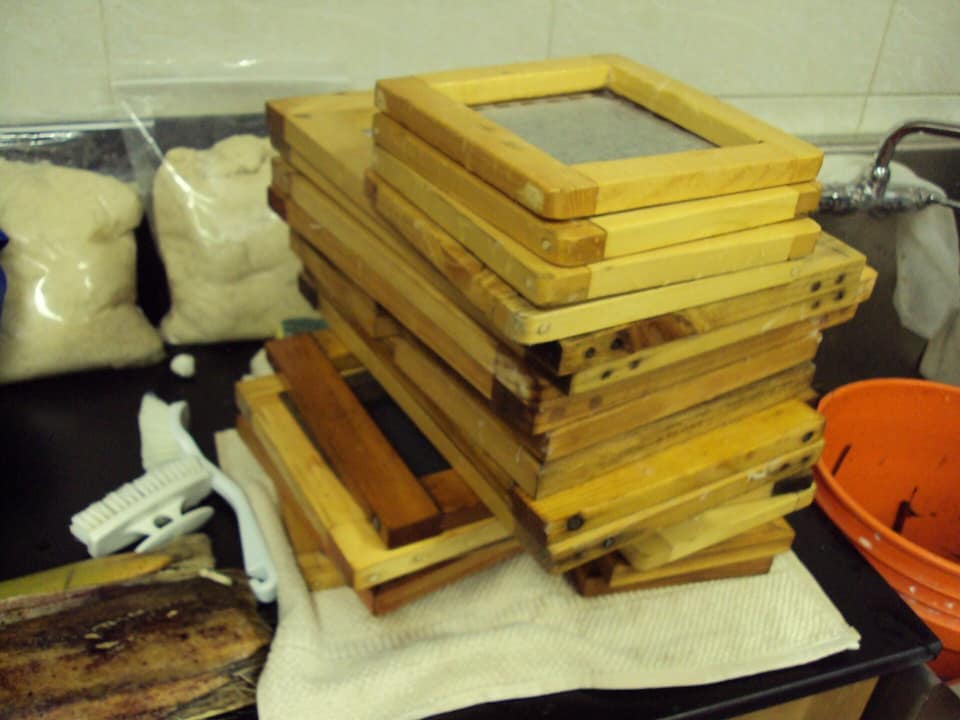
What sets the museum apart is that it does not stop at display. According to the municipality, visitors can make their own paper in the workshops using traditional methods. In Restorasyon Haber, Vural explains that they try to keep the technique of Ottoman papermaking alive and that the museum has become a training centre offering courses. The Wikipedia entry also notes that paper is made there from fabric scraps, twigs and leaves. According to the same entry, the museum consists of an exhibition area on the first floor of the cultural centre and workshops in the basement, covering about one hundred square metres. Vural says the museum is one of three paper museums in Turkey and that twelve masters worked day and night at the historic mill. According to the municipality, the Raif Dinçkök Cultural Centre that houses the museum opened in 2011 and stands on an area of about ten thousand square metres. The logo competition for the International Yalova Paper Days, organised in 2025 by the Provincial Directorate of Culture and Tourism, shows that paper now also features in the way the town presents itself.
Tips for following the trail of paper
As you tour the museum, look closely at the old paper samples in the showcases; searching for a watermark in a sheet held against the light is the easiest way to picture the world of imported paper described in this article. Books printed at the Müteferrika press are also on display. If you want to watch papermaking or try it in the workshop, check the practice days and group arrangements in advance in the current announcements of the municipality or the museum. For opening hours and visiting conditions, please also check the official page.
The Arkeopark next to the cultural centre displays archaeological works from the Roman, Byzantine and Ottoman periods in indoor and open-air areas. The area around the Hırka stream, where the mill is said to have stood, also lies within the town centre; after the museum you can walk towards the shore and see the fabric of the town. Visitors from Istanbul can reach Yalova by ferry or by road; follow the current announcements of the operators for timetables. A fine pairing for paper lovers is to look at the Kağıthane district and Beykoz in Istanbul: the later links of the story that began in Yalova are there.
Sources
- TDV Encyclopedia of Islam, Kağıt, https://islamansiklopedisi.org.tr/kagit
- TDV Encyclopedia of Islam, İbrahim Müteferrika, https://islamansiklopedisi.org.tr/ibrahim-muteferrika
- TDV Encyclopedia of Islam, Yalova, https://islamansiklopedisi.org.tr/yalova
- Yalova Provincial Directorate of Culture and Tourism, History of Yalova, https://yalova.ktb.gov.tr/TR-128111/yalova-tarihi.html
- Yalova Provincial Directorate of Culture and Tourism, International Yalova Paper Days logo competition, https://yalova.ktb.gov.tr/TR-391148/uluslararasi-yalova-kagit-gunleri-logo-ve-logotype-yarismasi-basvuru-sartlari.html
- Yalova Municipality, İbrahim Müteferrika Paper Museum, https://www.yalova.bel.tr/tarihi-merkez/ibrahim-muteferrika-kagit-muzesi/7
- Yalova Municipality, RDKM and Arkeopark, https://www.yalova.bel.tr/tarihi-merkez/rdkm-ve-arkeopark/26
- Hürriyet Daily News, First paper museum opens in northwestern province, https://www.hurriyetdailynews.com/first-paper-museum-opens-in-northwestern-province-47761
- Restorasyon Haber, Ottoman technique at the first paper museum, https://www.restorasyonhaber.com/ilk-kagit-muzesinde-osmanli-teknigi-hayat-buluyor
- Wikipedia (Turkish), İbrahim Müteferrika Kağıt Müzesi, https://tr.wikipedia.org/wiki/%C4%B0brahim_M%C3%BCteferrika_K%C3%A2%C4%9F%C4%B1t_M%C3%BCzesi
Comments
Be the first to comment