

The Sound of the Teke Region, Antalya's Folk Instruments From the Iklığ to the Sipsi
The story of the Teke name Whenever folk music in Antalya comes up, one regional name is heard at once, Teke.
 Radar Türkiye24 Kasım 2026
Sign in to like and rate
The story of the Teke name
Whenever folk music in Antalya comes up, one regional name is heard at once, Teke. According to the Antalya Provincial Directorate of Culture and Tourism, the Tekeoğulları Beylik was founded in and around Antalya after the collapse of the Anatolian Seljuk State. Until the Republican period, Antalya was known as the Teke Sanjak or Teke province. Today Antalya and its surroundings are still known as the Teke Region, and it is above all its music and dances that carry the name.
The borders of Teke culture are not drawn with sharp lines. The provincial directorate writes that this culture lives on in Burdur and its districts, in some districts of Isparta, Denizli, Muğla and Afyon, and within Antalya especially around Korkuteli, Elmalı, İbradı, Cevizli and Akseki. The common ground of this wide area is the nomadic Yörük way of life and animal husbandry. In a landscape where herding shaped everyday life, most of the instruments were also born on the mountain, in the camp and on the summer pasture.
A study by two researchers from Akdeniz University, published in 2024, divides the instruments used in Antalya into four families. Among plucked string instruments there are the bağlama, the cura and the three-stringed bağlama; among wind instruments the çığırtma, the sipsi, the kaval with and without a fipple, and the zurna; among percussion the drum, the frame drum, the zilli maşa and spoons; and among bowed instruments the kemane. The provincial directorate likewise lists the characteristic instruments of the region as the ıklığ, the gourd kemane, the sipsi, the three-stringed cura, the jingled frame drum, spoons, the bağlama, the drum and the zurna.
The ıklığ, ancestor of bowed instruments
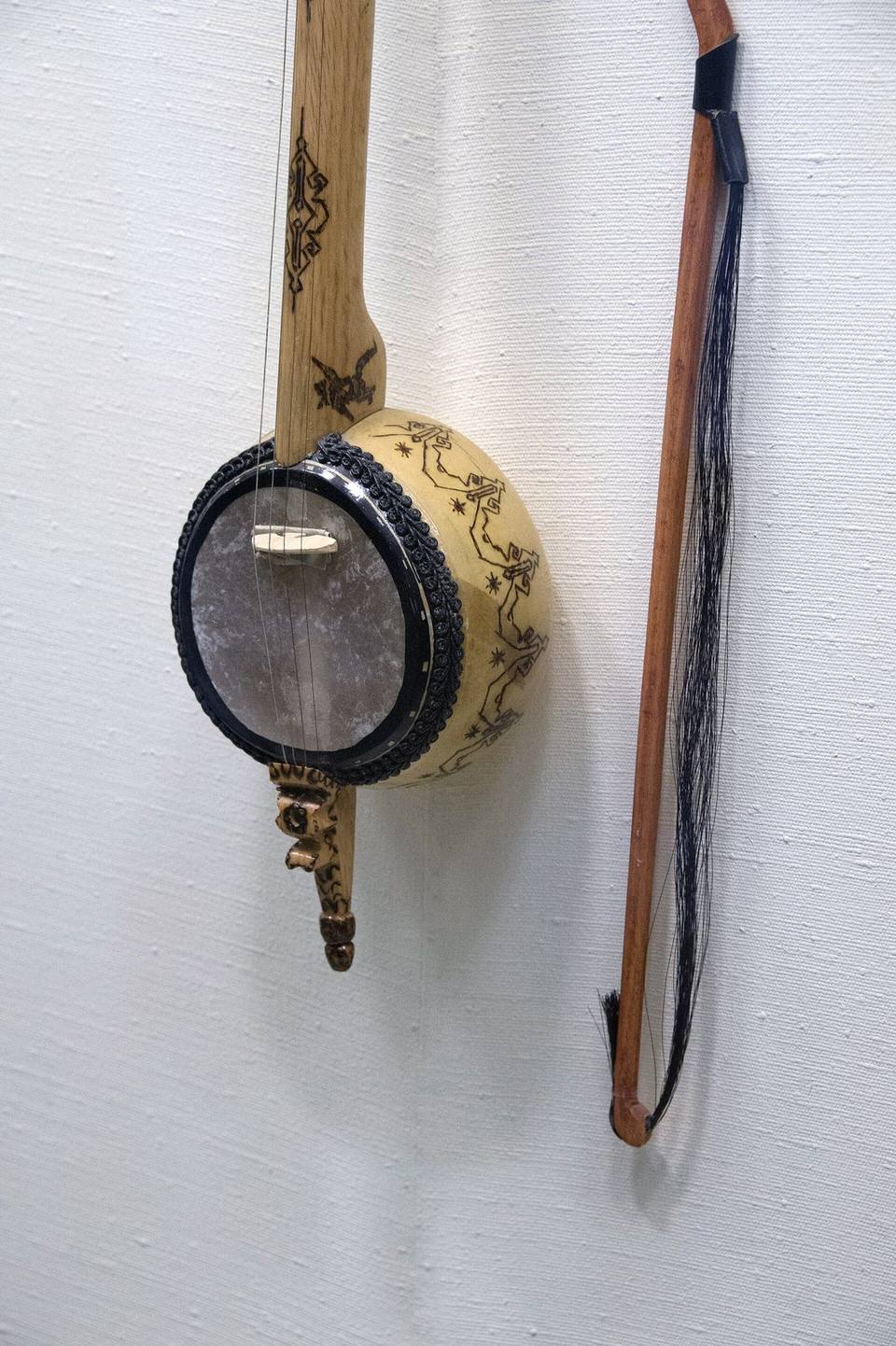
The oldest sound of the region is most probably the ıklığ. Recorded in the national inventory on the basis of a 2023 identification form, this instrument is defined by the provincial directorate as an archaic bowed instrument regarded as the ancestor of many bowed instruments and especially of the gourd kemane. It consists of a neck, a body, a wing, a bowl, a bridge and a foot. At the end of the long neck sit the peg box and as many wooden tuning pegs as there are strings. Its strings can be made of horsehair or animal gut.
The ıklığ is played with a bow known locally as the "sürgeç" or "çubuk". Players usually perform boğaz havası, gurbet havası and teke zortlatması on it, and zeybeks and kırık havalar can also be played on the ıklığ. The study in Ekev Akademi Dergisi notes that the name of the instrument has been traced to words meaning "arrow" and "bow". The same study also records that a personal archive holds an ıklık from Serik that is about a hundred years old.
The gourd kemane, a body made of a shell
Today the most widespread descendant of the ıklığ is the gourd kemane, known as kabak kemane. The provincial directorate defines it as an instrument made of four main parts, the body, the neck, the peg box and the foot, together with a bow, its body made from a bottle gourd. Also simply called the kemane, it holds an important place in Antalya folk music and entered the national inventory with a 2024 identification form.
According to the academic study, a well-dried bottle gourd is chosen for making a kemane. In the measurements cited, the body of the gourd is 14 to 16 centimetres across, the opening over which the skin is stretched is 9 to 11 centimetres, and the fingerboard is about 30 centimetres long. The bow is strung with horsehair, and fishing line is also used today. Because the gourd is fragile, coconut shell and carved wood have also been tried for the body.
The way the instrument is held has changed over time as well. In the past it was played sitting on the ground, resting against the left ankle and held at a slant. Today it is played sitting on a chair, resting on the left knee and held upright. The researchers state that the gourd kemane spread to other regions after TRT began using it as a solo instrument in its recordings of Teke folk songs in the 1960s. In Antalya it has been recorded as most widely played in Elmalı, Finike, Demre and Korkuteli.
The sipsi, a small voice made of reed
Perhaps the best known instrument of the Teke region is the sipsi. The provincial directorate defines it as a very small wind instrument made of reed, in one or two pieces. According to the academic study it is about 20 centimetres long and usually has six holes in total on the front and back. Most sources give its range as one octave, while some write that it can reach an octave and a half.
The most common material for the sipsi is the water reed, locally also called "demir kargı". Examples made from the wing bone of an eagle, from pine shoots and from willow twigs are also known. The mouthpiece can be damaged or clogged if it is pressed too hard with the teeth. A clogged mouthpiece is said to have traditionally been dried with a pigeon feather.
In playing the sipsi, a technique called "nefes çevirme", circular breathing, is used to keep the sound unbroken. According to the study, the zurna is preferred for open-air celebrations in the region, while the sipsi is preferred indoors. The best known centres of the sipsi in Antalya are Korkuteli and Elmalı. In villages of Korkuteli such as Yazır and Esenyurt, the making of the sipsi, the whistle and the kaval continues, if only on a small scale.
The kaval, the cura and the three-stringed bağlama
The kaval, in the words of the provincial directorate, is a wind instrument known as the shepherd's instrument. It is divided into two groups, with and without a fipple, and is usually made of plum wood. The academic study states that the kaval is made in lengths ranging from 40 to 80 centimetres and has eight finger holes. The shepherd's kaval accompanies many of the region's genres, from teke zortlatması to gurbet havası.
Among string instruments, the bağlama is the most common folk instrument in the region. The cura, the smallest member of the family, is played by striking the strings with a plectrum or with the fingers. The three-stringed bağlama also takes its name from its number of strings and is the smallest of the family in size. The provincial directorate describes it as an instrument played with affection in the western parts of Antalya and as essentially specific to the Teke region.
The delbek, spoons, drum and zurna
In the region the weight of the rhythm is carried by the delbek. According to the national inventory entry "Teke Region Traditional Music and Delbek Performance", based on a 2024 identification form, the delbek is a percussion instrument also called a def or tef, and it is especially widespread in the east of the province. It is made from materials easily found in the region, such as various woods, sheep and goat skin and pieces of tin. The same entry stresses that this music is learned through the master and apprentice relationship as well as by watching and listening within the family.
The spoon is really a kitchen utensil, yet in folk music it is also played as a rhythm instrument. According to the provincial directorate, these spoons are usually made of boxwood. The drum and the zurna, with their loud voices, are suited to the open air. At weddings, festivals and oil wrestling events it is this pair that gives the square its sound.
Throat playing and the gurbet havası
The most unusual technique of Teke music does not even need an instrument. The provincial directorate defines "boğaz çalma", throat playing, as a special technique of singing folk songs seen especially among the Teke Yörüks. Boğaz havaları are formed by the sounds produced by pressing the thumb or index finger against the throat. The technique has served to communicate while herding animals in the mountains, as well as for exchanges of verse, entertainment and competition.
The long melodies of the region are known as gurbet havası, songs of being far from home. The rhythmic kırık havalar consist of zeybeks, teke zortlatması and plain tunes. To these an unexpected melody is added. According to the provincial directorate, the "Algerian Tunes", a memory of the Turkish rule in Algeria that lasted from 1516 to 1830, are also much loved in the Antalya region and are without fail played and danced at every wedding.
From the zeybek to the teke zortlatması
The best way to understand the instruments is to look at the dances they accompany. According to the provincial directorate, the zeybek and the teke zortlatması are widespread in the western districts of Antalya. In eastern districts such as Manavgat, İbradı, Akseki, Alanya and Gazipaşa, the influence of Konya and Silifke dances can be seen and spoon tunes come to the fore. In central Alanya, zeybeks specific to Alanya are danced, such as Eygaziler, Hasbahçe Zeybeği and Oba Zeybeği.
The Teke zeybek is played in 9/8 time and is the fastest type of zeybek. The teke zortlatması is danced in 9/16 time and is thought to have been created by Yörük shepherds inspired by the movements of billy goats and goats. Among the best known zortlatma songs of the region are Cemilem, Yayla Yolları and Antalya'nın Mor Üzümü. Dances accompanied by the frame drum and usually performed by women are called dımıdan, and in İbradı and Akseki they are known as "sallama".
Where to hear it today
The most natural places to hear this music alive are the region's weddings, henna nights and highland festivals. The academic study states that the instruments are played at henna nights, when the bride is fetched, at weddings, at send-offs for military service, and at festivals and celebrations. It has also been recorded that at Korkuteli weddings women keep the rhythm with basins, copper jugs, frame drums and darbukas and play the bağlama, while men play the drum, the zurna and the bağlama.
For those who want to see the instruments up close, there is also a museum stop. The same study finds that eight types of instruments belonging to the region are displayed at the Antalya Ethnography Museum, namely the kaval, the zurna, the whistle, the sipsi, the gourd kemane, the kemençe, the bağlama and the drum. The instruments on display date from the 19th and 20th centuries. Check the current visiting status of the museum on the Ministry's museum website before you go.
Listening to the folk songs in advance is also good preparation for the journey. The provincial directorate's list of Antalya folk songs includes pieces such as Kalkan ile Kapıtaş'ın Arası, Çay Benim Çeşme Benim, Testi Doldurdum Çaydan and Dinar Yolu. Hearing one of these songs and then catching the thin voice of a sipsi on a highland road explains what Teke means better than any book.
Sources
- Antalya Provincial Directorate of Culture and Tourism, Antalya Yöresi Halk Çalgıları, https://antalya.ktb.gov.tr/TR-341685/antalya-yoresi-halk-calgilari.html
- Antalya Provincial Directorate of Culture and Tourism, Antalya İli Halk Oyunları, https://antalya.ktb.gov.tr/TR-176961/antalya-ili-halk-oyunlari.html
- Antalya Provincial Directorate of Culture and Tourism, Iklığ Yapımı ve İcrası, https://antalya.ktb.gov.tr/TR-366107/iklig-yapimi-ve-icrasi.html
- Antalya Provincial Directorate of Culture and Tourism, Kabak Kemane Yapımı ve İcrası, https://antalya.ktb.gov.tr/TR-384544/kabak-kemane-yapimi-ve-icrasi.html
- Antalya Provincial Directorate of Culture and Tourism, Teke Yöresi Geleneksel Müzik ve Delbek İcrası, https://antalya.ktb.gov.tr/TR-384555/teke-yoresi-geleneksel-muzik-ve-delbek-icrasi.html
- Antalya Provincial Directorate of Culture and Tourism, Üç Telli Bağlama Yapımı ve İcrası, https://antalya.ktb.gov.tr/TR-447300/uc-telli-baglama-yapimi-ve-icrasi.html
- Antalya Provincial Directorate of Culture and Tourism, Boğaz Çalma Geleneği, https://antalya.ktb.gov.tr/TR-296663/bogaz-calma-gelenegi.html
- Antalya Provincial Directorate of Culture and Tourism, Cezayir Havaları, https://antalya.ktb.gov.tr/TR-476410/cezayir-havalari.html
- Antalya Provincial Directorate of Culture and Tourism, Antalya Türküleri, https://antalya.ktb.gov.tr/TR-68822/antalya-turkuleri.html
- Hazan Kurtaslan and Deniz Berk Aldut, Antalya Etnografya Müzesinde Sergilenen Çalgıların Özellikleri ve Yöredeki Kullanılma Durumları, Ekev Akademi Dergisi 97, 2024, https://dergipark.org.tr/tr/download/article-file/3630948
Comments
Be the first to comment