

The Registered Flavours of Rize, from Muhlama to Enişte Lokumu
Narrow valleys, a generous table To understand the cuisine of Rize, it helps to look at the landscape first.
 Radar TürkiyeNovember 24, 2026
Sign in to like and rate
Narrow valleys, a generous table
To understand the cuisine of Rize, it helps to look at the landscape first. The folk cuisine page of the Rize Provincial Directorate of Culture and Tourism explains that, because farmland is scarce and the climate is demanding, only a limited range of vegetables can be grown here: maize, black cabbage, beans and squash are the cornerstones of this table. Apples, mandarins, pears and persimmons grow in gardens, but most of the time they only meet the needs of the household itself. Alongside vegetables, two other great sources shape the cuisine; on the coast the produce of the sea, above all anchovies, and in the high pastures the milk, cheese and butter of livestock farming.
The same page records that tea farming, which spread after the 1940s, also changed the kitchen. As villages became connected to towns and towns to the big cities, what was produced in one place began to be eaten in others, and the cuisine of a closed society opened up. The vineyards and molasses cauldrons that were common before tea were gradually replaced by tea gardens. Traces of this change can still be read on the table today; desserts made from fragrant black grapes and doughs glazed with grape molasses carry the memory of the small plots where the vines never disappeared.
The dishes of Rize registered with a geographical indication make most sense when read together with the everyday table that surrounds them. The Provincial Directorate's list includes eleven registered products, ranging from tea to honey and from cloth to bread rings. Eight of them are dishes, breads and sweets; each tells of a bond built through the local climate, wedding customs or a tradition of craftsmanship.
What a geographical indication tells you
A geographical indication is the name of a product that stands apart from similar products and owes this difference to the place it comes from. The Provincial Directorate's information page distinguishes between two types. In a designation of origin, all the qualities of the product come from the natural and human factors of that geography, and the entire production takes place within its boundaries. In an indication of source, at least one of the stages of production, processing or preparation takes place in the defined area; sometimes the product's bond with the region is simply its reputation.
All of the registered dishes of Rize that you will meet at the table are indications of source. This tells you something; the value of muhlama, the simit or the enişte lokumu comes less from the chemistry of a particular soil than from the knowledge of the hands that have made the product the same way for generations. Registration protects not a single producer but everyone who follows the conditions in the certificate, and it prevents the same name from being used on products that do not meet those conditions. In other words, a reader looking for a registered name is really looking for a described method.
Muhlama in a copper pan
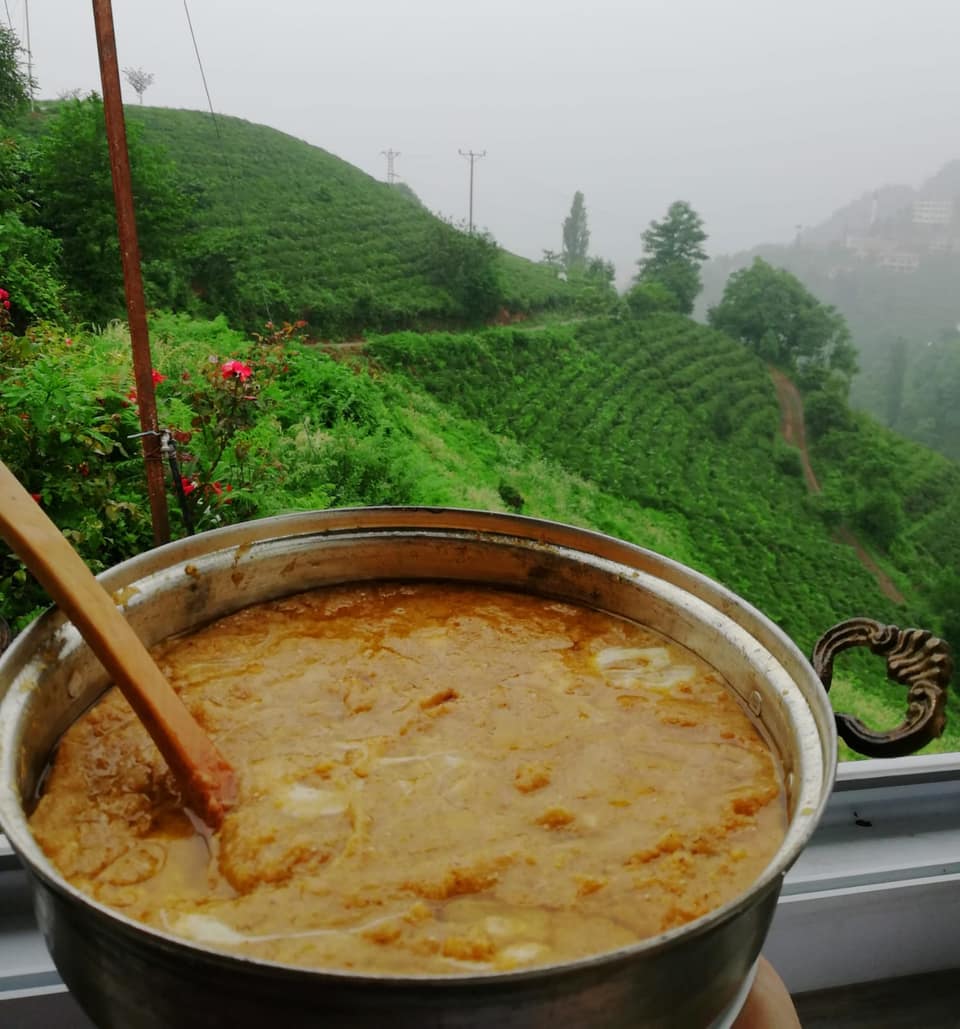
Rize Muhlaması was registered in 2021, and its certificate counts it among the wedding dishes of the region. Its ingredients are simple; kolot cheese, also called koleti cheese locally, butter, maize flour, salt and water. The real difference lies in the vessel. Muhlama is cooked in a food-safe copper pan with a wooden spoon and served hot; for this reason it is not packaged for sale.
The recipe proceeds step by step. Butter, maize flour and salt are roasted in the pan over the fire until they reach the desired golden-brown colour. Then boiling water is added from the edges towards the middle, and the mixture is stirred until it reaches the consistency of a pudding. The finely shredded cheese is then laid on top without stirring, pressed down gently with the spoon, the heat is turned up for a short moment and the pan is taken off the stove. The folk cuisine page adds that this dish, made especially with cheese produced in Hemşin, is called kuymak in some areas. The best way to eat muhlama is with maize bread after a day in the high pastures, in the first minutes while the cheese still stretches in strings.
Molasses simit and baston bread
Rize Simidi is a bread ring coated with grape molasses instead of sesame, briefly boiled first and then baked. According to its registration, its history goes back to before the 1930s; a local newspaper dated 5 August 1939 carried a decision of the municipal council on the weight and price of the simit. The molasses helps the simit bake evenly on every side. The dough is rested on boards made of pine or chestnut wood, called pasa.
Rize is a very rainy and humid province, and humidity changes how dough rises and how long it takes to bake. According to the certificate, the simit masters of Rize became famous for keeping the quality steady under these conditions. Selling simits threaded in groups of 25 or 50 on strings of different colours is also an old tradition; over time the colour of the string came to be recognised as the bakery's own mark.
Another product of the same humid climate is Rize Baston Ekmek. This bread, shaped as a thin, long rectangular roll, is baked in joined groups of three or four. Being shaped by the skilled hands of a master and placed in the oven with special paddles called pasa are the distinctive features listed in its registration. Tearing a piece of baston bread to go with muhlama or cheese at breakfast is a simple way to start the day in the city.
Kavurma in the cauldron, beans in the pot
According to its certificate, Rize Kavurması is a meat product made since the early 1900s. Beef cut into cubes is cooked for a long time in cauldrons in which beef fat has been melted, with nothing added but salt, and it is then stored in tins or roll packaging. The age and breed of the animals to be used are defined in the registration, and the animals are brought to Rize alive and slaughtered here. Cooking slowly in its own fat without any additives keeps the meat tender and preserves its fat. The fact that kavurma also reaches the table as one of the varieties of Derepazarı Pidesi shows how these products are tied to each other.
Çayeli Kuru Fasulye Yemeği, the bean dish of Çayeli, has been known across many parts of the country since the 1980s for its preparation and presentation unique to the district. The registration describes the beans in full detail; the white, round, large-grained şeker variety, in the large size class, with grains that remain on an 8 millimetre sieve. Veal or young bull meat goes into the dish. Its difference from an ordinary bean stew should be sought in its taste; the certificate also stresses that the difference comes from the way it is made.
Derepazarı Pidesi, served uncut
Derepazarı Pidesi is a baked flatbread that has been made in the district for more than fifty years. Its certificate lists it in six forms; with cheese, with open minced meat, with closed minced meat, mixed, with kavurma, and plain, that is, the dry pide. The use of pure butter and natural spring water is given as the source of its flavour. The most striking rule, however, is the way it is served; so that its taste does not change, the pide comes to the table uncut.
Enişte lokumu in the wedding bundle
Rize Enişte Lokumu is a biscuit that tells as much about the region's marriage customs as about its cuisine. Registered in 2021, it is shaped as a roll about 15 centimetres long and 2 centimetres thick. It is made with butter, wheat flour, granulated sugar, water, baking powder, egg and lemon. According to the certificate, its history goes back to the 1800s. It is offered to guests at weddings, placed in the groom's bundle, and sent again in a bundle to the groom's house each time the bride visits her father's home.
Before going into the oven, the two ends and the middle of each piece are scored with a knife at intervals of about one centimetre; the certificate writes that these marks represent the union of bride and groom. Once baked, the top is golden brown and the bottom is darker. The folk cuisine page explains that this sweet, which mothers-in-law made for their sons-in-law, is also called kaynana lokumu in some places, and that its real meaning is to keep family bonds strong and to show generosity to the other side.
Pepeçura, the dessert of the grape
Rize Pepeçurası is a pudding-like dessert made with the fragrant Isabella grape variety, and it was registered in 2021. The grapes are crushed and boiled with a little water and strained twice; maize starch, wheat flour, fine maize flour, sugar and water are added to the grape juice, and it is cooked until it thickens. Poured into bowls, the dessert is served once it has cooled. Because the grapes are harvested at the end of September, the berries and the boiled grape juice are frozen and stored so that production can continue all year round. Pepeçura is the most delicious surviving witness of the vineyard culture that existed before tea.
Black cabbage, anchovies and maize bread
The everyday table outside the registration list is at least as rich. The folk cuisine page says that black cabbage is the main ingredient of many dishes in the region. In cabbage soup, finely chopped black cabbage, cracked maize and pumpkin are added to boiled dried beans, and the soup is finally thickened with a paste of maize flour. In vurma lahana, the boiled cabbage is mashed to a pudding-like consistency with a flat wooden tool called a kutali. Black cabbage rolls are prepared with a filling either with meat or with olive oil.
Anchovy is the star of the coastal kitchen. In hamsikoli, cleaned anchovies, chard, spring onion and mint are mixed into maize flour, kneaded with hot water and baked in a tray. In anchovy pilaf, a spiced rice is spread in a tray and then covered completely with anchovies. Hamsi çığırtası is a thinner dough of the same ingredients fried in a pan. According to the folk cuisine page, the flavour of maize bread, also called lazut bread locally, is defined by baking it over a wood fire in a cooking vessel called a pileki. Çumur, in which hot maize bread is mixed with butter and minci curd cheese, is the simplest and most filling form of this bread.
The tea gardens have also given the kitchen a gift. Turşu tavalı, made by sautéing pickled green beans with onion and garlic, is, as the page describes, a practical dish that women eat after tea picking with maize bread, cucumber and ayran. On the sweet side, Laz böreği, where pastry layers filled with milk pudding meet syrup, kocakarı gerdanı, where a hazelnut-filled dough is rolled and sliced, and squash cooked in grape molasses stand out.
How to sit down at this table
It is better to discover the cuisine of Rize over a whole day than in a single meal. A molasses simit or baston bread with muhlama in the morning, Çayeli-style beans or an uncut Derepazarı pide at noon, and an evening table built around black cabbage soup and anchovies show three different faces of the region. For dessert, pepeçura or Laz böreği are good choices, and enişte lokumu and kavurma make good provisions for the road.
The season decides what is on this table. The grapes for pepeçura are picked at the end of September; the cheese and butter of the highland herds, meanwhile, are produced during the pasture season, which according to the Provincial Directorate's highlands page lasts from the beginning of June to the first week of September. When buying a registered product, checking that the name matches the description in the registration certificate protects both the local producer and you. Since opening hours and prices change, it is wise to check up-to-date information before your visit on the pages of the Provincial Directorate of Culture and Tourism and other local sources.
Sources
- Rize Provincial Directorate of Culture and Tourism, Halk Mutfağı, https://rize.ktb.gov.tr/TR-191577/halk-mutfagi.html
- Rize Provincial Directorate of Culture and Tourism, Rize Muhlaması, https://rize.ktb.gov.tr/TR-256617/rize-muhlamasi.html
- Rize Provincial Directorate of Culture and Tourism, Rize Simidi, https://rize.ktb.gov.tr/TR-256614/rize-simidi.html
- Rize Provincial Directorate of Culture and Tourism, Rize Baston Ekmek, https://rize.ktb.gov.tr/TR-256621/rize-baston-ekmek.html
- Rize Provincial Directorate of Culture and Tourism, Rize Kavurması, https://rize.ktb.gov.tr/TR-256619/rize-kavurmasi.html
- Rize Provincial Directorate of Culture and Tourism, Rize Pepeçurası, https://rize.ktb.gov.tr/TR-256620/rize-pepecurasi.html
- Rize Provincial Directorate of Culture and Tourism, Çayeli Kuru Fasulye Yemeği, https://rize.ktb.gov.tr/TR-256622/cayeli-kuru-fasulye-yemegi.html
- Rize Provincial Directorate of Culture and Tourism, Derepazarı Pidesi, https://rize.ktb.gov.tr/TR-256623/derepazari-pidesi.html
- Rize Provincial Directorate of Culture and Tourism, Rize Enişte Lokumu, https://rize.ktb.gov.tr/TR-281396/rize-eniste-lokumu.html
- Rize Provincial Directorate of Culture and Tourism, Yaylalar, https://rize.ktb.gov.tr/TR-112782/yaylalar.html
- Rize Provincial Directorate of Culture and Tourism, Coğrafi İşaret ve Geleneksel Ürün Adı Korumasına İlişkin Bilgi, https://rize.ktb.gov.tr/TR-256611/cografi-isaret-ve-geleneksel-urun-adi-korumasina-iliskin-bilgi.html
Comments
Be the first to comment