

The Kızılırmak Delta, a Wetland of Birds and Buffaloes on the Bafra Plain
Heading west from Samsun towards Bafra, the road flattens and the horizon opens up. Here the Kızılırmak releases into the Black Sea the soil it has carried from the heart of Anatolia.
 Radar TürkiyeNovember 18, 2026
Sign in to like and rate
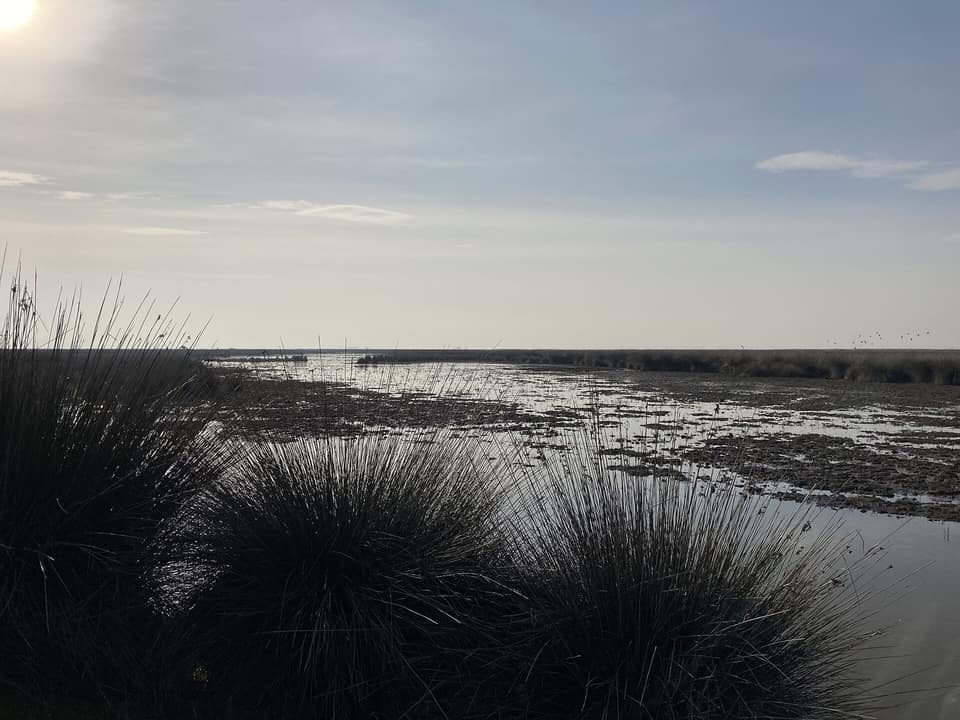
Heading west from Samsun towards Bafra, the road flattens and the horizon opens up. Here the Kızılırmak releases into the Black Sea the soil it has carried from the heart of Anatolia. Thousands of years of this deposition created the Bafra Plain and the lakes, reed beds, dunes and flooded forests along the coast. Known today as the Kızılırmak Delta Bird Paradise, the area is one of the places in Samsun where nature can be observed most closely. Whether or not you carry binoculars, you notice the same thing here. The longer you stay quiet, the busier your surroundings become.
A Plain Woven by a River
The Samsun Governorate's introduction to the area explains that the Kızılırmak rises on Kızıldağ, at an altitude of about 3,000 metres in the İmranlı district of Sivas. The river first flows west, and after passing Kayseri and Nevşehir it turns north around Kırşehir. It completes its journey of 1,355 kilometres by meeting the Black Sea in the Bafra district. The clay, sand, gravel and soil it carries along the way formed today's delta plain at its mouth. The Governorate's text describes the delta as a living space woven by a river from the material it carried over thousands of years.
This process now has a limit. According to the same source, the construction of the Altınkaya (1987) and Derbent (1991) dams on the Kızılırmak cut off the flow of alluvium the river carried to the sea, and the growth of the delta stopped. The dunes and lakes you see on the coast are therefore part of a landscape to which no new material is being added, and which needs protection all the more.
The delta is not only Bafra's; it is shared by three districts. The boundaries of the Ramsar site extend across the Ondokuzmayıs, Bafra and Alaçam districts, and its area is given as 21,700 hectares. Its elevation is around 5 metres above sea level. The Samsun guide published by the regional development agency also notes that the delta stretches along more than 60 kilometres of the Black Sea coast and is dotted with fish lakes, islets, grasslands, mud flats and farmland.
Lakes, Reed Beds and Dunes
Walking through the delta, the scenery changes every few hundred metres. The Governorate source counts ten lakes on the eastern side of the delta and two on the western side. In the east lie the Balık, Uzun, Gıcı, Tatlı, Alıntılı, Paralı, Cernek, Liman, Tuzlu and Sülüklü lakes, and in the west the Karaboğaz and Mülk lakes. These lakes are not all alike. Balık, Uzun, Cernek, Liman, Karaboğaz and Mülk are classified as brackish lakes, while Tatlı and Gıcı are freshwater lakes. The guide adds an interesting detail. Liman Lake, very close to the sea, meets seawater when waves spill over in windy weather, which is why some saltwater fish can live in the lake.
The lakes are surrounded by reed and bulrush communities. The wet meadows, which are under water at certain times of the year, are among the most important sources of food for the animals grazing in the delta. The dominant tree in the flooded forests is the narrow-leaved ash. Together with oak and alder, these forests are counted among the threatened habitat types. Closer to the shore the dunes begin. The dunes on the western side are higher and wider than those in the east. On the eastern side, the dunes are widest around Cernek Lake. Between Cernek Lake and the shore stands a grove dominated by bay laurel, with trees reaching 6 to 8 metres.
The plant life is rich as well. According to the Governorate's introduction, 355 plant species have been recorded in the delta, and the area has been designated one of the country's 122 important plant areas. The sea daffodil growing on the dunes is among the endangered species, because its bulbs are collected and the dunes are under pressure. Avoiding stepping on these plants while walking on the dunes is the simplest yet most effective way to protect the delta.
On the Birds' Route
The delta's real fame comes from its birds. The Ministry of Culture and Tourism's Culture Portal states that the delta lies on the route of more than 7 million migratory birds each year and that 140 bird species breed in the area. According to the same page, 15 of the 24 endangered bird species are seen here. The Governorate source writes that 354 bird species have been recorded in the area so far, corresponding to about 73 percent of Turkey's birds. It also gives a more recent figure for breeding species, mentioning 157. Since the figures come from counts made in different years, it is best to read them together.
In the winter months, roughly 100,000 to 150,000 waterbirds shelter in the delta. Breeding species include the bittern, purple heron, black stork, spoonbill, common crane, purple swamphen, black-winged stilt and collared pratincole. During migration, flocks of pygmy cormorant, little egret, glossy ibis, white-headed duck and little gull can be observed. Governorate data record the little gull in numbers reaching 41,000 during one migration period. This diversity is the result of the delta holding sea, river, lake, reed bed, forest and dune side by side.
Other creatures, less conspicuous than the birds, live here too. Twenty-nine fish species have been recorded in the delta, and sturgeons are of particular importance among them. Nine amphibian and twelve reptile species are recorded. The spur-thighed tortoise and the European pond turtle are two of them. The number of mammal species is given as 33, and the Eurasian otter is among the species living in the delta.
Buffaloes and Cranes
The Governorate's introduction names the water buffalo and the crane as the symbols of the area. This choice is no coincidence. The wet meadows and reed edges are where buffaloes graze. While exploring the delta, you may well come across herds of buffalo in the meadows or at the water's edge. The crane is counted among the breeding species of the delta and is also the area's emblem, easily recognised by its silhouette in the sky during the migration season.
When you come across buffaloes, keep your distance. Even if the animals seem used to people, sudden movements in an area surrounded by pasture and water can startle them. For photographs, a long lens is the most respectful solution for both the animals and the birds.
Protection Status and Ramsar
Today the Kızılırmak Delta holds several protection statuses at once. The area includes first, second and third degree natural protected areas, a Wildlife Development Area covering Cernek Lake and its surroundings, and the status of an international Ramsar site. The 11th Regional Directorate of the Ministry of Agriculture and Forestry also lists the Kızılırmak Delta in Bafra among the wildlife development areas in Samsun.
The Ramsar Convention is an international agreement for the protection of wetlands, made ready for signature in 1971 in the Iranian city of Ramsar. According to the Governorate source, Turkey became a party to the convention in 1994, and the Kızılırmak Delta was listed as a Ramsar site in 1998. The Culture Portal also notes that the delta was added to the UNESCO World Heritage Tentative List in 2016. Since 2015, the protection, control and management of the area have been transferred by a cooperation protocol to the Samsun Kızılırmak Delta Protection and Development Union (SAMKUŞ).
What You Find on Site
The Governorate's introduction lists the facilities in the area as a visitor centre, a management centre, birdwatching towers, walking paths and birdwatching points. The visitor centre is the natural starting point of a visit. The regional development agency's guide explains that the centre has an image monitoring section where footage from cameras placed at different points in the delta can be watched, an exhibition hall and a sales area promoting local products. Looking at the delta map here first, and learning which lake lies on which side, makes the following hours much more productive.
The birdwatching towers offer a wide view over the reed beds. Do not rush at the towers; wait at least half an hour. As the birds get used to human movement, they start to emerge one by one from among the reeds. On the walking paths, do not leave the marked trails. Approaching the reed edges during the breeding season disturbs the birds on their nests.
When and How to Go
According to the Culture Portal, the delta can be reached by road from the Bafra, Alaçam and Ondokuzmayıs districts. The address given on the portal is in the Doğanca neighbourhood of Bafra. Since the area is large, it is practical to go by your own vehicle or with an organised trip. It is also possible to reach Bafra by public transport and continue from there, but the points inside the delta are far apart.
The choice of season depends on what you want to see. Waterbirds are most numerous in winter. The spring and autumn migration periods are the months when different species stop at the delta for short spells. Late spring and early summer are suitable for seeing breeding species and their young. On summer middays the plain can become very hot and the birds grow quiet. Early mornings and late afternoons are the most rewarding times for both light and activity. Bafra's weather is shaped by its winds. According to the regional development agency's guide, locals call the wind blowing from the south and southwest Dağyeli, and this dry, cool wind disperses the humidity. In summer, the poyraz blowing from the north eases the heat. The wind is felt in the open terrain, so even in summer a thin extra layer is useful.
It is a good idea to bring binoculars, a windbreaker, water and mosquito repellent. The ground in the wetland is muddy in places, so prefer waterproof shoes. As visiting conditions, open sections and guided tour options may change, check the latest information from the Samsun Provincial Directorate of Culture and Tourism or the official announcements of the site management before setting out.
Sources
- Kültür Portalı, Kızılırmak Deltası Kuş Cenneti, https://www.kulturportali.gov.tr/turkiye/samsun/gezilecekyer/kizilirmak-deltasi-kus-cenneti
- T.C. Samsun Valiliği, Kızılırmak Deltası, Kuş Cenneti ve Mandacılık, https://www.samsun.gov.tr/kizilirmak-deltasi-kus-cenneti-ve-mandacilik1
- Tarım ve Orman Bakanlığı 11. Bölge Müdürlüğü, Yaban Hayatı Geliştirme Sahaları, https://bolge11.tarimorman.gov.tr/Menu/21/Yaban-Hayati-Gelistirme-Sahalari
- Orta Karadeniz Kalkınma Ajansı, Samsun Travel Guide, https://oka.gov.tr/assets/upload/dosyalar/samsun-travel-guide.pdf
- Vikipedi, Kızılırmak Deltası, https://tr.wikipedia.org/wiki/K%C4%B1z%C4%B1l%C4%B1rmak_Deltas%C4%B1
Comments
Be the first to comment