

The Cuisine of Gaziantep, a UNESCO City of Gastronomy
For most travellers arriving in Gaziantep, the first question is what to eat and where. In this city that question is more than curiosity; it is a door into the identity of the place.

Sign in to like and rate
For most travellers arriving in Gaziantep, the first question is what to eat and where. In this city that question is more than curiosity; it is a door into the identity of the place. In 2015 UNESCO admitted Gaziantep to its Creative Cities Network in the field of gastronomy. This article explains the cuisine behind that title, the registered dishes, the tradition of drying and storing food, and where you can see this culture in the city. There are no restaurant tips here; instead there is a map that lets you sit down at the table knowing what to look for.
A city of gastronomy in UNESCO's eyes
UNESCO's page on Gaziantep says that the city's long gastronomic history has been at the core of its cultural identity since the Iron Age. According to the same page, gastronomy is still the main driving force of the local economy today. Sixty percent of the active population is employed in the sector, and forty-nine percent of enterprises are dedicated to food, mainly spices, cereals and dried fruits. UNESCO stresses that in Gaziantep gastronomy also means festivity, intercultural dialogue and social cohesion.
The page names the Pistachio Culture and Art Festival and the three-day Şıra Festival, which gathers almost the whole city, as the leading events. The city's location on the ancient Silk Road is presented as the source of the diversity of its local cuisines. Among the projects UNESCO describes are shared kitchens in neighbourhoods and turning pistachio shells into renewable energy. The goals presented to UNESCO also include researching the food culture of the ancient Silk Road together with other cities of gastronomy and organising an international gastronomy festival. In other words, the title registers not only flavour but also the place of food in the life of the city.
More than a hundred geographical indications
A good place to start with the documented side of Gaziantep cuisine is the Geographical Indications Portal of the Turkish Patent and Trademark Office. When the portal's database is searched for the names Antep and Gaziantep, more than a hundred registered entries are listed as of November 2026. Most of them are dishes, soups, desserts, pastries and dried products. The list is one of the rare examples of a city's cuisine being recorded in such detail.
One of the oldest entries is Antep Pistachio. It was registered as a designation of origin on the application of the Gaziantep Chamber of Commerce, with a registration date in 2000. Antep Baklava was registered as a geographical indication in 2008 on the application of the Gaziantep Chamber of Industry. The list also includes names such as Antep Katmer, Antep Lahmacun, Antep Beyran, Antep Yuvarlama, Antep Menengiç Coffee, Antep Sumac, Oğuzeli Pomegranate and Antep Cheese. A designation of origin says that a product takes its qualities directly from its geography, while a geographical indication says that its reputation is linked to the region; they are two different forms of protection.
Most of the products protected as designations of origin come from fields and orchards. Alongside Antep Pistachio, this group includes Antep Firik, Antep Dried Stuffing Pepper, Antep Dried Aubergine, Antep Menengiç Coffee, Antep Thyme Honey, Antep Urmu Mulberry Syrup and Oğuzeli Pomegranate. Most of the geographical indications, by contrast, are cooked dishes, and a large share of the applications were made by Gaziantep Metropolitan Municipality and the Gaziantep Commodity Exchange. For example, Antep Beyran and Antep Yuvarlama were registered in 2017 on the municipality's application, and Gaziantep Lahmacun was registered in the same year on the exchange's application. The distinction shows that one side of the cuisine rests on soil and climate, the other on skill and recipe.
The tables described in the registration documents
Geographical indication documents are not dry legal texts; each one describes the recipe, ingredients and distinctive features of a dish. According to the Antep Beyran document, beyran is a dish of meat and rice, and records show that the first beyran shop in the bazaar opened in 1885. Lamb from the arm and neck is cooked over a low flame together with marrow bones for at least ten to twelve hours. The meat is pulled into strands, boiled unsalted rice called kel pilav is placed in a bowl, and stock, garlic and pepper are added on top. The document specifically states that the dish must be served boiling hot and always in a copper bowl.
Antep Yuvarlama, according to its document, is the traditional dish of festive holiday mornings in Gaziantep and is also called yuvalama in the local dialect. Tiny balls the size of a pea, about five or six millimetres, are rolled from a dough of rice and lean meat. The balls are cooked with stock and chickpeas, strained yoghurt is added, and the dish arrives at the table with mint butter poured over it. The document also notes that the balls can be steamed and frozen, and kept for up to three months.
The Gaziantep Lahmacun document recalls that the name lahm-ı acinli börek appears in Evliya Çelebi's Seyahatname. According to the document, Antep lahmacun differs from other versions because it contains no onion. The topping uses lamb minced with a zırh knife, garlic, parsley and pepper, and the meat share must be between fifty-five and sixty percent. Lahmacun is baked in a stone oven and served with a roasted, peeled aubergine on the side. The document also notes that in Gaziantep lahmacun is often eaten at everyday meals, at ceremonies and on picnics.
A cuisine of drying and storing
You see Gaziantep cuisine not only at the table but also on the roofs of houses. The Culture Portal's text on the kitchen museum describes women gathering in the lanes of neighbourhoods to hollow out vegetables for stuffing as they prepare for winter. The same text lists the red and green dried vegetables decorating the roofs, the peppers ground together for homemade paste, and the pickles put up jar after jar. The fatigue of this collective work is then shaken off with lahmacun eaten together.
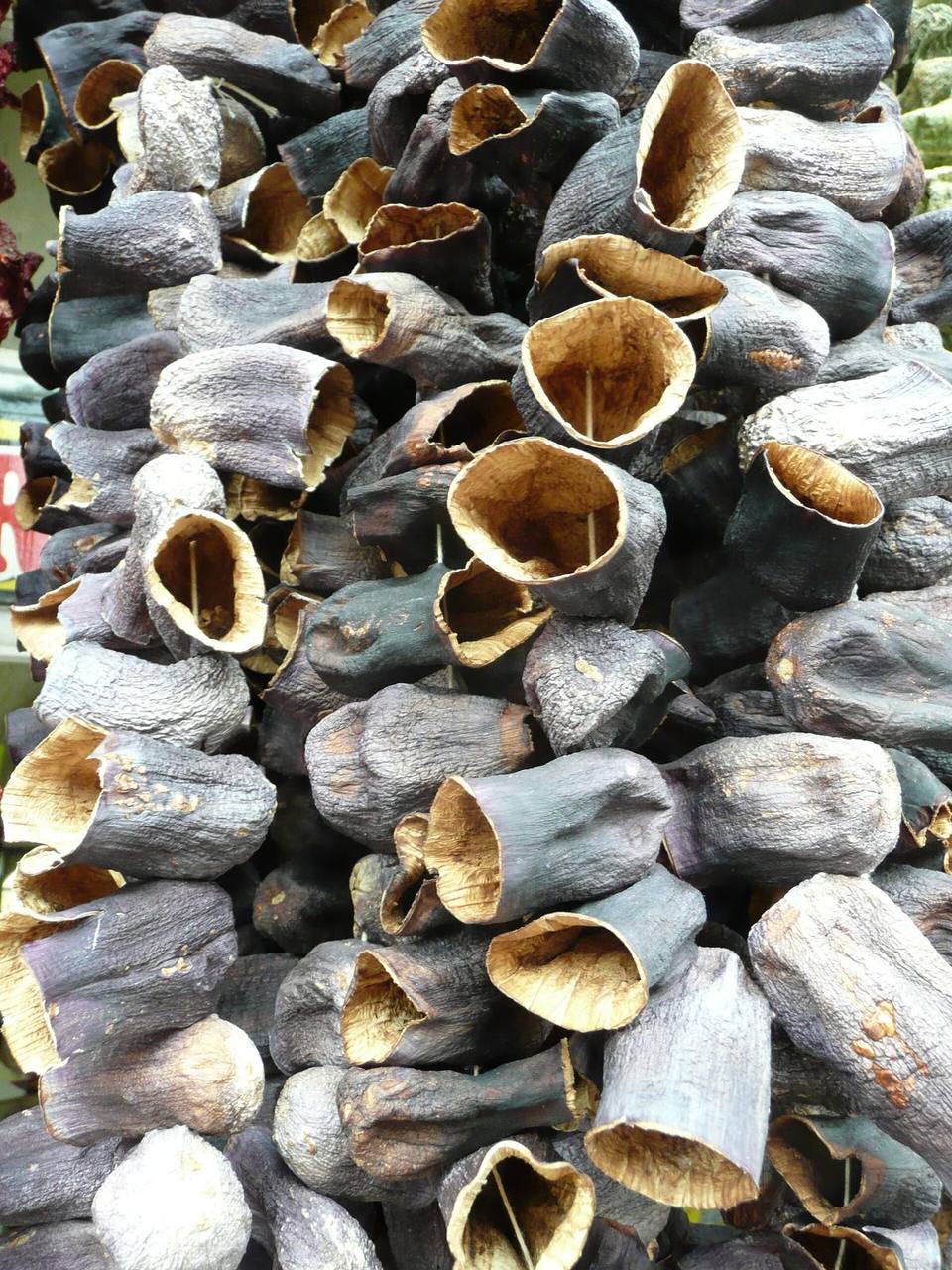
The best known product of this tradition is dried aubergine. Antep Dried Aubergine is registered as a designation of origin, and its production area is the districts of Oğuzeli, Nizip, Karkamış and Araban. The document notes that the eighteenth century Yemek Risalesi by Ali Eşref Dede mentions stuffed dried aubergine under the name balcan dolması. The aubergines are harvested between August and September, cut in two, hollowed out and threaded on strings in fifties. High, windy places are chosen for drying, because good drying needs wind and shade. According to the document, aubergines dry more slowly in these districts and become softer after cooking.
Firik is a product of the same storing wisdom. The Antep Firik document defines firik as wheat that is smoked over a fire in the field before it fully ripens, while the ear is still green. In a fire made from the wheat stalks, the awns burn away and the grains take on their own smoky aroma and taste. The grains are then winnowed in the wind to separate them from the burnt parts. Antep firik is made from durum wheat grown in Gaziantep, and firik pilaf is also among the registered dishes.
The museum of the kitchen
The best place to see this culture in one spot is the Emine Göğüş Kitchen Museum, south of Gaziantep Castle. According to the Metropolitan Municipality's page, the museum is housed in the Göğüş Mansion, built in 1904, which opened as a museum in 2008 after restoration. The municipality states that it is the first kitchen museum established in Turkey. Inside, the tools used in the Antep kitchen, ingredients, cooking methods and ways of storing provisions are explained. Forgotten local dishes are displayed through images.
The Culture Portal writes that the museum uses mannequins to recreate the making of yuvalama, winter nights spent around the tandoor and coffee culture. Before your visit, check the museum's current status and opening hours on the municipality's official page. The museum is within walking distance of the historic bazaars at the foot of the castle, so it fits naturally into a walk through the city.
A few suggestions before you sit down to eat
The rhythm of meals is also part of the cuisine in Gaziantep. According to its document, beyran is usually prepared the evening before and left to cook through the night. Yuvarlama, in the words of the Culture Portal, is a dish of festive holidays and special days. The registration list works like a menu in your hand; asking for a dish whose name you know leads you to the right table.
Walking past stalls of dried aubergine, pepper and courgette strings, sumac, pepper paste and pistachios in the markets and bazaars is the easiest way to see the raw materials of the cuisine. According to its document, August and September are the months when aubergines for drying are harvested. If you want to follow the timing of the pistachio harvest and the related festival, get current information from the announcements of the municipality and the provincial directorate of culture and tourism. When you buy a registered product, looking for the geographical indication emblem on the packaging is the official way to know it was produced according to the conditions in the document.
Gaziantep cuisine is understood not through one plate but through a way of life. Aubergines drying on a roof, wheat smoked in a field and stock boiling in a copper bowl are parts of the same story. Both UNESCO's title and the list of geographical indications are recorded versions of that story. When you arrive in the city, we suggest you take your time and look for each dish in its own season and at its own hour.
Sources
- UNESCO Creative Cities Network, Gaziantep, https://www.unesco.org/en/creative-cities/gaziantep
- Gaziantep Metropolitan Municipality, Emine Göğüş Kitchen Museum, https://gaziantep.bel.tr/tr/tarihi-ve-kulturel-eserler/muzeler/emine-gogus-mutfak-muzesi
- Culture Portal, Emine Göğüş Kitchen Museum, https://www.kulturportali.gov.tr/turkiye/gaziantep/gezilecekyer/emine-gogus-mutfak-muzesi
- TÜRKPATENT Geographical Indications Portal, Antep Pistachio, https://ci.turkpatent.gov.tr/cografi-isaretler/detay/37889
- TÜRKPATENT Geographical Indications Portal, Antep Baklava, https://ci.turkpatent.gov.tr/cografi-isaretler/detay/37952
- TÜRKPATENT, Antep Beyran registration document, https://ci.turkpatent.gov.tr/Files/GeographicalSigns/207.pdf
- TÜRKPATENT, Antep Yuvarlama registration document, https://ci.turkpatent.gov.tr/Files/GeographicalSigns/208.pdf
- TÜRKPATENT, Gaziantep Lahmacun registration document, https://ci.turkpatent.gov.tr/Files/GeographicalSigns/236.pdf
- TÜRKPATENT, Antep Dried Aubergine registration document, https://ci.turkpatent.gov.tr/Files/GeographicalSigns/376.pdf
- TÜRKPATENT, Antep Firik registration document, https://ci.turkpatent.gov.tr/Files/GeographicalSigns/244.pdf
Comments
Be the first to comment