

The Bursa Knife, a Craft Passed from Master to Apprentice
When Bursa's handicrafts are mentioned, silk and tiles come to mind first; yet the sound of the anvil has also been heard in the city's market for centuries.
 Radar Türkiye24 Kasım 2026
Sign in to like and rate
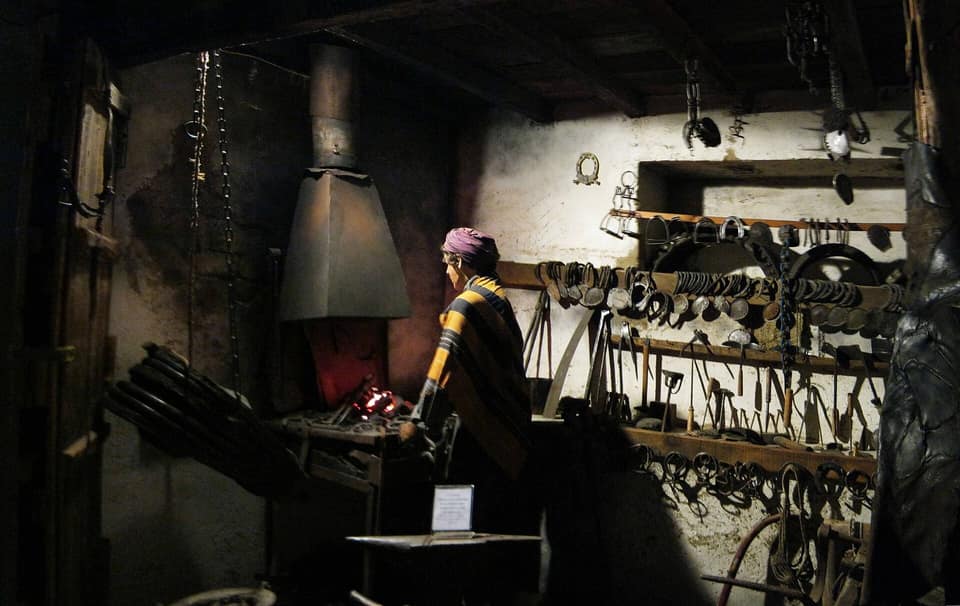
When Bursa's handicrafts are mentioned, silk and tiles come to mind first; yet the sound of the anvil has also been heard in the city's market for centuries. The Bursa knife is a craft passed down from master to apprentice to the present day and protected by a geographical indication. The Bursa Provincial Directorate of Culture and Tourism states that some 150 types of knives, made by traditional handcraft and each made for a different task, have been identified.
From hammersmiths to knife makers
Sources give different answers to the question of how far back Bursa knife making goes. The Visit Bursa page of the Bursa Metropolitan Municipality writes that, according to the records, the story of the hammersmiths who form the basis of the knife is seven hundred years old, and that tools of the first Ottoman sultans such as swords, axes and spears are remembered as the work of Bursa hammersmiths. Gültekin Erdal of Uludağ University, on the other hand, notes plainly in his 2018 article that there is no solid source for this long history.
As Erdal relates, in the Ottoman period there were many knife making centres in Anatolia, such as Bursa, Balıkesir, Yatağan, Afyon, Ankara, Kastamonu and Sürmene. In most of them traditional knife making disappeared over time; Bursa and Sürmene, however, managed to reach the present day while keeping its essence. According to the article, knife making in Bursa began with large types such as the yatağan, the pala, the sword, the dagger and the axe; over time these cutting tools grew shorter and gave way first to small daggers and then to bread, table and fruit knives. The same article also mentions that in the industrial census of 1913 there were more than a hundred knife shops in the province of Hüdavendigar and that annual production exceeded one million.
Skill that came with migration
One of the most important events that shaped today's Bursa knife was the migration after the war of 1877-1878. The Bursa Provincial Directorate of Culture and Tourism explains that the art of knife making came to Bursa with Balkan migrants in this period, and that the migrant masters and their apprentices developed the profession from that time on. Erdal also writes that the migrant masters brought innovations to Bursa knives, changing their ergonomic structure and freeing the knife from its weapon-like appearance somewhere between a sword and a dagger.
The article also contains technical details from this period. Migrant Albanian masters introduced the folding Albanian pocket knife to Bursa. Masters who encountered chestnut charcoal embers during the tempering stage improved this process, increasing the sharpness of the blade and largely preventing damage to the edge. The addition of a third V edge to high carbon steel, on top of the one or two V edges inherited from the sword tradition, is also remembered as an innovation that increased sharpness and gave the Bursa knife its identity. Visit Bursa notes that the Albanian knife has a special place in Bursa cutlery, that its handle is usually made of ram's horn, and that the horn is shaped by scraping with a knife called the kesteki.
1953 and a new beginning
Erdal's article draws attention to a second turning point for Bursa knife making. Law No. 6136, issued in 1953, banned the making and sale of grooved and fluted knives. In this period, which the knife makers call the black year, production became difficult, but the craft renewed itself. According to the article, knives now produced without grooves or flutes lost their weapon-like appearance completely; the rigid blade gave way to a more flexible and sharper one. New designs emerged, such as butcher, bread, cheese and fruit knives, and every knife maker developed a model of his own. Instead of grooves, the master's name began to be engraved on the blade, and silver and precious stones began to be worked into the handles and blades of gift knives. A master's saying quoted in the article sums up the ethics of the craft in a single sentence: the temper of the knife is the honour of the knife maker.
Material in the handle, mastery in the blade
When you look at a Bursa knife, examine the handle first. According to Erdal's typology, the materials most used in the handles of Bursa knives are horn, bone, metal, wood, plastic and fibre. For horn, the horns of deer, water buffalo, ram, billy goat and wild goat are preferred; bone handles are made from the shin bones of large animals such as cattle and camels. Zinc alloy, brass and silver stand out among metal handles, and hornbeam, walnut, rose, boxwood, ebony, mahogany, chestnut and ash among wooden ones; if a lighter knife is wanted, willow and pine are chosen. Whatever the material, there are technically three handle types: the one-piece handle carved from a single block, the scale handle in which two pieces are riveted to either side of the tang, and the moulded handle into which molten metal is poured.
According to the article, the real mastery lies in the blade. The temper, flexibility and sharpness of the blade, and its resistance to dulling, are shaped here. The blades of Bursa knives fall into four basic types: pointed, sword, chinned and serrated. The most functional and most preferred type is the pointed blade. The sword blade keeps the traditional form of the Turkish sword alive, mostly in gift and souvenir knives. In the chinned blade, the lower part where the blade meets the handle stands higher than the handle, so that the whole edge takes part in cutting. Erdal describes this blade type as specific to Bursa knives. The serrated blade appears mostly on bread knives; the pastry knife, serrated on both the spine and the edge, reaches up to 35 centimetres.
Erdal also lists the marks of craftsmanship to look for in a Bursa knife: the spine tapering slightly towards the tip, the blade sitting straight where it meets the handle, no cutting flaws at the joint, no cracks or splits in the handle, and a sharp edge. When you hold a knife, checking these points is the most practical way to recognise good workmanship.
Sheath and cover
The sheath is also an important detail in Bursa knife making. According to Erdal, the sheath is mostly made of leather, though there are also sheaths of metal or wood. Today true sheaths are sewn mostly for souvenir and gift knives, and this work is no longer done by the knife master but by other craftsmen. For kitchen knives, the sheath has given way to plastic covers used as packaging. The article also relates an interesting detail about handle colour: as plastic handles spread for reasons of hygiene, colours took on a meaning, and yellow or white handles began to be used for poultry knives, blue for fish knives and red for meat knives.
Geographical indication and brand
Visit Bursa states that the Bursa knife received its geographical indication following an application by the Bursa Metropolitan Municipality. A 2022 article by Erdal and Gücüyener examines this registration, made under the name Historical Bursa Knife, the legal responsibilities it brings and how the knife could be positioned as a world brand. The article also evaluates separately the effect of the 1953 law on Bursa knives and their production.
Tracing the craft
According to Visit Bursa, knife masters still pass on their craft from generation to generation and continue it in the area known in Bursa as the Knife Makers' Bazaar. While walking through the bazaar, watch the masters' benches from a distance, do not approach the grinding and tempering stages while work is under way, and ask for permission before taking photographs. If you want to buy a knife, tell the master what you will use it for; remember that in Bursa a separate knife is made for almost every task.
The Bursa City Museum is a good stop for seeing the history of the craft. According to Visit Bursa, the basement of the museum holds a historical artisans' street with examples from the city's commercial life. The photograph of Bursa knives and their sheaths in Erdal's article was also taken from the City Museum collection. The museum is run by the Bursa Metropolitan Municipality; check the visiting days and hours on the municipality's current page before you go.
A knife looks like an ordinary tool found in every kitchen. In Bursa, however, in the horn of the handle, the chin of the blade and the spot where the master's name is engraved, it carries a city story shaped by migrations, laws and a mastery that has lasted for generations.
Sources
- Bursa İl Kültür ve Turizm Müdürlüğü, Bursa Knives, https://bursa.ktb.gov.tr/EN-207626/bursa-knives.html
- Bursa Büyükşehir Belediyesi, Visit Bursa, Bursa Bıçağı, https://www.visitbursa.org/blog/somut-olmayan-kulturel-miras-14/bursa-bicagi-77
- Bursa Büyükşehir Belediyesi, Visit Bursa, Bursa Kent Müzesi, https://www.visitbursa.org/mekanlar/bursa-kent-muzesi-240
- Erdal, G., Bursa Bıçağının Tipolojisi, Türük Uluslararası Dil, Edebiyat ve Halkbilimi Araştırmaları Dergisi 6(12), 2018, https://dergipark.org.tr/en/download/article-file/633883
- Erdal, G. ve Gücüyener, İ., Structural Features and Registration of the World Brand Bursa Knife, Uluslararası İnsan ve Sanat Araştırmaları Dergisi 7(3), 2022, https://dergipark.org.tr/tr/pub/ijhar/article/1090139
Comments
Be the first to comment