

The Bilingual Inscriptions of Karatepe and Halet Çambel's Conservation Legacy
The quiet centuries of a border fortress Karatepe-Aslantaş lies in the Kadirli district of Osmaniye, in a forested area where the foothills of the Taurus meet the Çukurova plain.

Sign in to like and rate
The quiet centuries of a border fortress
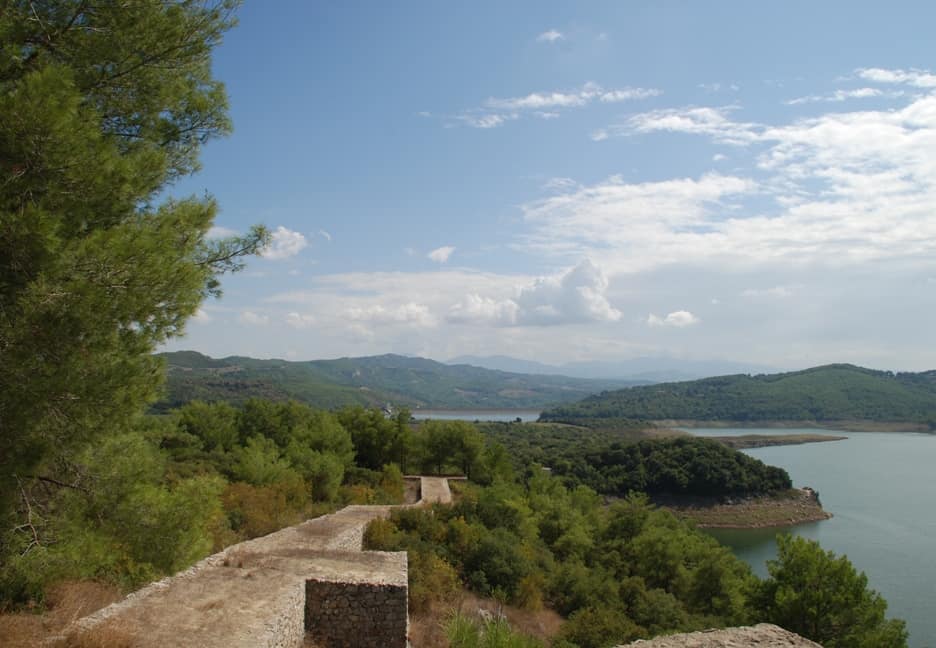
Karatepe-Aslantaş lies in the Kadirli district of Osmaniye, in a forested area where the foothills of the Taurus meet the Çukurova plain. According to the Culture Portal, the fortress was built in the 8th century BCE by Asativatas, who presented himself as a regional ruler, as a border fortress against attacks from the north. An academic article gives the same ruler's name as Azatiwata; both spellings appear in the sources, and this article uses the second. The web page of the General Directorate of Cultural Heritage and Museums describes the site as a border fortress of Adanava, one of the city-states founded in the Late Hittite period.
The same official page states that the fortress was abandoned a relatively short time after it was founded, which is why it is a single-layer archaeological site that has kept its original architectural identity well. This detail explains why the inscriptions stand today in such a legible context. Because no later settlement layers were built on top, the gates, the road axis and the spaces around it can be read as parts of the same design. Inscription and architecture were never separated; they have reached us together.
This article is not meant to be a general introduction to Karatepe. It focuses on two questions. Why are the bilingual texts on the gates considered so important, and how was the site that carries them protected? Without entering into the content of the reliefs, we treat the inscriptions as documents of language and history.
From discovery to excavation
According to the UNIMUSEUM article published on DergiPark, the site was discovered in 1946 by a team led by Prof. Helmuth Theodor Bossert, together with his students and local people. The following year, in the 1947 excavations, bilingual inscriptions written in Phoenician and Luwian were found, and Karatepe became famous worldwide. The ministry's page likewise says the remains were uncovered by excavations that began in 1947. In short, there was no long wait between discovery and excavation; the site moved quickly to the center of the scholarly agenda.
The article reports that after Bossert left the excavation, responsibility for the site passed to his assistant Halet Çambel. The ministry's page names Çambel as the excavation director and one of the pioneering archaeologists of Türkiye. Knowing this transition helps in understanding how Karatepe looks today, because she is the person who designed the site not merely as an excavated place but as a place to be protected and shown.
Why a bilingual text matters
The Culture Portal and the ministry page say the same thing. On the basalt stelae and reliefs found on both gates there are texts written both in the Phoenician alphabet and in Luwian hieroglyphs, and these are the longest bilingual texts in these languages. A bilingual text means the same content written in two different writing systems. The Phoenician alphabet could be read, whereas the decipherment of Luwian hieroglyphs had not yet been completed. When a readable text stands beside an unreadable one, comparing the signs becomes possible.
For this reason the official pages state that the inscriptions played an important role in the decipherment of Luwian hieroglyphs. The UNIMUSEUM article goes one step further and writes that the inscriptions made the decipherment of Hittite hieroglyphs possible and turned Karatepe into what it calls the Rosetta Stone of Anatolia. This is a comparison used by the article's authors, referring to the stone associated with the decipherment of Egyptian hieroglyphs. It is best read not as a firm verdict but as an expression that tries to convey the importance of the inscriptions. The language of the official sources is more measured and says only that they played an important role.
This measured language is not a shortcoming. A linguistic decipherment is not completed with a single document in a single day; it needs new finds, comparisons and years of work. The value of the Karatepe inscriptions comes from offering a long and complete bilingual text. Having so long a parallel text available to test the signs of a writing system is a rare circumstance.
Where the inscriptions stand
According to the ministry, the site consists of two large gate structures uncovered by excavation, a road axis and spaces on both sides of it. The inscribed stelae and reliefs are located at these gates. For the visitor this means something simple. The inscriptions are not seen as pieces removed from their place and placed in a display case, but within the fabric of the city gates, together with their natural setting. The Culture Portal stresses that this arrangement results from the site having been placed under protection together with the natural forest around it.
The indoor museum section within the open-air museum was opened to visitors in 2007. For current visit information, meaning opening hours and entry conditions, I suggest checking the official sites for this site, which is attached to the Adana Museum Directorate.
Halet Çambel's approach
According to the ministry's assessment, one of the things that makes Karatepe distinctive is that, through the efforts of excavation director Halet Çambel, sculpture and relief conservation was carried out, a protective roof was applied, and the site was declared a historical national park together with the natural forest around it, all at a remarkably early date in the 1950s. These three steps complement one another. Conservation serves the stone itself, the protective roof guards surfaces against weather, and the national park designation protects the landscape surrounding the site. Together they treat the remains and their setting as a whole rather than separately.
The ministry describes these early and successful practices as one of the first examples of in situ conservation and site management at archaeological sites. The UNIMUSEUM article also says that Çambel applied modern conservation and restoration methods during the museumisation process while carrying out, in cooperation with the local community, projects on education, handicrafts, environmental protection and social development. The work carried out with experts from fields such as architecture, art history and ethnography is said to have turned Karatepe into what the article calls a living cultural centre.
This outlook feels familiar to today's conservation thinking. To protect a building or a sculpture, one must think not only of the object but also of the people living around it and of the natural setting. Karatepe is cited as an early example of this approach in Türkiye. One point deserves care here: this is not a title or a ranking claim. The sources say only that it is one of the pioneering examples, and we write no more than that.
National park and open-air museum
According to the Culture Portal's national park page, Karatepe-Aslantaş National Park was declared a national park in 1958. The ministry's page likewise says the site lies within the borders of the national park declared in 1958, which bears the same name as the archaeological remains. The Culture Portal says that declaring the site an open-air museum and placing it under historical national park protection together with the natural forest around it keeps the cultural landscape of the remains alive, so that the site is protected and managed in situ with all its artistic value.
The same portal presents the place as the archaeological site opened to visitors as the first open-air museum of Türkiye. This statement belongs to the Culture Portal text and we relay it as a source statement. What matters is the idea behind it. Instead of being moved to a storeroom or a display case, the stones were protected where they were found, inside the forest where they stand.
On the way to UNESCO
The Karatepe-Aslantaş Archaeological Site was included in the UNESCO World Heritage Tentative List in 2020. The ministry presents the site as listed under criteria (ii), (iii) and (iv). A distinction should be kept clear here. A tentative list means a site may later be nominated for the World Heritage List; the site is not yet on the World Heritage List itself. The ministry's rationale is that, besides its Late Hittite fortress planning, the monumental and artistic gate entrances display the high architectural and artistic understanding of their period, and that early conservation practices succeeded.
Reading the inscriptions at Karatepe today
You do not need to be a linguist to read the inscriptions at Karatepe, but you should walk with an eye on how and where the writing stands. First follow the road axis and look at the gate entrances. On the surfaces of the basalt stelae and reliefs, noticing on which surface and in what arrangement the writing was placed is already a kind of reading. The idea of a bilingual text shows itself in the sight of two different sign systems side by side. To tell these two systems apart, a look at the official descriptions beforehand is enough.
According to the sources, because the national park lies in the Mediterranean climate zone, it can be visited all twelve months of the year. Picnics are possible in the day-use areas of the park. The park lies 33 kilometres from the centre of Osmaniye and 22 kilometres from the Kadirli district, within the boundaries of Kızyusuflu village and on the shore of Aslantaş Dam Lake. For daylight, prefer early hours; the light difference between forest shade and open areas can make stone surfaces harder to read. Comfortable walking shoes and water are good preparation given the forest-track character of the site.
Look at the conservation side as well. The roofs, the conserved surfaces and the stones that continue to stand inside the forest are the result of a conservation history of more than half a century. Not touching surfaces, not stepping around the signs, and following staff directions are the simplest ways of respecting this heritage.
A closing word
The story of Karatepe has two parts. The first is the inscriptions, known as the longest bilingual texts in Phoenician alphabet and Luwian hieroglyphs. The second is the approach of Halet Çambel, who secured the site carrying these inscriptions at an early date through conservation, a protective roof and national park designation. It is no exaggeration to say that neither would mean as much today without the other. Without the inscriptions the site would not be so well known; without the protection the inscriptions could not be read in their present context.
For those travelling to Osmaniye, Karatepe is one of the rare places where one can see both the scholarly and the conservation history of a site in the same walk. Check the current visit conditions from official sources before setting out.
Sources
- General Directorate of Cultural Heritage and Museums, Karatepe-Aslantaş Archaeological Site (Osmaniye) 2020, https://kvmgm.ktb.gov.tr/TR-261499/karatepe-aslantas-arkeolojik-alani-osmaniye-2020.html
- DergiPark UNIMUSEUM, From Stone to Culture, A Study on the Artistic and Sociological Memory of Karatepe-Aslantaş Open Air Museum, https://dergipark.org.tr/en/pub/unimuseum/article/1749062
- Culture Portal, Karatepe Aslantaş Open Air Museum, https://www.kulturportali.gov.tr/turkiye/osmaniye/gezilecekyer/karatepe-aslantas-acik-hava-muzesi
- Culture Portal, Karatepe-Aslantaş National Park, https://www.kulturportali.gov.tr/turkiye/osmaniye/gezilecekyer/karatepe-aslantas-milli-parki
Comments
Be the first to comment