

The Arslantepe Excavations and the Birth of the State
About seven kilometres northeast of Malatya, rising among the apricot orchards of Orduzu, Arslantepe looks at first sight like an ordinary hill.

Sign in to like and rate
About seven kilometres northeast of Malatya, rising among the apricot orchards of Orduzu, Arslantepe looks at first sight like an ordinary hill. Yet according to the Malatya Provincial Directorate of Culture and Tourism, the cultural deposit of this hill is thirty metres high; in other words, the houses, storerooms and streets of hundreds of generations piled up one on top of another to form it. Settlement stretches from at least the 5th millennium BC into the Middle Ages. What makes Arslantepe important on a world scale today is a complex of buildings found in one of these layers, and the patient excavation that has brought it to light over more than half a century. This article tells the story of the excavations at Arslantepe, the great story they reveal, and how the site can be read today.
The discovery of the lion gate
The hill takes its name from the stone lions found on its slope. According to the Malatya Provincial Directorate of Culture and Tourism, the first excavations began in 1932 with a team led by the Frenchman Louis Delaporte. This work uncovered a Late Hittite palace with a gate and courtyard decorated with low relief stone slabs. Known as the Lion Gate, this entrance is displayed today in the Museum of Anatolian Civilizations in Ankara. The directorate relates that, because there was no museum in Malatya at the time, fifteen reliefs of different sizes, two lion statues and the statue of King Tarhunza were taken to Ankara.
This first discovery identified Arslantepe with the Late Hittite period for a long time. According to the description by Battalgazi Municipality, the city of that period, known as Melid or Meliddu, was a settlement ringed with earthen walls and entered through a city gate opening onto the northeastern slope. According to Sapienza University of Rome, between 1600 and 700 BC Melid was first a centre associated with the Hittite Empire, then the capital of an independent kingdom, and was finally conquered by the Neo-Assyrian armies. Battalgazi Municipality dates that end to the Assyrian invasion of 712 BC.
The Italian excavation that began in 1961
Arslantepe's real fame came with the Italian work that began in 1961. According to the Malatya Provincial Directorate of Culture and Tourism, continuous excavations were started in 1961 by Piero Meriggi and Salvatore Puglisi, and then continued by the team of Sapienza University of Rome led by Alba Palmieri. Sapienza's own statement says the mission has worked at the site without interruption since 1961, carrying out documentation, conservation and public engagement alongside the excavation. The mission is supported by the university's large excavations fund and by the Italian Ministry of Foreign Affairs and International Cooperation.
One remarkable feature of this long excavation is its leadership. Sapienza stresses that for more than half a century the mission has been led by women scholars. Marcella Frangipane worked at Arslantepe from 1976 and directed the excavations from 1990, turning the site into an international scientific reference point. The mission's current director is Francesca Balossi Restelli. The directorate relates that the Italian team worked with the method of excavating wide areas, and established the cultural continuity of the settlement by combining stratigraphic data from the northeast, the southwest and the upper part of the western slope of the mound.
Administration before writing
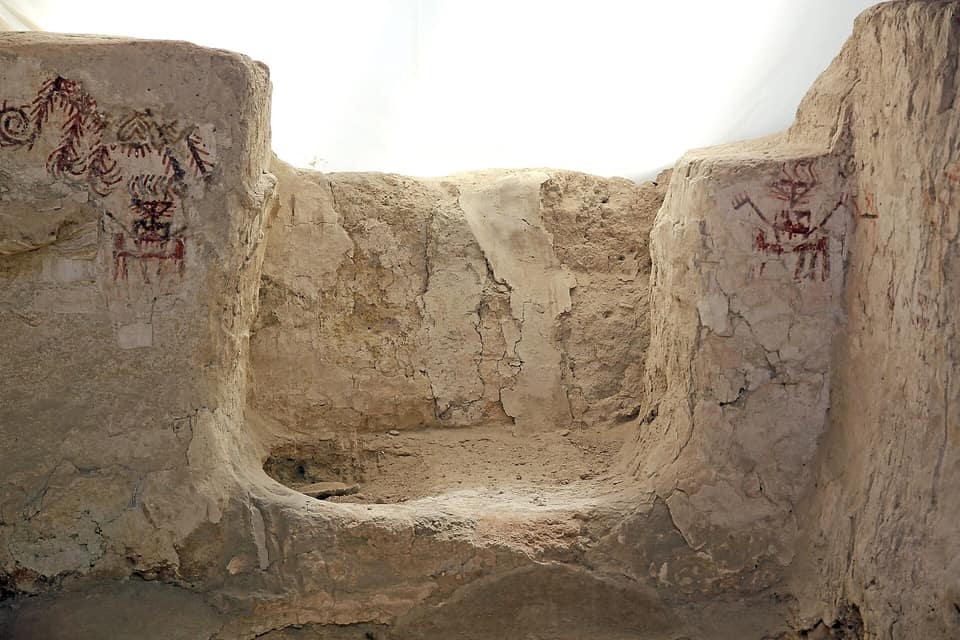
The greatest discovery of the excavation is a mud brick complex from the end of the 4th millennium BC. Sapienza dates this palatial complex to around 3400 BC, while the Malatya Provincial Directorate of Culture and Tourism dates the mud brick palace to 3300 to 3000 BC. According to Battalgazi Municipality, these monumental buildings spread over an area of at least 2600 square metres on the southwest slope of the hill. The corridor walls of the palace were decorated with impressions, motifs and wall paintings; the tops of the walls found in the excavation were adorned with black and red geometric elements.
What makes Arslantepe so important to researchers is not so much the size of the building as its function. According to Sapienza, this complex brought administrative, economic and political activities together within a single structure. More than two thousand seal impressions were found in the excavation. As Battalgazi Municipality puts it, the discovery of so many seal impressions in different parts of the building shows that many officials worked here with the authority to take goods from the storerooms and to seal them. The Malatya Provincial Directorate of Culture and Tourism writes that, in the light of these finds, the existence of accounting and archival practices at Arslantepe has been proven.
Sapienza's statement adds an important note. The centralised organisation at Arslantepe predates the emergence of writing; writing was developing at roughly the same time in neighbouring Mesopotamia, partly in response to the administrative needs of new urban societies. In other words, administration here first ran on seals, without writing. That is why Arslantepe is a key site for understanding the earliest forms of the state.
Early masters of metal
The palace complex is also an important page in the history of metal. According to the Malatya Provincial Directorate of Culture and Tourism, nine swords and twelve spearheads made of arsenical copper were found in the excavations; the swords are considered the oldest examples found so far. Battalgazi Municipality writes that some of these weapons were inlaid with silver, and that tall footed fruit bowls and long vases of Mesopotamian type were found alongside them. Right next to the palace, the grave of an important person dated to 2900 BC and containing rich finds was also uncovered.
Those who came after the fire
This brilliant period did not last long. According to Sapienza, the palace phase ended about two centuries later in a violent fire, after which pastoral groups settled at the site. According to the description by Battalgazi Municipality, after the fire the shared public area was abandoned; the newcomers' settlement pattern, houses and pottery of Eastern Anatolian and South Caucasian origin differed from the local tradition. In the second half of the 3rd millennium BC a new process began in the region that led to the building of walled cities.
The last phases of the mound can also be read in its layers. According to the directorate, when the Romans moved the city in the 2nd century AD to a place closer to the Euphrates, where Battalgazi stands today, Arslantepe was abandoned. The hill was used as a Roman village in the 5th and 6th centuries AD, and then completed its history of settlement as a cemetery of the Byzantine period.
The road to the World Heritage List
Over time the knowledge from the excavation turned into international recognition. Arslantepe was first placed on the UNESCO World Heritage Tentative List; the Malatya Provincial Directorate of Culture and Tourism gives the year as 2014, Sapienza as 2015. According to Battalgazi Municipality, the nomination file was submitted to the World Heritage Committee once the site studies were complete. The mound joined the permanent list on 26 July 2021, at the 44th session of the World Heritage Committee held online and hosted by China, becoming the nineteenth World Heritage property from Türkiye.
Reading the excavation site today
Arslantepe is as much an open air museum to visit as it is an excavation site. According to Battalgazi Municipality, most of the project to turn the mud brick palace complex into an open air museum was completed in 2011; a reconstruction of a Bronze Age house and copies of the Late Hittite lions and the statue of King Tarhunza were placed along the entrance path. According to the Malatya Provincial Directorate of Culture and Tourism, the Visitor and Reception Centre right next to the mound opened on 4 October 2025. The centre offers visuals and an audiovisual show prepared jointly by the excavation team and the Ministry, an exhibition hall and event spaces.
According to Sapienza's announcement, a new visitor route was opened at the site on 8 August 2026 and the protective roof over the palace complex of 3400 BC was extended. The extended roof protects the most recently excavated part of the building, and visitors reach the new areas via walkways and information panels in Turkish, English and Italian. On the same day the refurbished display of the Malatya Archaeological Museum was also opened. According to Sapienza, the museum holds more than four thousand finds from the Arslantepe excavations.
A suggestion for your visit
According to Turkish Museums, the Ministry's museum website, six settlement and cultural layers were uncovered in the Arslantepe excavations. Remains of the Islamic period and of the Byzantine and Roman ages were found at the surface, while the lower layers revealed settlements stretching from the Chalcolithic period through the Bronze Age, from the Hittite Imperial period to the Late Hittite period and the Iron Age. According to the same website, the Malatya Museum displays pottery, swords, spearheads, seals, stone and metal tools and jewellery from the layers of Arslantepe ranging from the Chalcolithic Age to the Late Hittite Age.
The best way to understand Arslantepe is a visit in two stages. According to the Malatya Provincial Directorate of Culture and Tourism, the finds from the excavations after 1961 are displayed in the Malatya Museum; seeing the seal impressions, the swords and the pottery in the museum first, and then walking through the corridors where they were found on the mound, puts the whole story into place. On site, take a close look at the wall paintings of the palace corridors and look for traces of the layers in the sections of the slope. According to the directorate, the mound can be reached from the city centre by public transport via the ring road. Because opening hours and visiting conditions can change, check the current information on the Ministry's museum website before you go.
Sources
- Sapienza University of Rome, Arslantepe, the origins of statehood, new visitor route opened at the UNESCO site, https://www.uniroma1.it/en/node/542234
- Malatya Provincial Directorate of Culture and Tourism, Places to Visit, https://malatya.ktb.gov.tr/TR-378938/gezilecek-yerler.html
- Turkish Museums, Malatya Arslantepe Archaeological Site and Open Air Museum, https://www.turkishmuseums.com/museum/detail/2142-malatya-arslantepe-orenyeri/2142/4
- Turkish Museums, Malatya Museum, https://www.turkishmuseums.com/museum/detail/2141-malatya-museum/2141/4
- Battalgazi Municipality, Arslantepe Höyüğü, https://www.battalgazi.bel.tr/2023/12/11/arslantepe-hoyugu/
- Wikipedia, Arslantepe, https://en.wikipedia.org/wiki/Arslantepe
Comments
Be the first to comment