

The Archive Beneath the Soil, the Tablets of Hattuşa and Şapinuva
Learning a city's name from its own correspondence is one of the most exciting moments archaeology can offer. Two excavation sites in Çorum, Hattuşa at Boğazkale and Şapinuva at Ortaköy, delivered exactly that.

Sign in to like and rate
Learning a city's name from its own correspondence is one of the most exciting moments archaeology can offer. Two excavation sites in Çorum, Hattuşa at Boğazkale and Şapinuva at Ortaköy, delivered exactly that. At both places thousands of clay tablets came out of the ground, and these tablets carried into our time how the Hittites were governed, how they corresponded with their neighbours and which languages they used. In this article we tell the story of how the two archives were found, how they were read, what they contain and where they can be seen today.
Signs pressed into clay
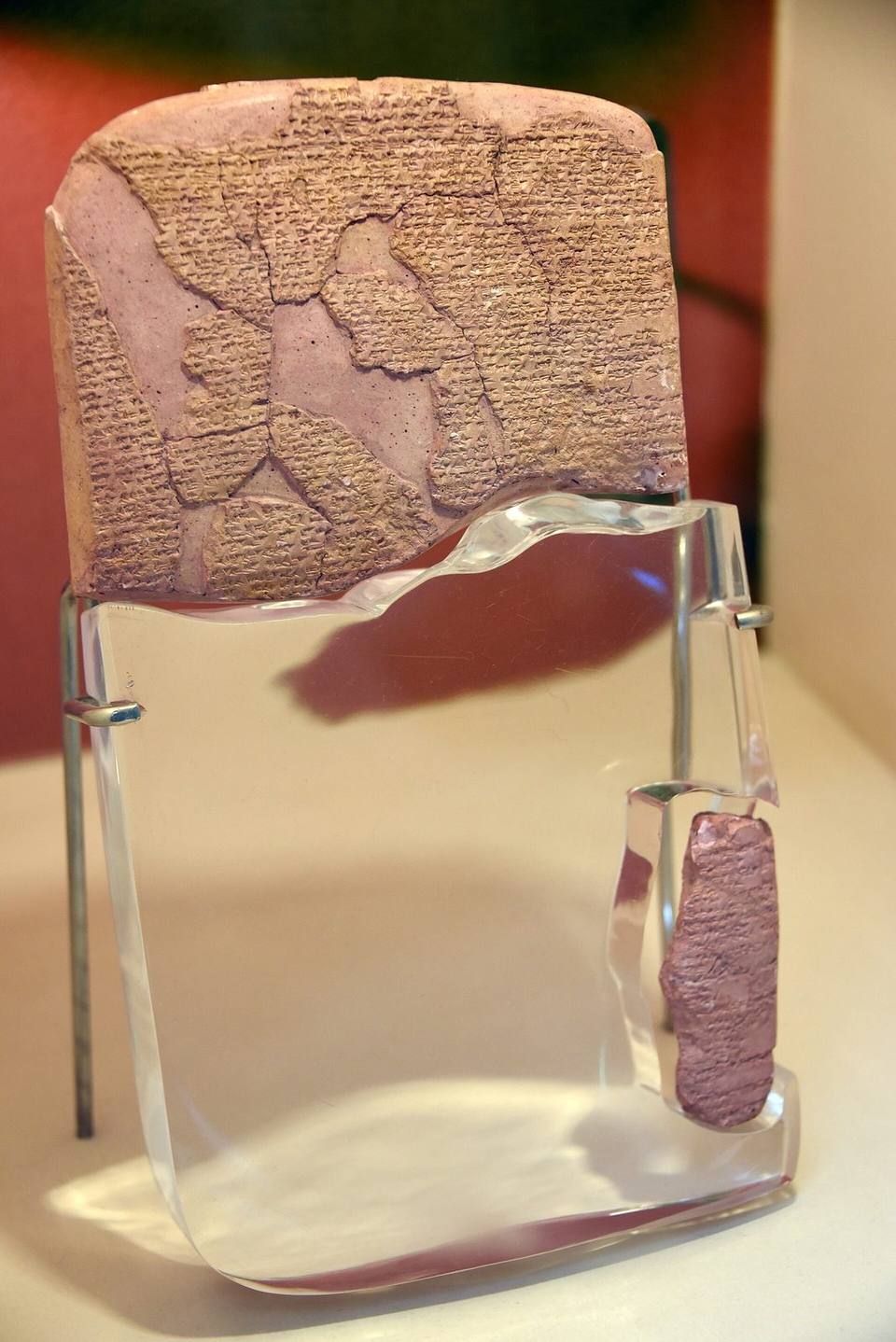
Cuneiform consists of wedge-shaped signs pressed into soft clay. The Hittites adopted this script from Mesopotamia and used it to write their own language. The nomination file submitted to UNESCO states that eight different languages have been identified in the tablets found at Hattuşa. This reflects the multilingual character of the empire. According to the file, the kings used only two languages in their official documents. One was Hittite, of Indo-European origin, and the other was Akkadian, the language of diplomacy in the Near East. Treaties and letters exchanged with neighbours to the south and east were therefore mostly written in Akkadian.
The Kültür Portalı page on Hattuşa notes that the cuneiform archives found at the site represent the oldest known Indo-European language. In other words, the earliest written examples of a language that is a distant relative of many languages spoken in Europe and Asia today came out of the soil of Çorum.
Finding a capital at Hattuşa
The first person to introduce the ruins of Hattuşa to the scholarly world was the French traveller and architect Charles Texier. The UNESCO nomination file gives the date as 28 July 1834. Texier drew the city plan and the nearby reliefs, but he believed the place to be a different ancient city. In the following decades many travellers and researchers came to the site and made drawings. According to the excavation sites page of the Çorum Provincial Directorate of Culture and Tourism, Ernest Chantre made several soundings in 1893 and 1894 and published the first cuneiform tablets that came from the site.
The real turning point came in 1906. The provincial directorate explains that in that year Osman Hamdi Bey, director of the Imperial Museum, started the Boğazköy excavations on behalf of the museum and brought the cuneiform specialist Hugo Winckler onto the team. The nomination file records that the excavation led by Winckler and Theodor Makridi at Büyükkale produced 2,500 tablet fragments, and so it became certain that this was Hattuşa, the Hittite capital. In short, it was not the spades but the city's own writings that revealed its identity.
Deciphering a language
Finding the tablets did not mean being able to read them. According to the nomination file, Bedrich Hrozny deciphered Hittite in 1915 with the help of the Hattuşa tablets. His work showed that Hittite belonged to the Indo-European language family and allowed a previously unknown civilisation to speak in its own voice.
The excavations were carried on by the German Archaeological Institute. The nomination file dates the institute's first excavation to 1907, followed by the seasons of 1931 to 1939 and the work that has continued since 1952. Over the years the excavation was directed by Kurt Bittel, Peter Neve and Jürgen Seeher. According to the file, all the documents in the archive were found during the excavations between 1906 and 1970 in the Great Palace and in the building complex known by its official name as the Büyük Mabet.
What the archive of twenty-five thousand tablets holds
UNESCO's Memory of the World entry describes the Boğazköy archive as a body of nearly 25,000 clay tablets. According to the entry, these tablets are the only surviving direct written record of the Hittites, one of the most powerful political organisations of the Near East in the 2nd millennium BC. The archive holds records of social, political, commercial, military, legal and artistic life. The nomination file also notes that the tablets are kept on wooden shelves, divided into groups according to their subjects.
The most famous of these texts is the Treaty of Kadesh, signed between the Hittites and Egypt. The nomination file explains that the treaty was written in Akkadian, that its clay tablets are on display in the Istanbul Archaeology Museums, and that a copy inscribed on a silver plate was sent to Egypt and lost. The Egyptian version was written in hieroglyphs on the walls at Karnak. The file emphasises that a copy of the treaty adorns a wall of the United Nations building and that it is the first surviving written document signed after a battle.
The archive also contains legal texts. The nomination file states that tablets of the Hittite laws include clauses protecting the life and bodily integrity of servants. The same file draws attention to the strong position of the queen in affairs of state. She is named alongside her husband in state documents, and the Kadesh text shows that she had her own official seal. Among the examples in the file are a letter written by an Egyptian queen to the Hittite queen Puduhepa, a tablet recounting the deeds of King Hattuşili I in Hittite and Akkadian, another tablet about the construction of a palace, and a bronze tablet found in 1986 that records a treaty between a Hittite king and the king of a neighbouring land.
UNESCO Memory of the World
Türkiye nominated this archive to UNESCO's Memory of the World programme in 2000, and the archive was inscribed on the register in 2001. The nomination file names the Ministry of Culture as owner and the Istanbul Archaeology Museums and the Museum of Anatolian Civilizations in Ankara as custodians. The file also lists Jürgen Seeher, then director of the excavation, among the nominators. Memory of the World is a programme that protects documentary heritage. Hattuşa itself, according to Kültür Portalı, has been on the UNESCO World Heritage List since 1986. This makes Hattuşa one of the rare places whose ruins and written archive both appear on international lists.
Şapinuva, the second great archive
The nomination file states that apart from Hattuşa, tablets had been found in small groups at only three places. Ortaköy, 53 kilometres southeast of Çorum, yielded far more than such small groups. According to an article published in 2025 by researchers of Hitit University, Şapinuva was discovered in 1988 and 1989 during surface surveys conducted around Çorum by Aygül Süel and Mustafa Süel. The starting point of the survey was information learned from the Maşat Höyük tablets in Tokat. Kültür Portalı cites a royal letter found at Maşat that asks for soldiers to be brought to Şapinuva within two days.
According to the Çorum Provincial Directorate of Culture and Tourism, the decision to excavate was taken after an on-site investigation that followed the purchase by the Çorum Museum of two cuneiform tablets found at Ortaköy in 1990. For the first two years the excavation was run by the Çorum Museum Directorate, and from 1992 Aygül Süel took over as director. The excavation publications page of Hitit University states that by reading the roughly 3,500 tablets and fragments found up to that point, Süel proved in 1994 that the city's name in the Hittite period was Şapinuva. The result was published in the journal Belleten in 1995.
The Şapinuva archive is as multilingual as it is large. The article by Süel and her team speaks of more than four thousand tablets and fragments written in Hittite, Hurrian, Hattian, Akkadian and Sumerian, and states that these documents belonged to a royal archive. According to the article, the tablets show that the city served as the capital of the Hittite state in the first half of the 14th century BC and that Great King Tuthaliya and Queen Taduhepa lived here. Letters addressed to the great king and queen, royal seals stamped into the wall plaster of buildings and bronze axes bearing the words "Great King" in cuneiform support this conclusion. Excavations are carried out at two parts of the city, the 15-hectare Tepelerarası and the 3-hectare Ağılönü.
Where you can see the tablets today
In Çorum the best place to begin following these archives is the Çorum Museum. Kültür Portalı writes that the museum displays Hittite-period cuneiform tablets from the Memory of the World register, together with sealed clay bullae found as archives at the Hattuşa and Şapinuva excavations, accompanied by drawings that explain how the tablets were used. The same hall also holds a bronze sword bearing a cuneiform inscription. Give yourself some time in front of the cases. Looking closely at the size of the tablets, the arrangement of the lines and the signs that run right to the edges tells you by itself how carefully the archive was kept.
The Boğazköy Museum at Boğazkale, according to Kültür Portalı, explains the Hittite writing system with panels and images on the upper floor of its Hittite hall. A model of the Hattuşa archaeological site is also on display there. Moving on from the museum to the site and walking to Büyükkale and the buildings of the Lower City, where the tablets were found, puts the documents you saw in the cases into their setting. Conditions at the Şapinuva excavation can change with the season. Before visiting, check the current information with the Çorum Provincial Directorate of Culture and Tourism or on the museum's official page.
If you want to see the Treaty of Kadesh, your route leads to Istanbul. According to the nomination file, the clay tablets of the treaty are displayed in the Istanbul Archaeology Museums. The other custodian of the Boğazköy archive is the Museum of Anatolian Civilizations in Ankara.
A few suggestions for the trip
To understand the tablets, following the order of museum first and site second works well. At the Çorum Museum you get the overall picture of the archives, at the Boğazköy Museum you learn how the script worked, and then at Hattuşa you look at the buildings where the tablets were found. Hattuşa spreads over a large area, so bring comfortable shoes, a hat and water. The site has no shade at midday in summer, and mornings and late afternoons are more comfortable. Since museum visiting days and hours may change, check their official pages before you set out. When taking photographs, bring the lens close to the glass to reduce reflections in the cases and do not use a flash.
Sources
- UNESCO Memory of the World, The Hittite cuneiform tablets from Bogazköy, https://www.unesco.org/en/memory-world/hittite-cuneiform-tablets-bogazkoy
- UNESCO, Memory of the World Register Nomination Form, Turkey, The Hittite cuneiform tablets from Boğazköy, https://media.unesco.org/sites/default/files/webform/mow001/turkey_hittite_cuneiform_tablets_bogazkoy.pdf
- Kültür Portalı, Hattuşa, https://www.kulturportali.gov.tr/turkiye/corum/gezilecekyer/hattusa
- Kültür Portalı, Şapinuva Örenyeri, https://www.kulturportali.gov.tr/turkiye/corum/gezilecekyer/sapinuva-orenyeri
- Kültür Portalı, Çorum Müzesi, https://www.kulturportali.gov.tr/turkiye/corum/gezilecekyer/corum-muzesi
- Kültür Portalı, Boğazköy Müzesi, https://www.kulturportali.gov.tr/turkiye/corum/gezilecekyer/bogazkoy-muzesi
- Çorum İl Kültür ve Turizm Müdürlüğü, Kazı Alanları, https://corum.ktb.gov.tr/TR-58773/kazi-alanlari.html
- Hitit Üniversitesi Arkeoloji Bölümü, Şapinuva (Ortaköy) Arkeolojik Kazı Projesi Yayınları, https://hitit.edu.tr/tr/itbf/arkeoloji/sapinuva-ortakoy-arkeolojik-kazi-projesi-yayinlari
- Süel, İpek, Gerçek and Aydın, Ortaköy/Şapinuva Tepelerarası Metal İşlikleri, Archivum Anatolicum 19/1 (2025), https://dergipark.org.tr/tr/download/article-file/4691539
Comments
Be the first to comment