

SEKA Paper Museum and İzmit's Republican-Era Industrial Heritage
Visiting a museum usually means looking at display cases.

Sign in to like and rate
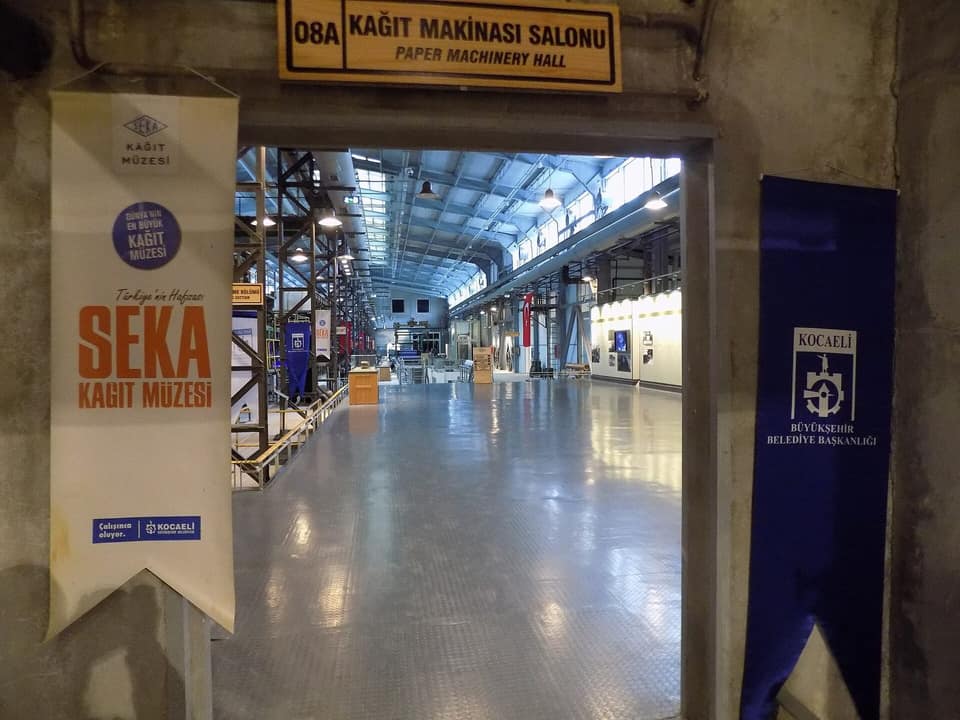
Visiting a museum usually means looking at display cases. At the SEKA Paper Museum, however, you first look at the building itself: the volumes of a former paper factory, the halls where machines once stood, the height of the ceilings. This article describes İzmit's Republican-era industrial heritage through this museum. The information relies on the pages of the Kocaeli Metropolitan Municipality and the Ministry of Culture and Tourism. Where sources give different figures, I write them as approximate and with caution.
The paper factory of the Republic
The Culture Portal presents the museum as an industrial heritage museum and stresses that the factory had an important place in the industrialisation of the Republican period. According to the municipality's 2024 news item, the SEKA Paper Factory opened in 1936. For a factory to become a symbol in a country's industrialisation it needs memory as well as production; in İzmit that memory is built around the idea of paper spreading from here across Turkey. The street in the museum's address is called Mehmet Ali Kağıtçı Street, so the founding story of the factory is even written into the map of the city. Today the museum uses the same site, but its function has changed: the place where machines produced paper has become an exhibition space that tells the story of production. To understand this change you need to read the building in two layers. The first layer is the factory itself, that is, the volumes, the heights and the traces the machines left. The second layer is the narrative added by the museum, built from documents, photographs and film. The Culture Portal and the municipality say that visitors can follow the life story of paper, starting from the founding of the factory, with the help of moving images. That sentence also sums up the logic of the visit: first you see how it was founded, then what it produced, and finally how it became a museum.
The SEKA name and the factory's long life
The abbreviation SEKA in the museum's name is the name the factory's long production years gave to the institution, and it still lives in everyday speech in the city. Through the years its paper machines ran, the factory stood at the centre of İzmit's economic and social life. The municipality's news item says that after the factory was transferred to the Metropolitan Municipality, it was restored. Turning an industrial building into a museum often also means saving the building from demolition. In Kocaeli, too, the conversion resulted in a large factory site being preserved for the city's memory. Such a site could have remained an empty space on the edge of the city; today it has become a place that visitors tour, where workshops take place, and where townspeople meet. That the museum makes Turkey's industrial history visible is therefore meaningful not only for paper enthusiasts but for anyone interested in the history of the city.
From factory to museum
According to the municipality's news item, after the factory was transferred to the Metropolitan Municipality a restoration lasting about three and a half years was carried out. The factory then opened as a museum on 6 November 2016. The news item notes that old machines used in paper production are also displayed. Figures differ slightly between sources. The municipality's news item says the museum has 18 halls, 115 display cases, 443 documents and 337 objects; the number of halls appears as 16 or 18 in other publications. So rather than getting stuck on the number of halls, it is enough to know that the visit consists of one main body and many sub-sections. From its opening day until the end of October 2024 the museum welcomed 1,011,787 visitors; its workshops on handmade paper, paper arts, art and woodwork reached 45,678 people, and the museum hosted 36 temporary exhibitions. While celebrating its eighth year, the museum also opened an exhibition that lets visitors experience children's books through augmented reality. This shows that the museum is not just a place that displays the past but a living institution that renews its programme.
Walking through the halls
Adjust your expectations a little as you enter. Alongside the display cases, you will see large machines, traces of installations and an industrial scale. The municipality's introduction says that the life story of paper, spreading from İzmit to Turkey, can be followed through images; reading the images and documents in the halls without skipping them is therefore the backbone of the visit. Our cover photograph shows a view from the museum's paper machine hall. When you stand in front of the machines, notice the ceiling height and the length of the machine; this scale cannot be fully conveyed by a photograph. In each hall, first look with an eye that understands how the factory worked, then return to the exhibition texts. For someone who does not know papermaking, it is not hard to work out the order in which raw material turns into pulp and pulp into sheets by following the exhibition's explanations. Even a fast visitor can see the main flow in half a day; those who want detail will take longer reading the documents and cases. Because some of the museum's exhibitions change as temporary exhibitions, it is wise to glance at the programme announcement on kocaelimuze.com before your visit. Reflections can spoil a photograph in document cases, so standing at a slight angle rather than parallel to the glass helps.
Workshops and children's programmes
The museum is not only a place to look at but a place where things are made. According to the municipality's service page, individual workshop activities, school group visits and project services at the museum are offered free of charge. Anyone between the ages of 4 and 13 can join the workshops. Workshops take place at weekends; applications for workshops, activities and group visits are taken through kocaelimuze.com. After you fill in the application form, an SMS is sent once registration is complete. The page also says on which day workshop registrations are published, but such arrangements can change, so check the latest on the site. According to the museum's news item, the workshops on handmade paper, paper arts, art and woodwork reached 45,678 people in total. The most natural activity for a paper museum is of course a handmade paper workshop: after seeing how paper is produced on a factory machine, trying the same thing by hand on a small scale reinforces the subject. For families with children, the best plan is to apply first and pick a workshop day, then tour the museum at a relaxed pace before or after the workshop. School groups can request visits through the same application system.
Surroundings and transport
According to the municipality's service page, the museum can be reached by tram, getting off at the Sekapark stop, or by bus, getting off at the Orduevi stop. The address is Kozluk Neighbourhood, Mehmet Ali Kağıtçı Street No 77, İzmit. If you are thinking of walking around the museum, a short walk to get to know the surroundings makes sense depending on the weather; since official sources give no detail on the park area nearby, I suggest you see it on site and decide. The same municipality service page lists other museums as well. The Kocaeli Photography Technologies Museum shows the past and present of photographic technology with 310 cameras and a lot of equipment. The Kocaeli Local Culture Museum presents the culture of the Manav Turks living in Kocaeli, both in digital form and as tangible cultural heritage. If you are planning a one-day programme, you can think of these museums together with the paper museum, but you should confirm the opening day and hours of each in advance.
Visitor guide
The museum is closed on Mondays and open from Tuesday to Sunday. The municipality writes that the museum is open to all citizens and can be visited free of charge; it is best to check this on the official page before your visit as well. Setting aside half a day is a reasonable estimate for the visit, especially for those who want to read the documents and cases. Wear comfortable shoes, because industrial floors and wide halls call for a long walk. At weekends there may be crowds from children registered for workshops, so those who want a quiet visit can choose a weekday. For photographers, morning and afternoon light give different results; light from the large windows can create striking shadows in the machine hall. If you are coming as a registered group, make the group visit application in advance. In short, the SEKA Paper Museum is a good stop for anyone who wants to understand İzmit's industrial past by walking through a factory.
Sources
- Kocaeli Metropolitan Municipality, SEKA Paper Museum, https://www.kocaeli.bel.tr/hizmet/seka-kagit-muzesi-28.html
- Kocaeli Metropolitan Municipality, One million visitors to Seka Paper Museum in 8 years, https://www.kocaeli.bel.tr/haber/seka-kgit-muzesine-8-yilda-1-milyon-ziyaretci-46746.html
- Culture Portal, SEKA Paper Museum, https://www.kulturportali.gov.tr/turkiye/kocaeli/gezilecekyer/seka-kgit-muzesi-
- Wikipedia, SEKA Paper Museum, https://tr.wikipedia.org/wiki/SEKA_K%C3%A2%C4%9F%C4%B1t_M%C3%BCzesi
- Cover image, Cobija, CC BY-SA 4.0, Wikimedia Commons, File:SEKA Kağıt Müzesi kağıt makinesi salonu.jpg
Comments
Be the first to comment