

Şahinkaya Canyon, the Kunduz Forests and the Historic Bazaar in Vezirköprü
Set on slopes overlooking the Kızılırmak valley in Samsun's interior, Vezirköprü shows a side of Samsun very different from the coastline.

Sign in to like and rate
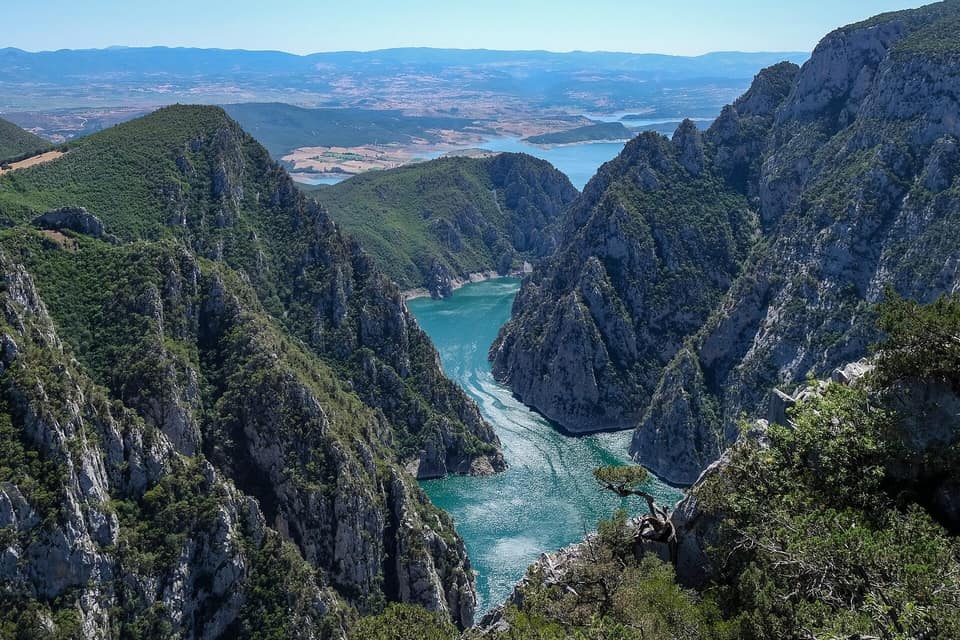
Set on slopes overlooking the Kızılırmak valley in Samsun's interior, Vezirköprü shows a side of Samsun very different from the coastline. Here there are dam lakes instead of the sea, canyon walls instead of beaches, and highland pastures and dense forests instead of plains. In the town centre, a bazaar, bathhouses and wooden houses from the Ottoman period are still part of everyday life. A traveller who gives Vezirköprü a day can spend the morning on the water and the afternoon in the bazaar.
A District in the Kızılırmak Valley
The Samsun guide of the Central Black Sea Development Agency introduces Vezirköprü as a district enclosed by the Kunduz and Tavşan mountains and by Kaletepe and Keltepe. The slopes overlooking the Kızılırmak valley are covered with dense forest. The highland pastures around the district, Kabalı to the north, Kunduz to the west and the Tavşan plateau to the southeast, are among the natural spots highlighted in the guide. The guide also stresses that the district has a transitional climate. Vezirköprü has neither the humid, mild weather of the coastal Black Sea nor the harshness of the inland areas. Winters are colder and summers warmer than on the coast.
This location has also shaped the district's history. The same guide explains that rich groundwater and the Kızılırmak made the area suitable for settlement. According to the guide, the earliest traces of settlement in the region were found at Adatepe and date to the Chalcolithic Age, roughly between 5500 and 3000 BC. Rock tombs and architectural remains from the Iron Age are seen around Esenköy, southwest of the district. The guide also records that in the Pontic period a castle called Sagylion stood at the Eğrikale locality in the village of Kocakaya. In the Roman period the town was known as Andrapa, or as Neoclaudiopolis after Emperor Claudius. After the Byzantine period, the settlement came under Seljuk rule and took its present name in the Ottoman period. The guide notes that the name is associated with the Ottoman grand vizier Köprülü Mehmet Pasha.
The traces of the Roman town are now being studied scientifically. According to an announcement by Ondokuz Mayıs University, the "Neoklaudiopolis Ancient City and Its Surroundings" survey, which began in 2018 under the direction of Assoc. Prof. Dr. Akın Temür of the Department of Archaeology, is carried out with the permission of the Ministry of Culture and Tourism. Its aims include determining the location and boundaries of the Roman town and documenting and promoting the district's cultural assets. The team has visited more than 100 villages and identified mounds, tumuli, castles, rock tombs and reused architectural pieces.
Şahinkaya Canyon
The best known stop on a trip to Vezirköprü is Şahinkaya Canyon. According to the page of the 11th Regional Directorate of the Ministry of Agriculture and Forestry, the area was registered as the Şahinkaya Canyon Nature Park in 2015. The nature park is 125 kilometres from Samsun city centre and 17 kilometres from the centre of Vezirköprü. It is 75 kilometres from Amasya Merzifon Airport and 148 kilometres from Samsun Çarşamba Airport. The area is reached by an asphalt road.
The canyon lies on the lake of the Altınkaya Dam, built on the Kızılırmak. The Culture Portal states that the canyon is the deepest point of the dam lake and is about 1,500 metres long. The Regional Directorate explains that the canyon divides the Altınkaya Dam Lake in two with a natural appearance. As you move through the narrow, winding canyon, the sky appears between Turkish pine, olive and strawberry trees clinging to the rocks. Natural caves formed in the limestone bedrock are also counted among the area's assets.
The most common way to see the canyon is a boat tour. The Regional Directorate writes that the area is suitable for boat tours, canoeing, camping, picnics, nature walks, plant and wildlife observation, nature photography and amateur fishing. The nature park has gazebos, picnic tables and walking paths. Since boat tour schedules and fees change with the season, check the latest information from official sources before setting out.
As soon as the boat leaves the pier, the colour of the water catches the eye. The Culture Portal describes this colour as turquoise. At midday, when the sun falls straight onto the water, the colour looks more vivid. In the morning and late afternoon, the shadows on the rock faces reveal the depth better. If you plan to take photographs, a wide-angle lens helps capture the height of the walls, and a long lens the trees clinging to the rocks.
Vezirsuyu and the Kunduz Forests
Near the canyon there is a second protected area. According to the Regional Directorate, Vezirsuyu Nature Park, registered in 2011, is 131 kilometres from Samsun city centre and 23 kilometres from the centre of Vezirköprü. The area is suitable for picnics, nature walks, cycling, photography and plant and wildlife observation. Its vegetation includes Turkish pine, cedar, maritime pine, Taurus cedar, Phillyrea, juniper, oak, broom, wild pomegranate and olive. Thanks to its proximity to the Altınkaya Dam and Şahinkaya Canyon, the nature park brings the blue of the lake and the green of the forest into the same frame.
The Kunduz Mountains, west of the district, are another world. The regional development agency's guide counts the Kunduz and Akdağ highlands among the places that stand out for nature lovers and campers. The Kunduz Deer Breeding Centre, run under the Regional Directorate, was established in the Kunduz Mountains in 1984. Red deer raised at the centre have been released into the wild in the provinces of Çorum, Samsun, Gümüşhane, Giresun and Bolu to support the natural population. The ministry page explains that the rutting season of red deer begins at the end of September and peaks in the first half of October. These animals are more active at dusk and dawn.
Highland life continues in Kunduz as well. According to the guide, families who live from livestock move up to the highland pastures in the summer months, as there is not enough grazing in the villages. Animals are usually taken up in May and brought back in September at the latest. Families staying in the highlands live in tents or in wooden shelters called kelik.
Bazaar, Bedesten and Arasta
When you return to the town centre, the bazaar should be your first stop. The regional development agency's guide writes that Vezirköprü's bedesten and arasta were built by Yusuf Ağa in 1660. According to the guide, the bazaar consists of inner and outer sections and has 110 shops. The inner section used to be an inn, while the outer section is surrounded by the arasta. The guide also notes that the arasta has coppersmiths, saddlers and shops selling farm tools.
The best known product of the bazaar is the Vezirköprü samovar. The guide explains that the samovars here are flatter than the familiar shape and have become one of the district's symbols.
Right at the foot of the bazaar's southern wall stands the Çifte Hamam. The guide notes that the bathhouse was built in 1660 by Ayşe Hanım and has two separate, almost identical sections for women and men. Taşhan, on Taceddin Street, is a two-storey inn from the late Ottoman period. According to the guide, the striking feature of the building is that it rises on wooden columns carved from single pieces of timber.
Clock Tower, Library and Wooden Houses
The clock tower near the bazaar was built in 1906. The guide explains that the tower was later damaged and repaired in 1959, and that the clock was still working with regular maintenance. The Fazıl Ahmet Pasha Madrasa, popularly known as the Stone Madrasa, was built in 1662. According to the guide, the building has served as a public library since 1964 and was restored for the second time in 2002. With its courtyard, it is a good stop for a quiet break during a walk through the bazaar.
The old houses lining Faruk Cömert Avenue show the district's civil architecture. The guide notes that a lime plaster technique that hardens on contact with water was used in these wooden houses and that the houses are still lived in. The Kale Hamam dates to 1696 and stands out with the clad dome above its changing room.
For those who want to go beyond the centre, the guide mentions two more places. The Kurt Bridge over the İstavroz stream is about 40 metres long and has four large arches. At Esenköy, 12 kilometres from the district centre, there is an Iron Age rock tomb in the Paphlagonian style with two chambers and three columns.
A One Day Plan and Practical Notes
Vezirköprü is reached from Samsun by road. The regional development agency's guide writes that the district has regular bus connections with Samsun, Ankara, Istanbul and Bursa. Since the canyon and the nature parks lie outside the town centre, going by your own vehicle makes the trip easier.
For a one day plan, it makes sense to go to Şahinkaya Canyon early in the morning and join a boat tour, then spend midday walking or picnicking in Vezirsuyu Nature Park. In the afternoon you can return to the town centre and explore the bazaar, the bedesten, Taşhan and the clock tower on foot. The Kunduz Mountains need a separate day. For those who want to see the deer and highland life, September and October are a meaningful time.
Boat tours in the canyon and the conditions of use of the nature parks may change. Before you go, check the latest announcements of the 11th Regional Directorate of the Ministry of Agriculture and Forestry, the Samsun Provincial Directorate of Culture and Tourism or the operating institutions. Follow the rules on lighting fires in the forest, leave no litter in nature and do not feed wild animals.
Sources
- Tarım ve Orman Bakanlığı 11. Bölge Müdürlüğü, Şahinkaya Kanyonu Tabiat Parkı, https://bolge11.tarimorman.gov.tr/Menu/65/SahinkayaKanyonuTP
- Tarım ve Orman Bakanlığı 11. Bölge Müdürlüğü, Vezirsuyu Tabiat Parkı, https://bolge11.tarimorman.gov.tr/Menu/66/VezirsuyuTP
- Tarım ve Orman Bakanlığı 11. Bölge Müdürlüğü, Kunduz Geyik Üretim Merkezi, https://bolge11.tarimorman.gov.tr/Menu/24/Kunduz-Geyik-Uretim-Merkezi
- Kültür Portalı, Şahinkaya Kanyonu, https://www.kulturportali.gov.tr/turkiye/samsun/gezilecekyer/sahinkaya-kanyonu
- Orta Karadeniz Kalkınma Ajansı, Samsun Travel Guide, https://oka.gov.tr/assets/upload/dosyalar/samsun-travel-guide.pdf
- Ondokuz Mayıs Üniversitesi, Vezirköprü's History Is Being Uncovered, https://omu.edu.tr/node/11396
- Vikipedi, Vezirköprü, https://tr.wikipedia.org/wiki/Vezirk%C3%B6pr%C3%BC
Comments
Be the first to comment