

Sadabad, the Summer Retreat of the Tulip Era
Today Kağıthane is one of Istanbul's most crowded residential districts, full of metro stations, office blocks and apartment buildings climbing the slopes.

Sign in to like and rate
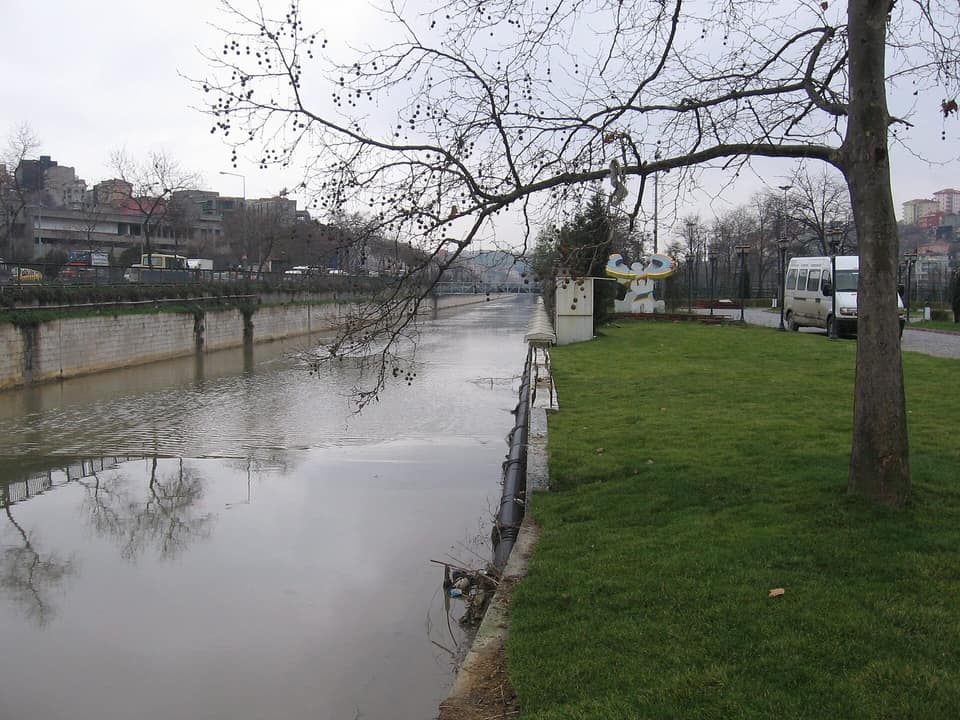
Today Kağıthane is one of Istanbul's most crowded residential districts, full of metro stations, office blocks and apartment buildings climbing the slopes. Three hundred years ago, however, the two banks of the stream that flows into the Golden Horn were the city's most celebrated summer garden. The valley, where a palace, pavilions, marble canals and cascades were built, was given the name Sadabad, meaning "the fortunate, prosperous place". This article tells the story of this summer retreat of the Tulip Era as a chapter of cultural and architectural history, and then shows where you can still find its traces in Kağıthane today.
From the Kağıthane meadow to the Tulip Era
The valley's story begins long before the palace. According to the TDV Encyclopedia of Islam, the stream was called Barbysos in the Byzantine period; its Ottoman name is said to come from paper workshops that once stood here. From the reign of Süleyman the Magnificent onwards, the Kağıthane meadows were one of the excursion grounds most loved by the people of Istanbul. Evliya Çelebi writes that goldsmiths and saddlers pitched their tents here, both to enjoy themselves and to hold meetings about their crafts. Horses belonging to the palace grazed on these meadows, and in the spring months the townspeople came out here for fresh air.
The valley's early buildings also date from this period. The gunpowder works founded by Bayezid II and rebuilt in masonry by Süleyman, the İmrahor Fountain and Pavilion built in the late 16th century, and the pavilion that Murad IV had built for Emirgune Yusuf Han are the first structures mentioned in the sources. But the transformation that gave the valley its name came at the start of the 18th century, in the years of Ahmed III and his grand vizier Nevşehirli Damad İbrahim Paşa. The years of peace that followed the Treaty of Passarowitz in 1718 were a time when the building of palaces, pavilions, gardens and fountains in Istanbul gathered pace. The historian Ahmed Refik named these years the "Tulip Era" in a work he serialised in a newspaper in 1913 and published as a book two years later, and the name stuck.
A stream bed redrawn in the summer of 1722
As the TDV relates, a country banquet that Damad İbrahim Paşa gave at Kağıthane in 1717 led the sultan to fall in love with the valley. In 1722 the stream bed in front of the palace to be built for the sultan was cleared and enclosed in a straight canal with regular quays on both sides. The marble for this structure, named Cedvel-i Sim or "the silver canal", was brought from the Kulelibahçe Pavilion in Çengelköy. Weirs and cascades were added to the canal, and the water, after passing over small falls, collected in marble pools. According to the account on Wikipedia, the pool in front of the pavilion was decorated with fountains in the shape of dragon heads spouting water from their mouths.
The palace was completed in a very short time. Kağıthane District Governorate writes that construction was finished in three months, while Wikipedia gives 31 July 1722 as the opening date; the TDV entry on Kağıthane gives 10 August 1722 as the completion date of the Kasr-ı Hümayun. Although the exact day varies from source to source, the sources agree that the palace was built within a few months in the summer of 1722. It is said that the name Sadabad was given to the palace in the eulogies the poets recited at the opening. A decree of Ahmed III dated September 1722 orders that 450 plane, linden, elm, ash and chestnut trees be dug up with their roots in the hills of Yoros and carried to Kağıthane by ship. One part of the garden was also named Hüsrevabad.
Where the architectural influence came from is still debated. The common view is that the palaces and gardens described by Yirmisekiz Çelebi Mehmed Efendi, who went to Paris as ambassador in 1720, such as Versailles, Fontainebleau and Marly, served as models. The architect and scholar Sedad Hakkı Eldem, however, argued in his 1977 study of Sadabad that the buildings had almost nothing in common with French palace architecture. Other researchers point to a link with the Chehel Sotoun palace in Isfahan. What the reader can take from this is that Sadabad was not the copy of a single model, but a place where the Ottoman garden tradition met new ideas.
The Sadabad outing
The palace soon became the centre of a network of pavilions and gardens. Plots along the stream were distributed to high officials, who were encouraged to build pavilions. Kağıthane District Governorate writes that within eight years 173 pavilions were built on the two slopes from the palace down to the Golden Horn; the TDV, drawing on Çelebizade Asım Efendi, speaks of about 170 pavilions and kiosks between Sadabad and the gunpowder works. The sources record names given to these buildings such as Kasr-ı Cenan, Kasr-ı Neşat, Çeşme-i Nur, the Kovanlı Bridge and the White Bridge.
The festivities were not confined to the palace walls. On holidays the public also flocked to the valley; people came overland in gilded carriages and from the Golden Horn in boats decked with flowers, and each sat in a different corner of the excursion ground according to their standing. This outing was called "going out on the Sadabad excursion". The TDV notes that swimming races on the Golden Horn were born as a custom of this period. By day there was javelin riding, racing and wrestling, by night lamp-lit and tulip gatherings and musical sessions, and foreign envoys were sometimes entertained here as well. Wikipedia writes that the festivities began with Hıdrellez, the spring festival, and went on until morning on moonlit nights.
1730 and after
This brilliant period ended with the Patrona Halil Revolt, which broke out on 25 September 1730. The rebels demanded that the pavilions and kiosks of Kağıthane be torn down. As the TDV relates, the new sultan Mahmud I did not allow the palace to be burned, but he could not prevent its destruction either; Hüseyin Ayvansarayi writes that 120 pavilions were demolished in and around Sadabad. The revolt ended the reign of Ahmed III and the life of Damad İbrahim Paşa, and with it the golden years of the valley came to an end.
Yet Sadabad was not forgotten. In 1736-37 Mahmud I had the Kurşunlu Pavilion repaired for a banquet to be given to the Iranian envoy, and in 1743 he tried to revive the valley. Documents from the reigns of Osman III and Abdülhamid I also record repairs to pavilions, pools and water channels. Selim III had grown very fond of Kağıthane, where he had gone with his father Mustafa III to watch the troops drill, and he had the palace repaired when he came to the throne. In these years the Kağıthane meadow became a drill ground for the artillerymen and the soldiers of the Nizam-ı Cedid; in other words, the excursion ground and the army began to share the same plain.
Three palaces and a town hall
Today, when people say "Sadabad Palace" they actually mean three buildings raised one after another on the same site. The first is the Tulip Era palace of 1722. In 1809 Mahmud II had the badly worn palace pulled down and rebuilt. The TDV names Krikor Amira Balyan as the architect of this second palace; according to Kağıthane District Governorate the work went on until 1816. According to the TDV entry on Kağıthane, at the Nowruz of 1814 the sultan stayed here for a few days with his household, and in the following years banquets and ceremonies continued to be held in the valley.
When Abdülaziz became sultan, he had Mahmud II's palace demolished in 1862-1863 and had Sarkis and Agop Balyan build in its place the two-storey Çağlayan Pavilion in a Western style. The same sultan gave a banquet at Kağıthane for soldiers and foreign statesmen on his return from his journey to Egypt in 1863, and in 1867 he opened the palace garden to the public. In 1893 Abdülhamid II had a monumental fountain built on the Kağıthane meadow; a small pavilion was also built at the head of the firing range where rifles bought from Germany were tested.
The twentieth century was not kind to the valley. After the First World War the neglected historic buildings disappeared one by one. According to the Governorate's account, the Tent Pavilion on the stream bank collapsed in 1940 when a plane tree fell on it, the third palace was demolished in 1943, and a military school was built in its place in 1952. The same building has been used since 1998 as the service building of Kağıthane Municipality. The Firing Range Pavilion was demolished in 1956 to make way for a gasworks, and a bus depot stands on its site today. With the migration that accelerated after the 1950s the banks of the stream turned into dense settlement, and industrial pollution made the stream a problem for many years.
Sadabad in poetry
The buildings were destroyed, but Sadabad lived on in literature. According to the TDV, the first work to mention Kağıthane is the Hevesname of Tacizade Cafer Çelebi, written at the end of the 15th century; Nefi compares the valley to paradise for its crowds and its beauty. The poet who did most to immortalise Sadabad, however, is Nedim. The line "Gidelim serv-i revanım yürü Sadabad'a", repeated as a refrain in his songs (Nedim, as quoted by the TDV), is still the first line that comes to mind when the Tulip Era is mentioned; it invites the beloved to walk with the poet to Sadabad.
The influence lasted into the twentieth century. An article in the Journal of Turkology by S. Dilek Yalçın Çelik of Hacettepe University examines the five poems about the Tulip Era in Yahya Kemal's book Eski Şiirin Rüzgarıyle. According to the article, Sadabad is used in these poems as a palace, as a neighbourhood and as the symbol of an entire era. The TDV in turn notes that Hüseyin Suat Yalçın in the Servet-i Fünun period, and Cevdet Kudret and İlhan Berk in the Republican years, recalled Kağıthane with longing.
Where to look for Sadabad today
A visitor should first know this: none of the pavilions and kiosks of the reign of Ahmed III have survived. Wikipedia notes that the very few remains of the palace can be seen near the municipal building, arranged as an open-air museum. The real subject of the visit is therefore not a single building but the valley itself. The banks of the stream, cleaned and rehabilitated through works that began in the 1990s, have been landscaped in part as a grassy park with a walking path; the bed in which the Cedvel-i Sim was cut also lies on this flat ground.
Starting your walk around the municipal building and following the stream towards the Golden Horn is the easiest way to grasp the valley's old scale. When you look up at the slopes, you see that apartment blocks have taken the place of the pavilions that once lined both banks. According to Kağıthane District Governorate, the Sadabad Mosque, known by the same name, survived from the Tulip Era until the reign of Abdülaziz and, because it was demolished and rebuilt together with the palace, also took the name Aziziye Mosque; this building is one of the traces of 19th-century Sadabad that can still be read in the valley today. On the site of the İmrahor Pavilion there is now a housing estate.
Practical notes
The way to reach Kağıthane by rail is the M7 metro line; the line's Kağıthane station is inside the district. Because a shuttle service is sometimes run on parts of the line, check the current service status with Metro Istanbul. According to Wikipedia, the section of the stream that was rehabilitated and turned into the Cedvel-i Sim is about one kilometre long and makes a flat walk. As the sources describe, Sadabad's true season is spring; walking the valley in early May, knowing that the festivities began with Hıdrellez and were held in the shade of Judas trees, adds meaning to the visit. Reading the TDV Encyclopedia of Islam entries on Sadabad and Kağıthane before you go makes it easier to picture where the old buildings stood among today's streets. For the visiting conditions of the open-air display around the municipal building, check the latest information with Kağıthane Municipality.
Sources
- TDV İslam Ansiklopedisi, Sadabad, https://islamansiklopedisi.org.tr/sadabad
- TDV İslam Ansiklopedisi, Kağıthane, https://islamansiklopedisi.org.tr/kagithane
- Kağıthane District Governorate, Sadabad Palaces, https://www.kagithane.gov.tr/sadabad-saraylari
- S. Dilek Yalçın Çelik, Eski Şiirin Rüzgarıyla'da Lale Devri ve Dönemin Ruhu, Türkoloji Dergisi 18/1 (2011), https://dergipark.org.tr/tr/download/article-file/649006
- Wikipedia (Turkish), Birinci Sadabad Sarayı, https://tr.wikipedia.org/wiki/Birinci_Sadabad_Saray%C4%B1
- Wikipedia (Turkish), Sadabad, https://tr.wikipedia.org/wiki/S%C3%A2d%C3%A2b%C3%A2d
- Wikipedia (Turkish), Kağıthane Deresi, https://tr.wikipedia.org/wiki/K%C3%A2%C4%9F%C4%B1thane_Deresi
- Wikipedia (Turkish), M7 (İstanbul metrosu), https://tr.wikipedia.org/wiki/M7_(%C4%B0stanbul_metrosu)
Comments
Be the first to comment