

On the Trail of Thrace's Early Villages, Kırklareli Museum and Aşağı Pınar
To understand a city's past, the museum is often the best place to begin. In Kırklareli that role falls to the former municipal mansion on Mustafa Kemal Boulevard.

Sign in to like and rate
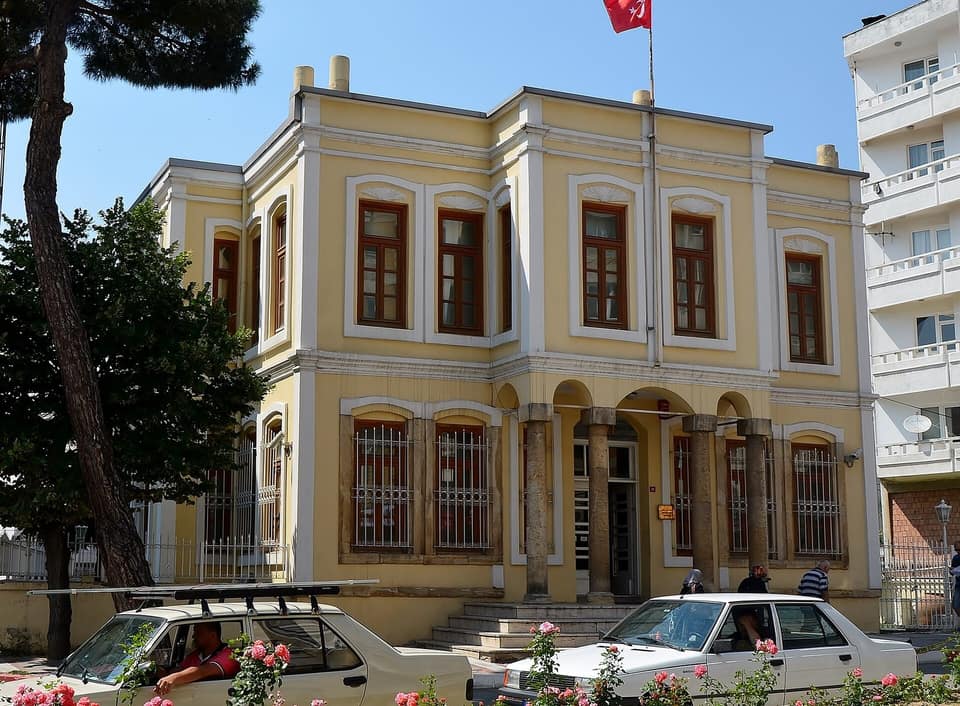
To understand a city's past, the museum is often the best place to begin. In Kırklareli that role falls to the former municipal mansion on Mustafa Kemal Boulevard. The building itself carries an urban story that reaches back to the late nineteenth century, while its showcases go much further back, to village life uncovered at Aşağı Pınar Mound south of the city. This article reads the museum and the story of the mound together, on the basis of official and academic sources.
From a municipal mansion to a museum
According to the museum page of the Ministry of Culture and Tourism, the building was constructed in 1894, in the time of Governor Neşet Pasha and Mayor Hacı Mestan Efendi. The structure served for many years as a municipal building and was later turned into a museum. The official page reports that restoration and display arrangement work continued from 1983 and that the museum opened to visitors on 14 January 1994.
The museum's address is Karacaibrahim Neighbourhood, Mustafa Kemal Boulevard, number 26. Because it stands in the city centre, it can be reached on foot from the market area or the bus station, or with a short ride. The ministry page states that the museum is open every day and that no entrance fee is charged; still, for changeable details such as hours and fees, it is good to check the muze.gov.tr page before your visit. Choose the hours when daylight is soft to photograph the facade.
A museum in three parts
The first place you meet on entering is the natural history exhibition hall on the ground floor. The archaeology and ethnography sections are on the upper floor. The collection consists of three main parts, natural history, ethnography and archaeology, and the natural history part contains taxidermied animals. This layout gives the visit a natural order; you first look at the living world of the region, then climb to the traces of people in these lands.
Here is a suggested order. Study the region's animal species in the natural history hall, then go upstairs, look first at the archaeology showcases and move on to the ethnography hall last. In this way you follow a timeline running from prehistory toward recent times. Collection counts and annual visitor figures change, so it is enough to walk through the halls at your own pace.
The ethnography hall
The ethnography section displays carpets, clothing, jewellery and household items. These objects bring to life Kırklareli in the nineteenth and early twentieth centuries. Looking closely at the patterns of the weavings, the cut of embroidered garments and the craftsmanship of the jewellery helps you notice the fine taste in the region's everyday life.
Do not hurry in this hall; every object carries a story of use. Reading the small label cards beside the household items helps you understand in which room and for which task they were used. After the thousands of years old finds in the archaeology hall, the ethnography section shows more recent traces of people on the same land and brings the visit to a balanced close.
Thrace in the showcases
The archaeology section is the most striking part of the museum. Finds from the settlements of Aşağıpınar, Kanlıgeçit and Tilkiburnu, from the Neolithic, Chalcolithic and Iron Age, are displayed here together with works from the excavations of the Vize ancient theatre and the Demirköy iron foundry. This variety shows that Thrace was not merely a transit corridor but a region settled for thousands of years.
Among the prominent works are a relief of Dionysus two metres long and a Neolithic mother goddess figurine found at Aşağı Pınar in 2011. The relief stands out for its size, the figurine for its small scale and expression. Standing in front of the showcases and comparing the shapes and surface decoration of pottery fragments is an easy way to tell different periods apart.
Aşağı Pınar Mound
Most of the finds in the museum trace back to Aşağı Pınar Mound, south of the city. According to an article published in the TÜBA-KED journal, excavations have been carried out at the mound since 1993. The settlement was continuously inhabited between 6200 and 4800 BC and reflects some 1400 years of farming life. According to the article, the transmission of farming culture from Anatolia to Europe and the formation of Thrace's local cultures can be traced here.
The English abstract of the article states that the first settlers were migrant farmers who brought with them the Neolithic village life already developed in Anatolia. According to the abstract, this new culture went through a process of adaptation in Thrace before being transmitted further into Europe. The authors describe Aşağı Pınar as a settlement where this movement took place and where the region's own traditions developed. The mound therefore carries particular importance for understanding the prehistoric way of life. Keeping this wider frame in mind while looking at the showcases makes it easier to grasp what a single pot or tool represents.
It has been understood that the settlement gradually shifted westward and reached the Kanlıgeçit locality in the Early Bronze Age, which is called horizontal stratigraphy. In Anatolian mounds, settlements usually pile up and rise upward, whereas here a layout spreading side by side is seen. This difference is one of the features that sets the mound apart from other archaeological sites in the region. Aktüel Arkeoloji magazine reports that the excavations were run as a multidisciplinary international project led by Mehmet Özdoğan and lasted 24 years.
From excavation to museum
Finds from the excavation area gain new context in the museum showcases. According to the article, an area of more than 4000 square metres has been opened by excavation; this size made it possible to read the layout of the settlement horizontally and to document the whole process in detail. Every pot, tool or figurine you see in the museum is part of a body of knowledge that comes from this wide area.
According to the announcement of the Kırklareli Governorate, the International Aşağıpınar Mound Workshop was held on 17 November 2022 at the Kırklareli University Rectorate Cultural Centre. The head of the Aşağıpınar excavation is Prof. Dr. Mehmet Özdoğan of Istanbul University. According to the announcement, the governor described the mound as a great treasure for Kırklareli. This workshop shows that the scientific and cultural value of the mound is still on the agenda today.
The open air museum idea
The story of the mound does not end with excavation; protecting and displaying the remains is a separate matter. The TÜBA-KED article presents the Aşağı Pınar Open Air Museum as the excavation team's approach to protection and display. According to the abstract, the remains exposed in the excavation have limited visual appeal, and this led the team to look for new ways of displaying them that would attract public attention. The aim is to protect the archaeological remains with a contemporary approach and to convey a message about this to every part of society.
Besides public participation, the project also has the character of a research centre where specialists can carry out experimental work. Among the article's keywords is the protective shelter; in other words, the remains were envisaged as being protected and displayed under a roof. The 2010 article describes the experimental implementation that was under way, the problems encountered in the process and proposed solutions. Aktüel Arkeoloji magazine also states that the open air museum project is carried out by the Kırklareli Provincial Directorate of Culture and Tourism.
For the present visiting status of the mound and the open air museum, you need to consult the Kırklareli Provincial Directorate of Culture and Tourism. Learning about access and conditions before going to the site prevents a wasted trip and also shows respect for conservation work. The finds in the museum offer a strong introduction for understanding the story of the mound even if you do not see it on site.
Half a day in Kırklareli
For a half day plan, visiting the museum in the morning is suitable. Half an hour in the natural history hall, at least an hour in the archaeology showcases and a short break in the ethnography hall make a reasonable split. After leaving the museum you can walk through the city centre and explore the streets around the building.
For the days and hours the museum is open and the entrance conditions, check the current information on the muze.gov.tr page. It is good to ask the staff about the rules on photography and approaching the showcases. For those who want to learn about Aşağı Pınar in more depth, the TÜBA-KED article can be read; the text explains the excavation approach and the open air museum idea in detail.
Closing
Kırklareli Museum brings two different time spans together in one building; the 1894 mansion carries the city's memory, while the showcases carry traces of settlement thousands of years old. The story of Aşağı Pınar offers a window onto the prehistoric village life of Thrace. The easiest way to look through that window is to stop by the museum in the city centre.
Sources
- Ministry of Culture and Tourism, Kırklareli Museum, https://muze.gov.tr/muze-detay?SectionId=KRK01&DistId=MRK
- Eres, Özdoğan, Demirtaş, Aşağı Pınar Open Air Museum, TÜBA-KED, https://dergipark.org.tr/tr/pub/tubaked/issue/57432/814194
- Kırklareli Governorate, International Aşağıpınar Mound Workshop, https://www.kirklareli.gov.tr/valimiz-sayin-birol-ekici-uluslararasi-asagipinar-hoyugu-calistayina-katildi
- Aktüel Arkeoloji, The 8000 year old Aşağı Pınar village comes back to life, https://aktuelarkeoloji.com.tr/kategori/aktuel/8-bin-yillik-asagi-pinar-koyu-yeniden-canlaniyor
- Wikipedia, Kırklareli Museum, https://tr.wikipedia.org/wiki/K%C4%B1rklareli_M%C3%BCzesi
- Wikipedia, Aşağı Pınar Mound, https://tr.wikipedia.org/wiki/A%C5%9Fa%C4%9F%C4%B1_P%C4%B1nar_H%C3%B6y%C3%BC%C4%9F%C3%BC
Comments
Be the first to comment