

Nicomedia, the Roman Capital Beneath İzmit and Its Traces in the Museum
Most travellers passing the train station in İzmit think they are looking at an industrial city. Yet beneath the same city lies a place that once served as the eastern capital of the Roman Empire.

Sign in to like and rate
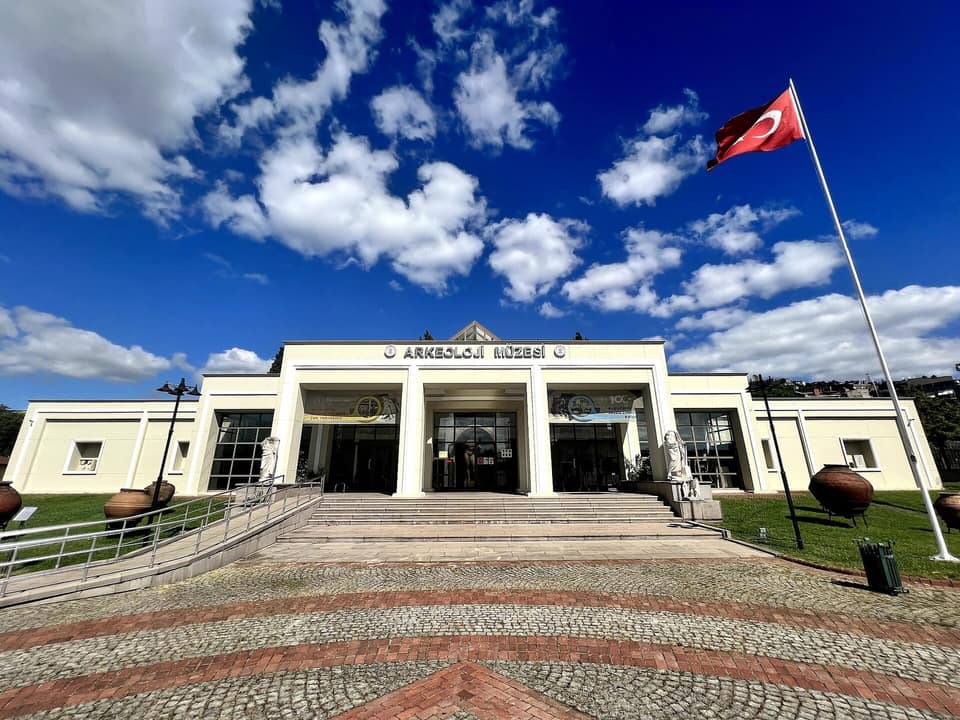
Most travellers passing the train station in İzmit think they are looking at an industrial city. Yet beneath the same city lies a place that once served as the eastern capital of the Roman Empire. This article tells the story of that city, Nicomedia, through a place you can actually visit today, the Kocaeli Archaeology Museum. We chose the museum over the excavation site for a simple reason: official sources confirm that the museum is open to visitors, while there is no such confirmation for the Çukurbağ excavation area. For that reason we discuss Çukurbağ only through scientific publications and the museum's own work.
From Astakos to Nicomedia, the founding of the city
The story begins around Başiskele, at the south-eastern end of the Gulf of İzmit. According to the TDV Encyclopedia of Islam, settlers from Megara founded the city of Astakos here around 712 BC. The Kocaeli Governorship's museum text presents the same migration as the story of people who set out from Megara about 2,700 years ago. Astakos was devastated during an attack by the Bithynians. Afterwards King Nicomedes I of Bithynia founded a new city in the eastern part of today's town under the name Nicomedia, and it became the capital of the kingdom. The safest wording is therefore the middle of the 3rd century BC. In the following years the city grew westward and was surrounded by walls. When the Kingdom of Bithynia was attached to Rome in 75 BC, Nicomedia became the centre of that province. The journey of the name towards today's İzmit is interesting in itself. Strabo calls the city Nikomedeia, the form İznikmid is common in Turkish sources, İzmid appears towards the middle of the 19th century, and the present spelling İzmit settles in the early 20th century. In other words, the name of the founding king still lives on in the name of the city.
The years as eastern capital of Rome
Nicomedia's brightest period began at the end of the 3rd century, when Emperor Diocletian made the city the capital of the eastern lands of the Roman Empire. According to the TDV entry, Diocletian had a hippodrome, a palace, a temple, baths and official buildings built here and had the city's infrastructure reorganised. The same source writes that in this period Nicomedia became the fourth largest city of the empire after Rome, Antioch and Alexandria, and a hub where important roads met. The Governorship page also describes the city as the fourth largest city of the world that served as a capital for Rome. Roman emperors had coins struck in their own names here, a detail that gives meaning to the museum's coin section. The TDV also records that Pliny, governor of Bithynia, considered digging a canal between Lake Sapanca and İzmit in the year 111 but could not carry it out. After Istanbul became the capital in 330, Nicomedia kept its importance for a while. The Governorship text stresses that Nicomedia was the city that shaped Constantine's life. The city was badly damaged by the great earthquake of 358 and the Gothic attack of 378, was rebuilt under Justinian, but gradually declined into a small town because of repeated earthquakes. It passed to Ottoman rule in 1337.
Çukurbağ, revealed after the earthquake
The most tangible trace of this capital period appeared in the Çukurbağ neighbourhood of the city. According to the abstract of an article in the Journal of Mosaic Research, published by Bursa Uludağ University, an imperial building belonging to Emperor Diocletian was found here after the 1999 earthquake. The Kocaeli Archaeology Museum carried out rescue excavations here between 2001 and 2016. Many colourful reliefs and architectural elements thought to belong to the imperial complex were recovered. A geometric opus sectile floor made of coloured marble pieces of different sizes was also uncovered. The article says the floor was heavily damaged. In 2022 an in situ conservation and repair project began. Mortar samples were analysed with salt tests and microscope examinations, grasses and woody plants were cleared from the area, and marble fragments that had come loose were placed back in their original positions. When the work ended, the floor was covered with geotextile and sand. This is an important warning for readers. The area is an archaeological site, official sources do not confirm that it is open to visitors, and it is kept covered for protection. Going to Çukurbağ to look around is therefore not a plan; visiting the museum makes more sense.
The museum itself, the Old Station Area
The Kocaeli Archaeology Museum stands inside the historic İzmit railway station complex, in the Old Station Area in the Kozluk neighbourhood. According to the Ministry of Culture and Tourism's Kocaeli Museum Directorate, the city's first museum opened in 1967 in the Hunting Lodge, and in 1987 the Saatçi Ali Efendi Mansion Ethnography Museum came into service. In 2006 a new site was chosen and repair work began in the long-unused Old Station Area. The area consists of the station building thought to have been built by the German architect Otto Ritter after the railway came in 1873, together with structures added later. Of the 19 decares in total, 11 decares were allotted to the museum. Two monopoly warehouses on the site were joined to form exhibition halls and a conference hall of roughly 130 seats; the repair workshop, water tank and lodging that served the former station also remain within the museum grounds. The museum opened on 20 June 2007. The Ministry of National Education page gives the opening as early 2007; I follow the exact date on the Ministry of Culture directorate page. According to the Governorship page, the ethnographic works moved to the Atatürk, Redif and Ethnography Museum in 2022 and the building took the name Archaeology Museum. So what you see today is a railway station turned into a museum.
What to see in the galleries
The coin section greets you at the entrance. According to the Ministry's description, it holds a broad collection covering almost every age from the Archaic to the Ottoman, and the coins of Nicomedia are among the most striking examples. While looking at the coins, remember the point made above: Roman emperors had money struck in the city in their own names. The exhibition area consists of two coin cases and eighteen archaeological cases. Most of the hall follows a chronological flow from the Palaeolithic to the Ottoman period. In that flow you move from Stone Age people who lived at Kefken about 30,000 years ago to the founders of Astakos, then to the city that served as a Roman capital, and on to the later centuries in which Nicomedia took the names İznikmid, İzmit and Kocaeli. The Governorship page also lists Classical and Hellenistic works, marble busts of commanders, athletes and honoured people from the Roman period, and Middle Ages and Byzantine finds. To the left of the entrance, amphorae and information about ancient seafaring illustrate the region's underwater cultural heritage; finds from the 2020 underwater surveys off the Kerpe coast are exhibited here too. The Governorship also writes that a statue of Herakles welcomes visitors at the entrance. Rather than reading the exhibition in one go, it is more rewarding to move slowly from hall to hall and recall each age one by one.
The garden display
The museum garden is perhaps where you feel Nicomedia most directly. The Ministry and Governorship texts say that the open-air display includes sarcophagi found in Kocaeli, grave stelae, statues, pithoi, and the stone remains of structures that point to Nicomedia's capital period. According to the Governorship, the garden is divided into small islands starting from the security checkpoint entrance, which creates a conceptual unity as you walk. Most of the works come from drilling, excavation and construction work within the province, while some entered the museum by confiscation. Most date to the 1st to 3rd centuries AD, with a considerable number from the late Roman and Byzantine periods and a few from the late Hellenistic period. The densest groups are sarcophagus chests and lids and milestones, generally dated to the 2nd and 3rd centuries AD. Next come marble altars and inscriptions. Among the sculptures, the Genius of Eternity and the Statues of the Seasons found at Kumköy in Kandıra stand out. The garden also holds column capitals, shafts and bases from the Hellenistic period to the Byzantine period, along with Ottoman fountain panels and cannons. If you plan to take photographs, side light brings out the texture of the stone surfaces best.
Visit plan and surroundings
The area around İzmit station is the best reference for reaching the museum. The museum lies inside the historic station complex; for public transport, I suggest checking the most current information on the Kocaeli Metropolitan Municipality's transport pages. The Ministry of National Education page says the museum is closed on Mondays, that guide service and barrier-free access are available, that the site has a car park and toilets, and that food and drink may not be brought in. Group visits require an appointment in advance. If you have a full day, there are two more museums under the same directorate. The Atatürk and Redif Museum is housed in a building erected in the 19th century for the Redif organisation; according to the Ministry's text its inscription reads 1889-1890, it served as a military court building until the 1999 earthquake, its restoration ended in 2011, and it opened as a museum in 2012. The Hunting Lodge Palace Museum is a palace built in the reign of Sultan Abdülaziz. Spreading the three stops across different days lets you give each one proper time.
Sources
- Ministry of Culture and Tourism Kocaeli Museum Directorate, https://dosim.ktb.gov.tr/TR-321197/kocaeli.html
- Kocaeli Governorship, Kocaeli Archaeology Museum, https://www.kocaeli.gov.tr/kocaeli-arkeloji-muzesi
- DergiPark, Çukurbağ Opus Sectile Floor article, https://dergipark.org.tr/tr/pub/jmr/1564761.xml
- TDV Encyclopedia of Islam, İzmit, https://islamansiklopedisi.org.tr/izmit
- Ministry of National Education Out-of-School Learning Environments, Kocaeli Archaeology Museum, https://okuldisiogrenme.eba.gov.tr/mekan-detay/kocaeli-arkeoloji-muzesi-6054
- Wikipedia, Nicomedia, https://en.wikipedia.org/wiki/Nicomedia
- Cover image, Aaytacc147, CC BY 4.0, Wikimedia Commons, File:Kocaeli Arkeoloji Müzesi Ana Bina.jpg
Comments
Be the first to comment