

Merinos, the Factory of the Republic, from Sümerbank to Museum
Bursa's silk has been talked about for centuries; the story of its wool is far shorter, yet every bit as decisive.

Sign in to like and rate
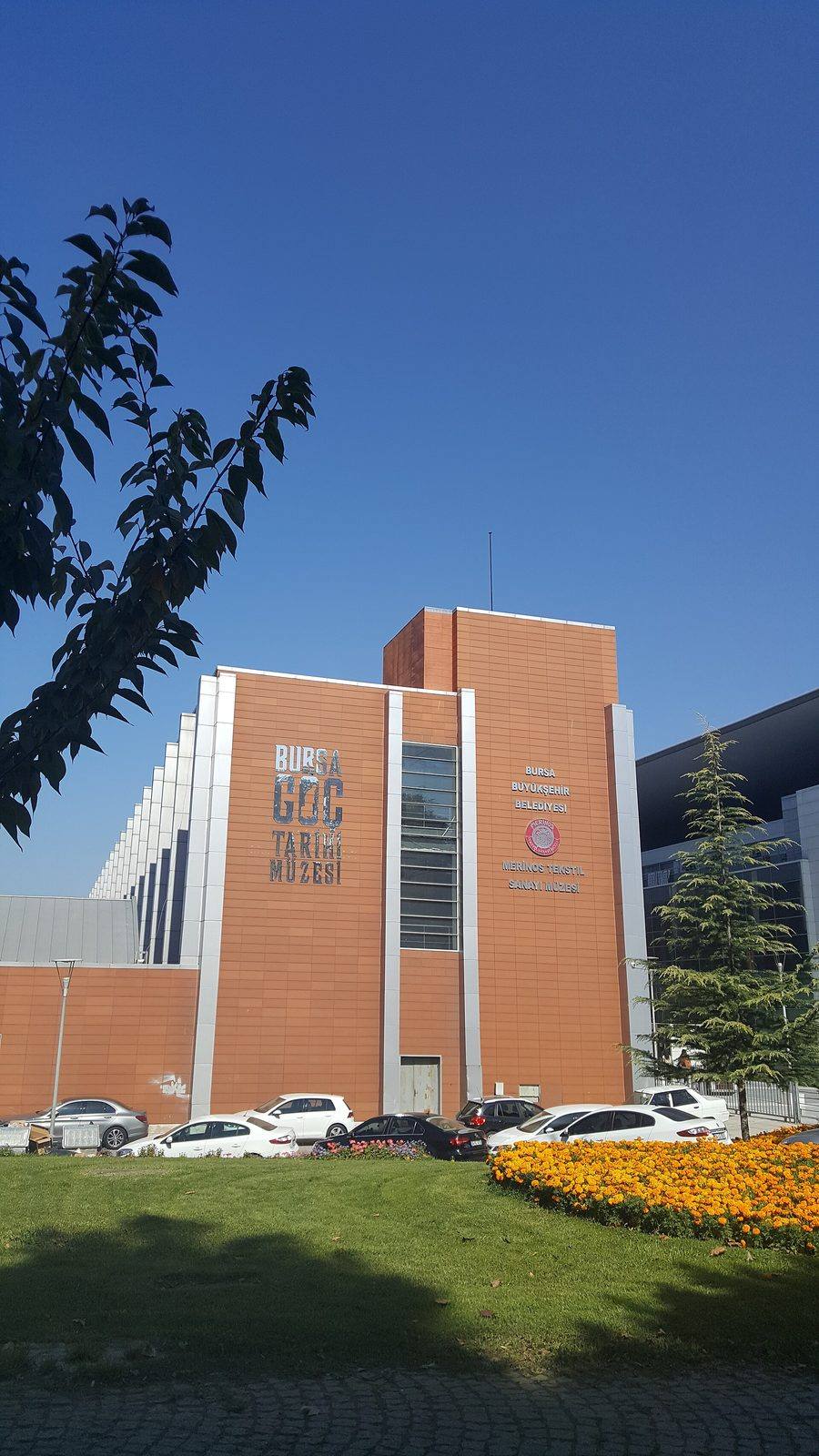
Bursa's silk has been talked about for centuries; the story of its wool is far shorter, yet every bit as decisive. The Merinos complex, standing on the west side of the city where the Mudanya road begins, tells the 66-year life of a state factory that started production in 1938, and a second life that began after it closed. Today the same walls hold a congress centre, a textile museum and an energy museum, with one of Bursa's largest urban parks around them. This article follows that transformation, from the day the factory was founded to an afternoon in the park.
Foundations in 1935, a key in 1938
When Sümerbank planned a woollen weaving plant for Bursa within the Republic's first industrial plan, the name was already there. Merino is the sheep breed that yields fine, long-fibred wool; the factory would process that wool and feed its raw material through domestic merino breeding. According to the history published by Merinos AKKM, the foundations were laid on 28 November 1935, the construction was undertaken by Nuri Demirağ, and the buildings rose within a few years. The factory began trial production in early 1938 and opened on 2 February 1938. The detail of that day is still told in Bursa. On his seventeenth and last visit to the city, Atatürk opened the factory not by cutting a ribbon but by unlocking the door with the golden key presented to him. The out-of-school learning material of the Education Information Network confirms the same date; the artificial silk factory in Gemlik opened one day earlier, and Merinos in Bursa the next.
The factory started with yarn. According to the history it had 16,140 spinning and 7,000 twisting spindles at its foundation. The English Wikipedia article on the Energy Museum relates that with the additions of 1944 and 1946 the plant became the largest woollen factory in the Balkans and the Middle East; the museum page of Bursa Metropolitan Municipality also describes it as one of the most advanced textile enterprises of its time. That it employed 17,500 people from its foundation to its closure, and that it was one of the factories where women worked in the greatest numbers, is written on the same page.
Two sides of the avenue, factory and housing
Merinos was not only a place of production but the founder of a neighbourhood. In an article published in the Journal of the Faculty of Engineering and Architecture of Uludağ University, Timur Kaprol writes that İpekiş, opened in 1925, and Merinos, opened in 1938, increased migration from the countryside to the city and gave rise to new housing areas around Mudanya Avenue. In those years the worker walked to work; for that reason the factory settled on one side of the avenue and the workers' housing on the opposite side. Western housing typology dominated the layout of the housing, and the dwellings were designed in relation to the existing fabric. The article also reads the factory building itself within the modernism of its period. Glass surfaces, horizontal divisions, a terrace roof and pediments recalling Art Deco make it the largest-scale example in Bursa of the international currents of the 1930s. The canteen building, the administrative block and the service courtyard still stand with the same lines after restoration.
The municipality's museum page also lists the social face of the factory. A tennis court, a football pitch, a swimming pool, a cinema hall and a nursery were inside the same complex. State factories of that period did not only produce; they established an order of life from the housing of the worker to the care of the worker's child. Merinos became the most complete example of this model in Bursa.
A factory that generated its own electricity
Washing, combing, spinning and dyeing wool required a constant supply of steam and electricity. For that reason a power plant was built together with the factory. The Culture Portal writes that the plant was built with German technology and equipped with a capacity that could meet not only the needs of the factory but, when necessary, the electricity needs of Bursa. According to the municipality's page, the 3,200 square metre plant building held coal-fired steam boilers, additional boilers dated 1951, turbines, generators and water pumps. These machines fell silent together with the factory, but they were not dismantled; as we will shortly see, they are the main exhibit of the museum.
Closure and transfer
Merinos, one of the most important enterprises of the Bursa economy during the industrialisation that accelerated in the 1960s, stopped production in 2004 as a plant that could not keep pace with technology and whose productivity had fallen. The transfer decision had been taken earlier. According to the history, on 14 November 2000 the Privatisation High Council decided to transfer the land of roughly 314,570 square metres and the structures on it to Bursa Metropolitan Municipality free of charge; the purpose was education, culture, art, sport and recreation. The actual transfer was completed in 2004. For an industrial complex to turn into a public space in the middle of the city without being demolished was a new idea in Turkey in those years.
From factory grounds to city park
According to the Wikipedia article on Merinos Park, the park was created between 2006 and 2008 within the urban transformation project launched by the municipality and opened in 2008. On 252,500 square metres there are 2,500 trees of 81 species and 11,600 plants, an artificial pond, ornamental pools, two kilometres of walking path, three kilometres of running track and five kilometres of cycle path. It is known as the second largest urban park of Bursa. The main building of the factory, meanwhile, was converted into the Merinos Atatürk Congress and Culture Centre and opened on 6 June 2010. According to the centre's own page there are four large halls, led by the 1,623-seat Osmangazi Hall, a 7,600 square metre fair area and three exhibition halls; the 74,215 square metre former factory building houses a conservatory, an art centre, the textile museum and the migration museum. The fair area is the old production hall running from the West Gate to the East Gate of the factory; as you walk through it, the height of the ceiling and the rhythm of the windows tell you why it is shaped that way.
Where the machines stayed, the Textile Industry Museum
The Merinos Textile Industry Museum opened on 14 October 2011 at the East Gate entrance of the congress centre. The municipality presents it as the first and only textile industry museum in Turkey. The visit follows the order of production through four halls. The machines and material samples of every stage, from raw wool fibre to spinning, from weaving to dyeing and finishing and to garment making, stand in place. The laboratory where the factory tested fibre, yarn and cloth has been preserved with its instruments. The social section displays the badges, work clothes, photograph archive and personal collections of former employees; this corner reminds you that beside the machines the real story is the people. Since 2013 there has also been a sericulture section; the process from cocoon to thread and to weaving is told with a reeling machine and looms. Silk is Bursa's other story, and in this article we only mention it.
A free audio guide is available in the museum, in two versions narrated for adults and for children. Guided tours for groups require a reservation; programmes for children such as the Merino Sheep Workshop and drama sessions are organised. Lifts and ramps give access to all floors. The museum is closed on Mondays; check the current opening hours and visiting conditions on the municipality's museum website.
The Energy Museum in the power plant
The factory's power plant opened as the Merinos Energy Museum on 7 September 2012. The entrance is on the North Gate side of Merinos Park. Four water pumps, two older and two 1951-dated steam boilers, turbines and generators have been preserved in place; with light, sound and fog effects the machines are presented as if they were still running. The exhibition tells the history of electricity in the world, in Turkey and in Bursa, the lighting devices used before electricity, and the forms of generation from thermal plants to wind, with models. When this article was being prepared, the municipality's page stated that the museum was closed to visitors for restoration; be sure to check the current situation before going. When open, it is the best second stop to visit on the same day as the textile museum, because together the two complete the whole cycle of the factory.
Visiting Merinos today
The easiest way to get there is by rail. When you leave the Merinos station of BursaRay, the park and the congress centre are in front of you; the Çarşamba Merinos stop of the T1 tram also passes beside the complex. The Culture Portal writes that the museum is reached by metro and bus from Ulubatlı Hasan Boulevard. Come early in the morning; walk around the pond and along the tree-lined paths of the park first, then enter the textile museum through the East Gate. After leaving the museum, crossing the fair hall of the congress centre from end to end is the shortest way to feel the scale of the old factory. If the energy museum is open, walk towards the North Gate. Do not forget to look across the road at the neighbourhood where the old workers' housing stands; the relationship between factory and housing described by Kaprol can still be read in those streets.
Merinos tells us that wool is Bursa's second great textile story after silk. The factory closed, but its machines, its power plant, its buildings and its park remained with the city. That an industrial complex turned into a museum, a concert hall and a tree-lined park without being demolished shows that the factory of the Republic still gives something to the city today.
Sources
- Merinos AKKM, History, https://www.merinosakkm.com/kurumsal/tarihce
- Merinos AKKM, Merinos AKKM, https://www.merinosakkm.com/kurumsal/merinos-akkm
- Bursa Metropolitan Municipality Museums, Merinos Textile Industry Museum, https://www.bursamuze.com/merinos-tekstil-sanayi-muzesi
- Bursa Metropolitan Municipality Museums, Merinos Energy Museum, https://www.bursamuze.com/merinos-enerji-muzesi
- Culture Portal, Bursa Merinos Energy Museum, https://www.kulturportali.gov.tr/turkiye/bursa/gezilecekyer/bursa-enerji-muzesi
- Timur Kaprol, Architectural Development in Bursa between 1930 and 1950 after the Republic, Journal of the Faculty of Engineering and Architecture of Uludağ University 7(1), 2002, DergiPark, https://dergipark.org.tr/tr/download/article-file/202905
- EBA Out-of-School Learning, Merinos Textile and Industry Museum activity plan, https://okuldisiogrenme-cdn-large.eba.gov.tr/uploads/general/691f567033f9e.pdf
- Wikipedia (Turkish), Merinos Parkı, https://tr.wikipedia.org/wiki/Merinos_Parkı
- Wikipedia, Bursa Energy Museum, https://en.wikipedia.org/wiki/Bursa_Energy_Museum
Comments
Be the first to comment