

Kemaliye Eğin Houses and a Town Built on Stone Terraces Above the Euphrates
A Settlement of Three Terraces Above the Euphrates Kemaliye is a district in the southwest of Erzincan.

Sign in to like and rate
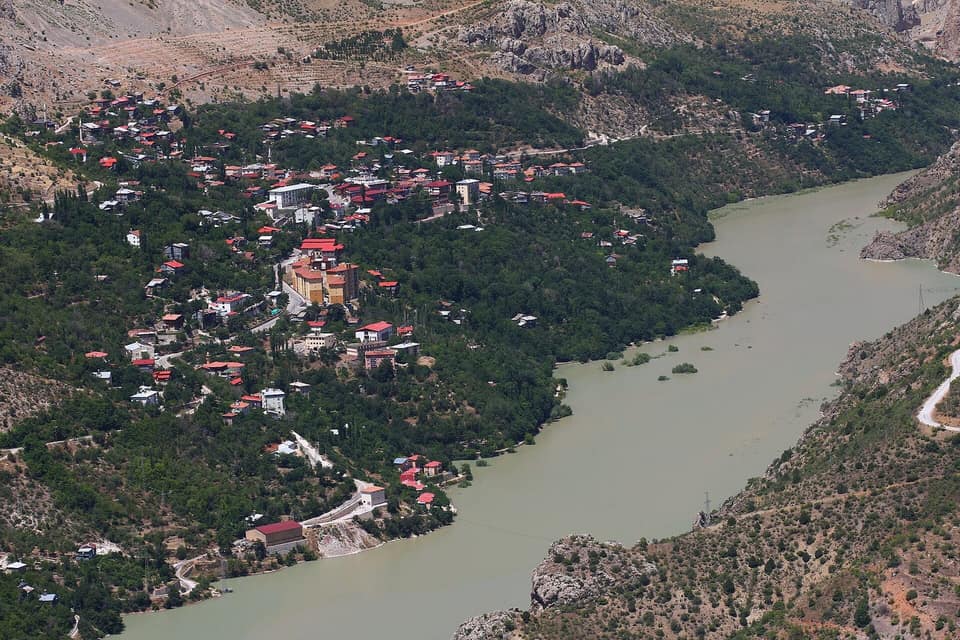
A Settlement of Three Terraces Above the Euphrates
Kemaliye is a district in the southwest of Erzincan. According to the Ministry of Culture and Tourism's Culture Portal, the settlement formerly known as Eğin was renamed Kemaliye, inspired by the name of Mustafa Kemal. Official pages today often refer to the district as Kemaliye (Eğin). To understand the town, look at the slope before the map. The settlement was shaped by an approach that treats nature as the basic element of building, and it consists of three main terraces rising from the Euphrates. Here the river is not a line that divides the town but the main force that organizes it. The Culture Portal says the Euphrates influenced the urban spatial structure and the architecture, and that the neighborhoods were designed accordingly. The result is a skyline that climbs step by step, with each house looking onto the roof of the one below. Anyone walking along the terraces can take in both the changing view and the way the houses lean on one another. The Culture Portal presents Kemaliye Historic Town as a settlement that stands out for its urban fabric, its architecture and its authentic houses.
Eğin on the Silk Road and the Caravan Routes
Kemaliye's calm appearance today should not hide its busier past. The Culture Portal states that, over the course of history, the district lay on the Silk Road and on caravan routes. The district governorate's page on the houses says Kemaliye has been a place where various cultures lived since its foundation, and that the traces of this shared culture show in the details. For that reason it is more rewarding, when looking at the houses, to follow how different traditions merged into a common building language than to search for one single regional style. Pay attention to the arrangement of doors, the structure of the hall and the orientation of the rooms. The Culture Portal adds that the district center and its dependent settlements have largely preserved their traditional local architecture and fabric. Thanks to this, the houses of a caravan route town still stand in its streets like a readable document.
Stepped Houses and the Mağ Axis System
The principle that holds Kemaliye houses together is the economical use of land. According to the district governorate's page, the houses are positioned to suit the topography and were built with an axis system of 3 to 3.5 meters, called mağ. Because land is scarce and sloping, the houses were conceived vertically rather than horizontally, and two, three or four storeys were preferred to single-storey houses. Most houses lean against the slope. One interesting result is that doors opening from different floors of a house lead either to a street or to a garden. The same house can therefore connect to the lower street and the upper garden, depending on the height of the slope. The houses are surrounded by mulberry, walnut, plane and poplar trees, and the district governorate's page describes them, set among many shades of green, as fine examples of harmony between the natural setting and architecture. Standing at the head of a street and reading the facades from top to bottom is the easiest way to grasp this vertical design. Afternoon side light makes the difference between the stone and timber floors more distinct.
A Walk Inside the House
Inside, the plan is organized around the sofa, a passage from which rooms open. The district governorate's page defines the sofa as a passage from which rooms and other spaces open directly, and treats it as an expression of the tendency to create the courtyard element of the traditional house inside the building. The seating part of the sofa is called the divanhane. Separated from the sofa only by a floor raised by one step, the divanhane is also the center of the house's visual relationship with the view. The rooms are usually placed on both sides of the divanhane, symmetrically if there is no functional difference between them. The seating area of a room is called sekiüstü and is one step higher than the sekialtı. Along the walls there are divans with one, two or three sides. The yüklük section is used for storing bedding, and the wall surface between the yüklük and the door is shaped with wooden decoration known as çiçeklik or şerbetlik. At the upper edge there is a shelf system, corner lamp niches and a hat shelf above the door. The kitchen door, however, is smaller than the others, and a person entering has to bow his head. The district governorate's page explains this as an expression of respect for bounty.
Lower Floors, Upper Floors and the Roof
A three-storey Kemaliye house can be read according to the function of each floor. Generally the lower floor is the service floor. This floor, connected to the garden, is used as a cold store, a pantry and a woodshed. The timber floors that begin above the stone wall are the main living floor, and the divanhane, the reception room, the sofa and the kitchen are located here. The upper floors generally hold the bedrooms. Above the last floor, the roof covered with a paved surface is used for processing and drying agricultural products. The service spaces are distributed across the floors. The coffee hearth serving the reception room, the roof where seasonal foods are dried, the stable for the family's animals, the hay store and the toilet units are placed on different floors according to the spatial principles of the house. The kitchen is mostly on the main floor, adjoining the sofa, at the rear, opposite the view. This arrangement shows that the house was not only a dwelling but also a small unit of production and storage. The difference you notice from the street between the stone base and the timber upper structure is the outward reflection of this functional division inside.
Streets, Carpet Weaving and Urban Fabric
The houses of Kemaliye are valuable not one by one but as a fabric. The Culture Portal says that, with its natural beauty nearby and its rich folklore, Kemaliye has great tourism potential. The same page calls the district famous for its carpet weaving and reports that a carpet festival is held every year. The date and program of the festival should be checked in the current announcements of the relevant institutions. According to the Culture Portal, Kemaliye Historic Town was added to the UNESCO World Heritage Tentative List in 2021 and joined Turkey's network of slow cities (Cittaslow) in 2022. A tentative listing does not mean a place has entered the permanent list, it only shows that it has been recorded as a candidate. On your walk, follow the streets while watching the arrangement of doors and windows, garden walls and the points where trees thicken. Walking the same route both downhill and uphill shows you two different faces of the houses.
The Surroundings of the Town
The Culture Portal describes Karanlık Kanyon as an inseparable part of the Kemaliye settlement. The canyon is a gorge surrounded by steep rocky slopes, formed by the Karasu River, a tributary of the Euphrates, and it was registered as a Natural Site in 2020. It is about 25 kilometers long. Its depth exceeds 1000 meters, and its floor narrows to 10-15 meters in some stretches. Springs emerging from the slopes form small waterfalls and the canyon shelters wildlife such as ibex, otter and lynx. Within the canyon runs the Stone Road, carved from hard rock. The Culture Portal writes that the road is 7 kilometers long and consists of 38 tunnels. According to a news text published by the Communications Directorate, work on the road began in the 1870s to link Kemaliye with Central Anatolia, local people carved the rock with hand tools, and the road was completed in 2002 after about 130 years of work. Over time the road was widened to let vehicles pass and it connected Kemaliye with Divriği. The Culture Portal notes that boat trips, rock climbing and various outdoor sports are possible in the canyon. For the conditions, permits and current status of these activities, the Kemaliye District Governorate and the Culture Portal pages should be the reference. In Dilli Valley, about 4-5 kilometers northwest of the town, there are petroglyphs and tribal marks. The Culture Portal says studies on these signs contain important information for Turkish cultural history. The same page also lists Endiçi Castle, Topkapı Castle, Kadıgölü and Ala Cave among the district's important places.
How to Get There and How to Explore
Kemaliye lies in the southwest of Erzincan and is linked to Divriği by the Stone Road. From whichever direction you come, plan the journey as a mountainous and winding route and check the current road conditions beforehand. Because public transport and vehicle options can change with the season, it is safest to get transport information from the Kemaliye District Governorate and Kemaliye Municipality. The news text states that the Stone Road was widened over time to suit vehicles, and passage conditions and permits should be asked of the authorities. Times, prices and safety conditions for boat trips and other outdoor sports should be learned from the relevant institutions. For the sloping streets, choose comfortable shoes that do not slip. Most of the houses are lived-in homes, so respect gardens and doors, do not enter without permission and behave quietly when taking photographs. Spring and summer are when gardens and trees are greenest, and according to the Culture Portal the Kemaliye Culture and Outdoor Sports Festival is held every May. Set aside at least one full day to see the whole town, and plan extra time for the canyon and the valley.
Sources
- Kültür Portalı, Kemaliye Tarihi Kenti, https://www.kulturportali.gov.tr/turkiye/erzincan/gezilecekyer/kemaliye-tarihi-kenti
- Kemaliye Kaymakamlığı, Kemaliye Evleri, https://www.kemaliye.gov.tr/kemaliye-evleri
- Kültür Portalı, Karanlık Kanyon, https://www.kulturportali.gov.tr/turkiye/erzincan/gezilecekyer/karanlik-kanyon-
- İletişim Başkanlığı, Kemaliye'nin Tarihi Güzelliği Taş Yolu, https://www.iletisim.gov.tr/turkce/yerel_basin/detay/kemaliyenin-tarihi-guzelligi-tas-yolu
Comments
Be the first to comment