

Istanbul's Market Gardens, from Yedikule Lettuce to Langa Cucumbers
Fields inside the city Today vegetables in Istanbul bring to mind market stalls and the wholesale market, but for centuries the city grew a large share of its vegetables at the foot of its own walls.
 Radar TürkiyeNovember 24, 2026
Sign in to like and rate
Fields inside the city
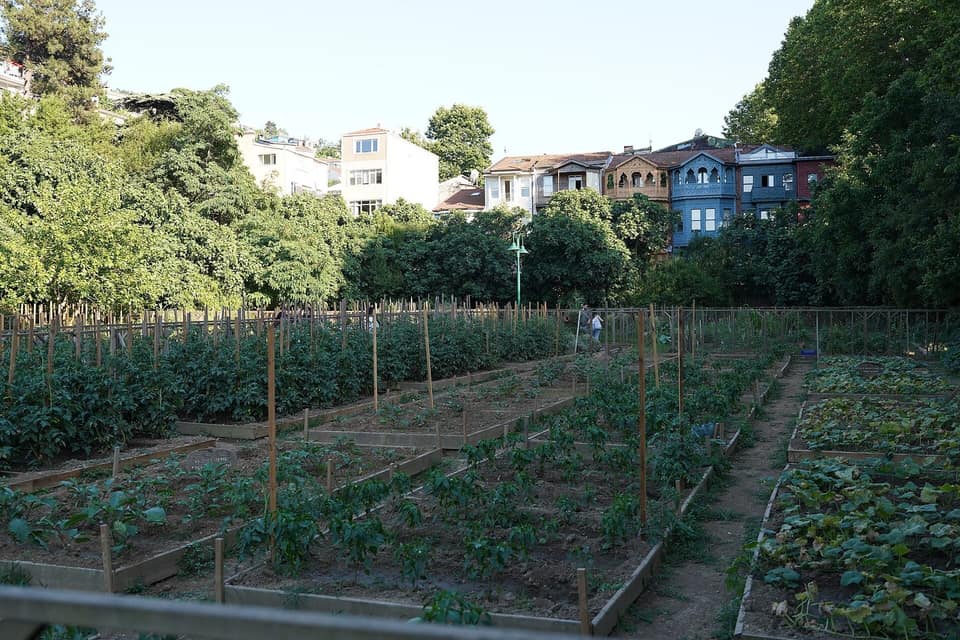
Today vegetables in Istanbul bring to mind market stalls and the wholesale market, but for centuries the city grew a large share of its vegetables at the foot of its own walls. These fields were called bostan, market gardens. According to research by Dr. Ahmet Hamdi Bülbül, published in 2024 in Erdem, the journal of the Presidency of the Atatürk Cultural Centre, the Ottoman state had set up an advanced provisioning system for Istanbul, and within this system the people's daily need for vegetables and fruit was met by market gardens in certain parts of the city. The gardens were not only around the land walls but also on both shores of the Bosphorus and at the mouths of streams. The same study reports that travellers visiting the city called it "Green Istanbul" because of these vineyards, orchards and market gardens.
A tradition inherited from Byzantium
Market gardening in Istanbul is much older than the Ottomans. The article on Istanbul's gardens in the Great History of Istanbul from Antiquity to the 21st Century explains that in the Roman and Byzantine periods gardens, vineyards and market gardens took up considerable space in the city, and that this continued under the Ottomans. The study in Erdem reports that at Yedikule, which was also used for market gardens in the Ottoman period, cabbage, leeks, onions, garlic, squash, carrots, cucumbers, melons and pomegranates were grown on the land outside the Golden Gate. The gardens spread along the city walls and around today's Bayrampaşa Stream, known in Byzantium as the Lykos.
To revive the city, emptied after the conquest, an edict sent to all provinces encouraged the planting of vineyards and gardens, and the city soon turned green again. The places Byzantium had cultivated continued to be used for the same purpose. An interesting detail is that open-air Byzantine cisterns, once water reservoirs, were filled in over time and turned into gardens. According to the study in Erdem, the areas called "çukurbostan", or sunken gardens, formed by filling the Mokios cistern at Altımermer, the Aetios cistern at Karagümrük, the Aspar cistern at Yavuz Selim and the Hebdomon cistern at Bakırköy, were used as vegetable fields. The 2005 conservation plan for the Historic Peninsula also refers to the sunken gardens at Karagümrük, Yavuz Selim and Altımermer by these names.
Langa, a garden on top of an old harbour
One of the most famous gardens was Langa. According to the article in the Great History of Istanbul, this garden, formerly called Vlanga, stood on the site of an old and important harbour that had silted up over time with the sand and gravel carried into the Marmara by the Bayrampaşa Stream. This silted harbour became a garden and was drawn, complete with garden wells, in Matrakçı Nasuh's famous depiction of Istanbul. Evliya Çelebi described the Langa Garden as a place where people from every corner of Istanbul strolled freely. The same article also reports that the name Vlanga was said to mean "greenery" in Greek and that the cucumbers grown there were described as very large.
The Langa gardens were a source of income for a great endowment. The study in Erdem states that, according to the accounts of the Süleymaniye Foundation for 1583-1586, a rental income of 29,290 akçe was earned from the Langa gardens. According to the study, most of Istanbul's market gardens were of endowment origin and were managed through the endowment system; the gardeners described in the sources as garden owners were often not the owners of the land but the people who worked it.
Palace gardens and the bostancı
In Istanbul the palace was also part of the market garden story. According to the Bostancı entry of the TDV Encyclopedia of Islam, the history of the Corps of Gardeners goes back to the reign of Murad I. The gardeners, part of the outer service of Topkapı Palace, mainly worked in the vineyards and gardens of the palace and on the sultan's boats. The same entry writes that at the end of the 16th century the privy garden staff numbered 645 and the other gardeners about 971. The TDV entry on gardens also states that at the end of the 16th century Topkapı Palace was surrounded by extensive vegetable gardens, vineyards and orchards where 921 gardeners worked.
The produce of the palace gardens did not go only to the palace kitchen. The study in Erdem reports that every year the head gardener presented the sultan with a register of the produce grown and sold in the gardens under his care, and that vegetables were sold in about 200 shops and flowers in about 17. The number of outer palace gardens also changed from era to era; from 39 in the second half of the 16th century it rose to 61 in the mid-17th century and 62 in 1778, then fell to 28 at the start of the 19th century. The Corps of Gardeners was abolished in 1826.
Vegetables named after neighbourhoods
The most lasting legacy of the gardens to Istanbul's cuisine is the vegetables named after neighbourhoods. The study in Erdem lists some of them: Beykoz ayşekadın beans, Çengelköy cucumbers, Bayrampaşa artichokes, Yedikule lettuce, Langa cucumbers and lettuce, Beykoz aubergines, Kavak figs, Tuzla okra and Arnavutköy strawberries.
What Eremya Çelebi Kömürciyan, who described Istanbul in the 17th century, reported widens this map. According to the study, Kömürciyan wrote that there were many fine gardens and market gardens along and inside the walls at Yedikule, that large European roses were grown in the gardens of Kasımpaşa, that artichokes obtained from Europeans were planted in the gardens of Ortaköy, that the famous cherry called "hisar kirazı" grew at Beykoz and Göksu, and that there were two large market gardens at Kuzguncuk. The fruit and vegetable gardens of Çubuklu were also under the supervision of the palace gardeners.
Inside a market garden and its water wheels
A market garden was not just a planted field. According to the study in Erdem, the gardens were mostly enclosed by stone walls and contained large, deep stone-lined wells, water wheels, pools, buildings where the gardeners lived and stored produce, sheds and stables. The gardens were also places of recreation. Citing Reşad Ekrem Koçu, the study describes how poor families went to neighbouring gardens after the afternoon heat had passed, sat by the well, watched the wheel turn and the water pour from the buckets, ate pickled cucumbers, lettuce and green plums, and on the way back bought some vegetables and fruit before returning home.
Because Istanbul suffered water shortages in every era, irrigating the gardens was not easy. Especially for the gardens between Yedikule and Silivrikapı, which had no stream nearby, water wheels driven by animals were used. A large wooden wheel set over the well drew up water with buckets tied to ropes and emptied it into a wooden trough above. Channels attached to the trough distributed the water to the beds. The horse harnessed to the wheel was blindfolded so that it would not get dizzy, and a small bell was hung on its neck so that the gardener would notice when it stopped. The Building Law of 1880 exempted garden water wheels from tax. According to the study, animal-driven water wheels survived in the Yedikule, Bayrampaşa and Yenibahçe gardens until the middle of the 20th century.
Market gardens in numbers and their transformation
Archival records show how widespread the gardens were. According to the study in Erdem, in 1719 there were 195 market gardens within the walls and in Eyüp, Galata and Üsküdar, and 77 of them lay between Yedikule and Topkapı. A map of Istanbul dated 1845 shows the gardens with a separate legend, in green and in the form of vegetable beds. On the 1875 maps of the walled city, 102 market gardens are marked in various parts of the city.
From the end of the 19th century, as the city grew, the market gardens were the first areas opened up for housing, industry and roads. According to the study, gardens on the Hasanpaşa Stream in Kadıköy were expropriated for a gasworks, and gardens at Yedikule and Dolmabahçe for the gasworks built there. Many gardens were divided into plots, sold and turned into neighbourhoods. In the 1930s the municipality placed irrigation water under strict control on health grounds and required gardens to be watered with mains or spring water. In this period moving the gardens out of the city was also debated.
Where to see them today
According to the conclusion of the study in Erdem, only a few of the old market gardens survive today, outside the land walls along the line of Mevlanakapı, Yedikule, Belgradkapı and Silivrikapı. The conservation-oriented development plan for the Historic Peninsula approved in 2005 places these gardens within a conservation zone as areas that have kept their natural character. Some former garden sites, on the other hand, have been laid out as parks, cultural areas or sports grounds.
The best way to see the gardens is to walk north from Yedikule along the outer face of the land walls. This line, where the walls and fields stand side by side, lets you see the same land doing the same work since Byzantine times. Most of the gardens are still working private fields today; do not enter without permission, do not step on the beds, and respect the gardeners' work when taking photographs. Choosing the afternoon hours, when the shadow of the walls grows longer, for the walk is also a small reminder of the evenings by the well that Koçu described.
Sources
- Ahmet Hamdi Bülbül, Şehre Sığmayan Topraklar, İstanbul Bostanları, Erdem 87 (2024), Atatürk Kültür Merkezi Başkanlığı, https://erdem.gov.tr/tam-metin-pdf/1110/tur
- Antik Çağ'dan XXI. Yüzyıla Büyük İstanbul Tarihi, İstanbul Bahçeleri, Suç ve Teftiş, https://istanbultarihi.ist/assets/uploads/pdf/istanbul-bahceleri-143.pdf
- TDV İslam Ansiklopedisi, Bostancı, https://islamansiklopedisi.org.tr/bostanci
- TDV İslam Ansiklopedisi, Bahçe, https://islamansiklopedisi.org.tr/bahce
Comments
Be the first to comment