

From Trabzon Jewellery to the Sürmene Knife, the City's Metal Crafts
A city of goldsmiths For centuries Trabzon lived as a port and market city on the eastern Black Sea coast, and one face of that trade was metalwork.
 Radar TürkiyeNovember 24, 2026
Sign in to like and rate
A city of goldsmiths
For centuries Trabzon lived as a port and market city on the eastern Black Sea coast, and one face of that trade was metalwork. Jewellery woven from gold and silver wire, cauldrons hammered from copper and knives shaped from steel in Sürmene are still known by the city's name today. Under the heading of handicrafts, the Trabzon Provincial Directorate of Culture and Tourism presents Trabzon-style jewellery, coppersmithing and Sürmene knife making one by one. These crafts work with different materials, yet they meet at a common point: all of them take shape in the hands of a master, with simple tools and with patience.
The city's fame for goldsmithing reaches back to early sources. A study of kazaziye published in the Journal of the Institute of Black Sea Studies relates that Evliya Çelebi wrote there were no goldsmiths in the world as skilled as those of Trabzon. The same study states that Selim I became governor of the Trabzon sanjak in 1489 and took up goldsmithing as his craft, and that the city's goldsmiths had been renowned ever since. In court registers from the middle of the 17th century, goldsmithing and kazaz work are also listed among the trades of the city. In the Ottoman period goldsmiths' workshops existed not only in Istanbul but also in provincial centres such as Trabzon.
The hasır bracelet
The best known of the jewellery types unique to Trabzon is the hasır bracelet. According to the Provincial Directorate of Culture and Tourism, the hasır bracelet is made by knitting gold or silver wires 31 to 32 microns thin, loop by loop. The directorate writes that the work is entirely handmade and that it has traditionally been knitted at home by young girls and women. The same technique is used to make not only bracelets but also necklaces. Through local and foreign visitors to the city and through people from Trabzon living abroad, hasır jewellery reaches almost every part of the country and many other countries.
The directorate notes that various tools and vessels are also made by knitting, but that making the hasır bracelet, which is unique to Trabzon, is the most widespread work. Knitted silver and gold tassels are also among the works the directorate counts as original examples of Trabzon goldsmithing. When you look closely at a hasır bracelet, remembering that every loop was made by hand one by one explains why this craft is described as work that costs the light of one's eyes.
Kazaziye
Kazaziye is the city's most delicate jewellery craft. The study in the Journal of the Institute of Black Sea Studies explains that the word means one who works and sells silk, and that the master who practises this art is called a kazaz. The Provincial Directorate of Culture and Tourism defines kazaziye as a local handicraft made with very fine gold and silver wires twisted and wound around a silk or nylon thread. During winding the inner thread is held tight, so that a thicker wire with a twisted look is obtained. The directorate states that 995 fineness is used for gold wire and 999 fineness for silver wire.
A spinning frame called a çıkrık is used to prepare the wire. According to the academic study, the standard length of the çıkrık is 120 centimetres, and the nylon thread is held taut between two hooks while the wire is wound around it. On the master's table there are a crochet hook, a tool called the sarmaçka, beeswax, scissors and the kazaz needle. Beeswax stiffens the thread and makes it easier to pass through the needle. The knitting techniques have their own names as well: fishbone, short and long slide, ball knit, the şemse knot, openwork, bıcırık and clover are the main ones.
In the past kazaziye was used mostly for whip tassels, buttons and the decoration of garments. According to the directorate, today necklaces, earrings and bracelets are the products most preferred by women, while tassels are those most preferred by men. The directorate writes that during the years of the First World War there were more than 50 kazaz shops in Trabzon, while today only a limited number of craftsmen remain. The academic study relates that research in the region points to this art having come to Trabzon from Dagestan and the Caucasus.
Trabzon Kazaziyesi received geographical indication registration as a designation of origin in 2017 on behalf of the Trabzon Chamber of Jewellers and Watchmakers. According to the registration, the products carry the TK stamp made from the initials of Trabzon Kazaziyesi, or a TK label specific to the product. The label shows the producer's name, the type and fineness of the material and a statement that the product was made with this technique. If you plan to buy kazaziye, asking for this stamp or label is the easiest way to recognise genuine handwork. The same study also notes that tassels made with kazaz work are recorded in the inventory of the Trabzon Museum.
Filigree
Filigree, whose Turkish name telkari means wire work, is a goldsmith's art made with fine gold or silver wires. The Provincial Directorate of Culture and Tourism writes that the origins of filigree go back to Mesopotamia in the 3000s BC and to Anatolia in the 2500s BC, and that it was also widespread in ancient Greece and Rome. According to the directorate, filigree became widespread in eastern and southeastern Anatolia after the 15th century, and the masters themselves say that craftsmen from Dagestan played a part in its settling in Trabzon. Coffee sets, tea trays, clogs and storage containers used at home are among the pieces of Trabzon-style filigree.
Coppersmithing
Trabzon's metal crafts are not limited to precious metals. According to the directorate, copper from the rich deposits of the region has been worked in Trabzon workshops since the Middle Ages, and the production of copper, bronze and brass formed the city's largest industry. Inventory lists of Topkapı Palace prepared in the reign of Bayezid II show that vessels made in Trabzon workshops were valuable enough to be used in the palace. Because the city was a port, copperware could easily be shipped to the other cities of the Black Sea. Ottoman archive documents also record that gunpowder and saltpetre cauldrons ordered from Trabzon workshops were sent to other cities of Anatolia.
The shapes these workshops produced read like a map of Trabzon's kitchen. Hearth cauldrons with handles on top, copper buckets, ewers, water jugs, bowls for milk and for stewed fruit, dough basins, mugs, lidded pans, pots, braziers and lidded anchovy pans are among the characteristic forms the directorate lists. According to the directorate, copper kitchenware made in Trabzon workshops is still sought after today in the eastern Black Sea region, in Istanbul and in the Adapazarı and Bolu area. The fact that the coppersmith, the cauldron maker and the tinsmith became subjects of folk songs also shows the place of this craft in daily life.
The Sürmene knife
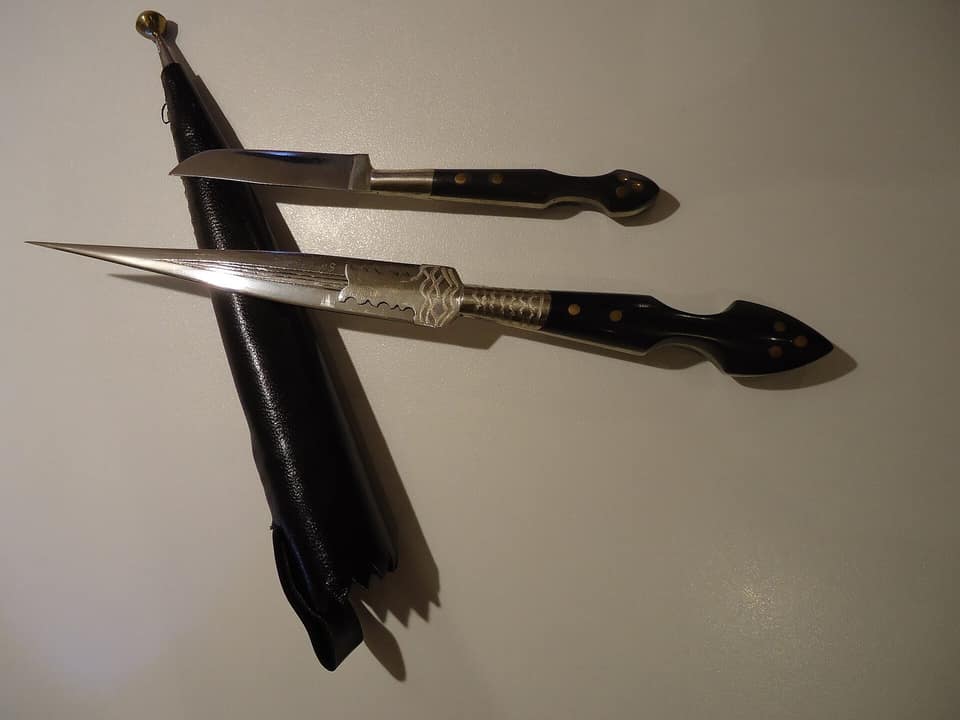
Sürmene, east of the city, has made its name known across Türkiye through its knife. According to research published in the Eastern Geographical Review, knife making has continued in the district for about 150 years. The Trabzon provincial yearbooks of 1872 and 1904 record that blacksmithing and gun making were important in Sürmene, and the knife is thought to have begun as an accessory made together with firearms. The research relates that before 1952 knives were produced in about 50 home workshops. When the Sürmene knife was placed in the firearms category and banned that same year, production almost stopped and most masters migrated to cities such as Istanbul, Bursa and Kocaeli. By 1990 the number of masters still working had fallen below 10, and courses run by public education centres later raised the number somewhat again.
According to the research, traditional production takes place in small workshops next to or attached to the houses. Soğuksu neighbourhood is the centre of production, and Kayalı and Orta Mahalle are other places with workshops. Knives were once made from railway iron and scrap iron, but today they are made from strip steel. The steel is heated in charcoal with a hand-worked bellows and hardened by hammering on an anvil. The steel is then quenched with fish oil; the research stresses that this practice is unique to knife making in Sürmene.
Animal horn, animal bone and wood are used for the handle; the master shapes the roughly cut piece by hand and fits it to the blade. The sheath is made from alder wood hollowed out inside and covered on the outside with goatskin. Because every part of the blade, the handle and the sheath is made by hand, a master can finish only four or five knives a day. Masters often engrave their own names or pen names on the blade. The dagger called the Sürmene çiftli kama, known by the district's name, stands out as the piece on which masters take the greatest care and display their skill.
The Provincial Directorate of Culture and Tourism writes that the Sürmene knife is given as a gift to the groom at weddings and also has a place in send-offs for military service. The directorate advises paying attention to the original product and its quality when buying a knife. Alongside handmade knives, factory production also takes place in the district in two large enterprises founded in 1996 and 2001. The conclusion of the research is that these two forms of production complement rather than compete with each other, and that traditional making continues thanks to this.
How to see these crafts
The best way to see Trabzon's metal crafts is to watch a master at work and to ask how a piece is made. Hasır and kazaziye jewellery are among the first things visitors take home from the city; on kazaziye, the TK stamp or label shows that the piece was made with the registered technique. If you go to Sürmene, look at the handle and sheath of a handmade knife and at the master's signature on the blade. Copper vessels live not only in shop windows but also in the anchovy pan and the milk jug of the Trabzon kitchen. Whichever craft you choose, learning the name and place of the master when you buy a piece that carries the mark of handwork means taking the story of that piece home with you as well.
Sources
- Trabzon Provincial Directorate of Culture and Tourism, Trabzon İşi Takı Sanatı, https://trabzon.ktb.gov.tr/TR-365454/trabzon-isi-taki-sanati.html
- Trabzon Provincial Directorate of Culture and Tourism, Trabzon Bakırcılığı, https://trabzon.ktb.gov.tr/TR-365452/trabzon-bakirciligi.html
- Trabzon Provincial Directorate of Culture and Tourism, Sürmene Bıçakçılığı, https://trabzon.ktb.gov.tr/TR-365448/surmene-bicakciligi.html
- Begiç, H. N. and Önal Çapık, H., Trabzon'da Geleneksel Kazaziye Sanatı, Journal of the Institute of Black Sea Studies 5/8, 2019, https://dents.ktu.edu.tr/dosyalar/karendergi_01893.pdf
- Doğanay, H. and Çavuş, A., Geleneksel El Sanatlarına Bir Örnek, Sürmene Bıçağı Üretimi, Eastern Geographical Review 29, https://dergipark.org.tr/tr/pub/ataunidcd/article/31306
Comments
Be the first to comment