

From Trabzon Cloth to the Boxwood Spoon, the Weaving and Woodcraft of the Village House
The crafts of the village house In the villages of Trabzon that stretch from the coastline up to the high pastures, most of what a household needed was produced inside the house before industrial goods became common.
 Radar TürkiyeNovember 24, 2026
Sign in to like and rate
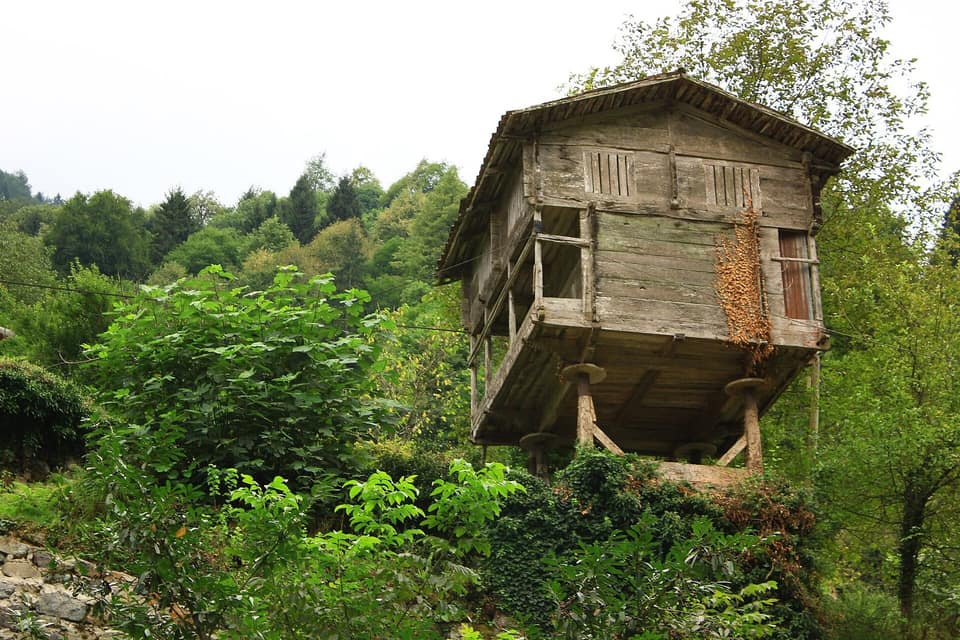
The crafts of the village house
In the villages of Trabzon that stretch from the coastline up to the high pastures, most of what a household needed was produced inside the house before industrial goods became common. Clothes were woven from hemp grown in the field, spoons were carved from wood brought from the forest, and baskets were woven from hazel rods. The Trabzon Provincial Directorate of Culture and Tourism counts weaving and needlework among the province's oldest crafts, as old as coppersmithing, and describes woodwork under a separate heading. From Trabzon cloth to keşan, from boxwood spoons to hazelnut baskets, some of these crafts have been forgotten, while others still continue in the districts today.
Trabzon cloth
At the root of Trabzon's fame for weaving lies its linen cloth. A study published in the Journal of Black Sea Studies writes that the linen weavings known as Trabzon cloth were, since early times, among the main products the city sent to nearby and distant cities. According to the same study, written sources show that people living on the coast stretching from Trabzon to Batumi were selling linen cloth abroad even in the 5th century BC. In the Middle Ages woollen fabrics, linen and silk goods were processed in Trabzon and sent onwards.
Ottoman records clearly show the scale of this trade. According to the study, the first tax survey of 1486 shows that hemp production held an important place in and around Trabzon. In the village of Mersin in Akçaabat, tax was collected on ketan cloth in 1486 and 1554, and on hemp in 1583. Law codes of the 16th century record that merchants coming to Trabzon bought linen cloth to take home after selling their goods. The Provincial Directorate of Culture and Tourism also writes that historical documents contain records of the palace's underwear and silk fabrics being supplied from Trabzon weaving, and that Trabzon cloth became famous in every Ottoman province.
One of the finest kinds of this fabric is known as hilali shirt cloth. According to the study, one thread of this cloth is linen and the other is fine silk, and both edges are woven with stripes. On fabric meant for men's shirts the stripe was made with white silk thread, and on fabric meant for women's shirts with coloured silk threads. The ketan trade was still one of the city's main businesses in the 17th century; court records mention cases about ketan sold in the Trabzon Bedesten, and at that time there was a neighbourhood in the city known as Ketancı or Ketani. The records also show that ketan weavings made up a large part of the goods sold in the markets of Platana, the old name of Akçaabat, and İskefiye, the old name of Çarşıbaşı.
From hemp to cloth
The raw material of Trabzon cloth is hemp. The Provincial Directorate of Culture and Tourism stresses that the weaving called linen in studies of Trabzon weaving is in fact hemp. According to the study, this fabric was called ketan on the coast and in places near the coast, forotiko in and around Çaykara, and tevek in and around Şalpazarı.
The chain of production recorded in Çaykara shows how much labour a single fabric required. Hemp was sown in mid April; the plants to be used for weaving were pulled up at the end of August and those kept for seed in September. The leaves of the dried bundles were stripped with a pointed piece of wood called the hartoma, and the bark was soaked and peeled. The peeled bark was beaten by hammers attached to a water-powered wheel at the stream side, and the fibres, now separated into strands, were refined on an iron-toothed comb called the lanar. The fibres were spun into thread with a tool called the yığ and then bleached for two or three days in a process called tola, using hot water filtered through hornbeam ash.
The bleached threads were wound onto bobbins, and the threads for the warp, spun thicker, were stretched between nails driven into the outer wall of the house. From the fabric woven on a wooden loom, whose seat for the weaver was called the andokur, shirts, underwear, mattress covers and bags for yoghurt and cheese were sewn. In the village of Sevinç in Maçka, the place where hemp used to be beaten is still called Tokmaklar, the hammers. The study writes that until the 1970s hemp was grown in almost every house in the villages of Trabzon and nearly every house had a loom, and that when hemp cultivation was banned this weaving was abandoned and most of the looms were broken up and burned. According to the directorate, weavings made with hemp thread gradually gave way to cotton.
Keşan and peştemal
The weavings that came to the fore with cotton are keşan and peştemal. According to the Provincial Directorate of Culture and Tourism, curtains, shirting, shawls, headscarves and sashes, and above all peştemal, are woven with cotton thread brought from Iğdır, Erzincan and Çukurova in places such as Maçka, Çarşıbaşı, Beşikdüzü and Şalpazarı. The directorate states that the peştemal, a symbol of the Black Sea woman, is divided into two main groups, the dolay peştemal wrapped around the waist and the head peştemal, and that it takes names such as makaslı, ikat and çeşan according to its colour, size and weaving technique. Local women tie the keşan woven on wooden looms around their heads and the peştemal around their waists.
A field study published in the Journal of the Institute of Black Sea Studies found that keşan weaving continues today in the Kavaklı neighbourhood of Çarşıbaşı. Keşan is a plain weave woven with one weft over one warp. What sets it apart from the other plain cloths of Anatolia is the ikat method: certain parts of the warp thread are bound tight and the exposed sections are dyed, so that the threads give the fabric a wavy look. According to the study, the weaving cooperative founded by Hafız Şükrü Bayraktar, born in Kavaklı in 1886, brought weaving families together and helped keşan become both a handicraft and a source of livelihood. Keşan received a geographical indication registration certificate in 2008. In the past, silk thread and shades of red, white, yellow and black obtained from root dyes were used, while today cotton thread and chemical dyes are used.
The same study writes that a silk and cotton peştemal fabric called futa is also woven in Rize and Trabzon. The ground of the futa is woven in stripes or checks, and red is the colour used most. The directorate, for its part, also lists, alongside hand weavings, saddlebags, triangular sashes woven from thick wool, and socks knitted from wool in the natural colours of white and brown; triangular motifs are a distinctive feature of Trabzon socks.
Wood, boxwood and spoons
In a forested setting, wood is the material of both building and household in Trabzon. According to the Provincial Directorate of Culture and Tourism, wood is still indispensable in village and highland architecture; chestnut, called ehil ağaç locally and used especially in roofs because it lasts 100 to 150 years, is the most important building material. The making of objects such as stools, cupboards, troughs, the külek used for keeping butter, churns, spoons, ladles and water vessels continues, even if less than before. The churn used in highland houses to make butter and ayran is, in the directorate's description, a wooden vessel wide at the bottom and narrow at the top, 120 to 130 centimetres tall.
The best known of Trabzon's woodcrafts is the boxwood spoon. According to the directorate, the boxwood tree grows mostly around Of and Yomra in the province, while the boxwood spoon became famous in the district of Köprübaşı. Research published in the Marmara Geographical Review writes that spoon making in Köprübaşı is mentioned in the Trabzon provincial yearbook of 1870 and has been passed down for more than 150 years, usually from father to son. In 2011, when the research was carried out, about 40 masters were working in the Fidanlı, Gündoğan, Akpınar and Karşı neighbourhoods and in the village of Çifteköprü.
Spoons are made from boxwood, hornbeam and alder, and boxwood is the most preferred. According to the research, boxwood is now hard to find and is brought from Rize, Bolu and Artvin, while hornbeam and alder come from the surrounding area. Production usually takes place in a room of the house or on its lower floor, carried out by one person. Boxwood is left in water for three days so that it softens and becomes easier to work. On a log adjusted to his height, the master rough-hews the blank with an adze, carves it with wood-carving knives, smooths the bowl of the spoon with a knife called the eğdi, and makes it smooth with a rasp and sandpaper. Finally the spoon is boiled in olive oil and takes on a bright and lively look.
Because boxwood is hard and laborious to work, a master can make about 10 spoons a day from boxwood and 40 to 50 from hornbeam. The kırmalı spoon, unique to the area, can be folded in two at the middle. The research relates that this type arose because, in times when iron spoons were not common, separate spoons could not be given to everyone at weddings, so people needed to bring their own; there are also ones with a spoon at one end and a fork at the other.
Baskets and stonework
Besides wood, hazel rods are also a material of the Trabzon home. According to the directorate, baskets woven from hazel rods are made in almost every district of the province and are divided into different types according to whether they are carried on the back, hung on the arm or set on the ground. The bread basket, the back basket, the three-bottomed basket, the hazelnut basket and the tea basket are some of them. The directorate writes that, though only on a small scale, large millstones, hand mills and pileki stones are also still made. The pileki is a round stone trough used in old houses for baking bread with the heat of a fire lit on top of it.
Where to see them today
Some of these crafts now live only in records and in memories; ketan woven from hemp comes first among them. Keşan, however, is still produced in Çarşıbaşı, the boxwood spoon in Köprübaşı, and peştemal around Maçka, Beşikdüzü and Şalpazarı. If your way takes you to these districts, look in the local markets for hand-woven keşan and peştemal and for boxwood spoons made by the spoon makers. Paying attention to the order of weft and warp in a hand weaving, and to the hardness of the wood and the smoothness of the surface in a boxwood spoon, is the way to tell handwork from a factory product. The wooden churns used in highland houses and the baskets woven from hazel rods are also part of the same tradition.
Sources
- Trabzon Provincial Directorate of Culture and Tourism, Dokuma ve El İşlemeleri, https://trabzon.ktb.gov.tr/TR-365455/dokuma-ve-el-islemeleri.html
- Trabzon Provincial Directorate of Culture and Tourism, El İşçiliği, https://trabzon.ktb.gov.tr/TR-365451/el-isciligi.html
- Aydın Öz, N., Trabzon'da Yok Olan Dokuma Sanatı, Ketan, Journal of Black Sea Studies 26, 2019, https://dergipark.org.tr/tr/pub/kid/article/562338
- Selçuk, K. and Yurttaş, H., Doğu Karadeniz Bölgesi'nde Dokunan Geleneksel Kumaşlar Üzerine Bir Deneme, Journal of the Institute of Black Sea Studies 6/9, 2020, https://hplab.ktu.edu.tr/dosyalar/karendergi_81039.pdf
- Çavuş, A., Kültürel Miras Kaynağı Olarak Köprübaşı İlçesinde (Trabzon) Geleneksel Tahta Kaşık Üretimi, Marmara Geographical Review 29, 2014, https://dergipark.org.tr/tr/pub/marucog/article/3998
Comments
Be the first to comment