

From the Port of Trabzon to Tabriz, a Century of Caravans and Steamships
A harbour below a table-shaped hill Trabzon takes its name from the city's first settlement area.
 Radar TürkiyeNovember 24, 2026
Sign in to like and rate
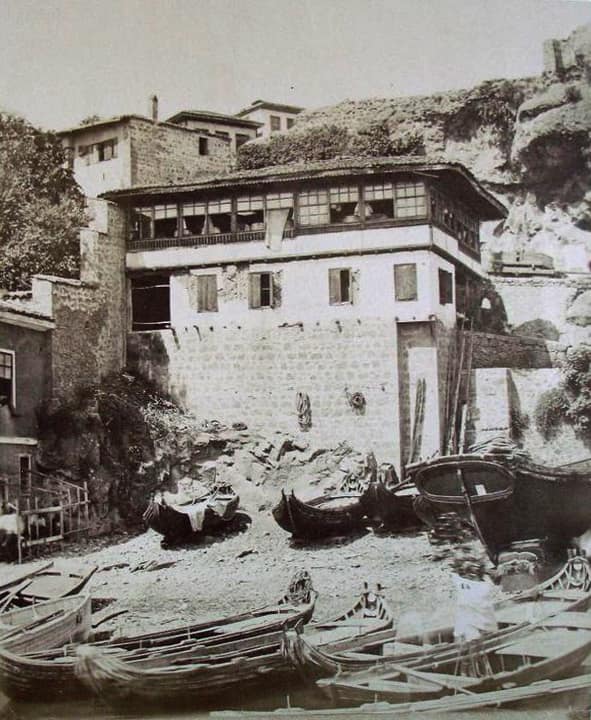
A harbour below a table-shaped hill
Trabzon takes its name from the city's first settlement area. According to the Provincial Directorate of Culture and Tourism, the high, irregular table-shaped ground between the Tabakhane and Zağnos streams is the oldest known settlement of the city, and the name is associated with the word "trapezos", meaning table or trapezium. The city's name first appears in Xenophon's Anabasis, which recounts events of the 4th century BC. The Directorate writes that under the Roman emperor Hadrian (117-138), roads, aqueducts and an artificial harbour, whose remains could be seen until recently, were built in the city. The port study published in the journal Karadeniz Araştırmaları also states that this harbour was built to the east of the city.
This harbour would have meant little without the land routes crossing the mountains behind it. Goods from Eastern Anatolia and Iran reached Trabzon by caravan and were loaded onto ships here. The economic historian Hüseyin Kaleli writes that caravans came to Trabzon from Iran, the Caspian shores and Syria in the Roman, Byzantine and Seljuk periods as well, and that the city was a meeting place with merchants arriving from the north of the Black Sea. The port study mentions the Kefe-Trabzon-Tabriz road, a branch of the Silk Road. The real revival of this road, however, came in the 19th century, and it turned the port of Trabzon into one of the busiest on the Black Sea.
The pass between the mountains
The Directorate's geography page explains that south of the Değirmendere basin the watershed forms a shoulder at about 2,000 metres in the Zigana Mountains. This is an important pass connecting the Black Sea coast with the interior, and it provided the ground for the Trabzon-Iran transit road. From Trabzon the road entered the valley towards Maçka, crossed the Zigana down into the interior, and reached Erzurum, and from there Tabriz in Iran. Kaleli stresses that in this period, when land transport was largely carried out on pack animals and by caravan, the roads were long, unsafe and expensive.
The opening of the Black Sea and two rival roads
According to Kaleli, the main development that prepared the revival of this trade was the opening to international commerce, by the Treaty of Küçük Kaynarca in 1774, of the Black Sea, which had long been open only to Ottoman ships. In the following years Austria, Britain, France and Prussia also gained trading rights in the Black Sea. As a result, the shortest route between Europe's manufactured goods and the raw materials of the East began to pass across the Black Sea.
At the beginning of the 19th century there were two rival routes to Iran. The first started from the ports of Sukhumi, Poti or Batumi on the Georgian coast and ran through Tbilisi to Tabriz. The second was the Trabzon-Erzurum-Tabriz road. Kaleli writes that the first route was preferred until 1832, but that the restrictions imposed on European goods along it in January of that year turned attention to the Trabzon road. According to the same article, the British had previously conducted their trade with Iran through the port of Bushehr on the Persian Gulf; the road reaching Trabzon across the Black Sea offered them an option closer to Europe. The port study also states that what made Trabzon a centre of transit trade was the choice by British merchants, from the 1830s onwards, of the Trabzon-Erzurum-Tabriz road for their trade with Iran. According to the same study, in 1842 the number of bales and cases unloaded at the port of Trabzon for dispatch to Tabriz reached 32,000 a year.
Steamships reach the coast
As the road revived, the sea side changed too. According to the port study, in 1836 the steamships Essex and then Crescent, belonging to a British company, began fifteen-day voyages between Istanbul, Samsun and Trabzon. An Austrian company followed in 1837, and ships of French and Russian companies, as well as the Ottoman Fevaid-i Osmaniye line, soon joined the route. The study calculates that with the arrival of steamships, the tonnage of ships calling at Trabzon rose about eightfold between 1830 and 1880, while the volume of trade grew two and a half times. The 1870 timetable given in the same study shows how regular the services had become. According to it, the Ottoman company's ships left Istanbul every Wednesday, called at Ereğli, Amasra, İnebolu, Sinop, Samsun, Ünye, Ordu and Giresun, reached Trabzon on Sunday, and after unloading cargo and passengers went on to Batumi via Rize. Ships of Russian, French and Austrian companies also worked similar lines on other days of the week. According to the study, between 1830 and 1850 the Iranian trade made up the majority of Trabzon's total trade volume.
Consulates, shipping agencies and foreign trading houses settled in the city. According to the port study, envoys and foreign merchants lived in the Çömlekçi, Kemerkaya and Boztepe neighbourhoods close to the harbour. Commercial buildings such as shops, inns and warehouses were concentrated especially near the Çömlekçi landing. Transit cargoes such as dried fruit, silk and carpets came from Iran to Trabzon and were sent on from here to Europe. In the opposite direction, British cotton cloth was carried to the markets of Erzurum and northern Iran. Trabzon's own products, hazelnuts, tobacco and eggs, were also among the cargoes sent to foreign ports.
A landing on the shore, ships at anchor offshore
Despite all this traffic, Trabzon had no sound harbour. The port study brings together the accounts of travellers who came to the city in the 19th century. A German traveller who arrived on an Austrian steamer in 1843 wrote that the harbour was directly exposed to dangerous north winds and that large ships could not enter it and anchored offshore. A French traveller who came in 1869 likewise described the shallow water along the shore, the landing from ships by rowing boat, and a small pier made of stone and piles. The Çömlekçi, Moloz and Mumhane landings were not suitable for loading and unloading large ships. As steamship services increased in the 1860s, the landings and customs warehouses began to fall short. Construction of a harbour started after long preparations, and only part of it could be completed in 1903.
From caravan track to carriage road
The problem on the land side was similar. According to Kaleli, a project to turn the caravan track into a road that carriages could use was prepared in 1846, but construction did not begin for a long time. Work was carried out piecemeal in the 1850s and 1860s; construction, which also drew on French engineers, accelerated after 1869, and the Trabzon-Erzurum section was completed in 1872. The French traveller who used the road in 1869 wrote that it turned to mud, especially in the rainy seasons. Kaleli explains this by the damage done by hundreds of thousands of laden caravan animals and by the wet climate.
The safety of the caravans was another issue. Kaleli reports that in 1834, 452 loads of a caravan of 680 camel loads carrying European trade goods were robbed. The state relied on watchmen and gendarmes to protect the road. Ships arriving from places where epidemics had broken out, and travellers coming overland, were also held for ten days in quarantine stations; Kaleli describes this practice as a further burden for merchants. The difference in cost was also large: according to the same article, while the railway company carried a bale from Poti to Tabriz for 5 francs, transport by caravan from Trabzon to Tabriz cost 30 francs.
Decline at the end of the century
The heyday of the Trabzon road gradually came to an end in the second half of the century. Kaleli notes that the Suez Canal, opened in 1869, brought the Persian Gulf route to the fore in the Iranian trade; in the same year the Ottoman administration tried to stay competitive by lowering the transit tax from 3 to 1 per cent. According to the port study, the construction of the port of Poti in 1872 and the Tbilisi railway in 1874 made the Caucasus route a strong rival to Trabzon. After 1878, the change of hands of Batumi and the railway connections reaching Iran led Trabzon to lose its place in Black Sea trade to the ports of Samsun and Batumi. The tables in the study show that between 1860 and 1900 both the imports and the exports of the port fell by about half.
Following this history today
It is still possible to follow the traces of the caravan road today. To see the old face of the harbour, go down to the shore towards Çömlekçi and Kemerkaya; these neighbourhoods, where foreign merchants once lived, lie just above the port. Then climb Boztepe and watch the harbour and the coastline from above. The open sea and north wind described by the travellers are easier to understand when you look from this hill. The area around the Bedesten and Taşhan in the city completes the commercial fabric that transit trade left behind.
Those who want to follow the land route can enter the Değirmendere valley towards Maçka. After Hamsiköy the road rises towards the Zigana Mountains; the narrow and steep character of the valley is enough to understand the difficulties the caravans faced. Remember that snow and ice can occur on the mountain road in winter and that the current road conditions should be checked before setting out. This short journey from the coast to the mountains shows why Trabzon was for centuries regarded as a gateway between East and West.
Sources
- Trabzon Provincial Directorate of Culture and Tourism, Tarihçesi, https://trabzon.ktb.gov.tr/TR-212974/tarihcesi.html
- Trabzon Provincial Directorate of Culture and Tourism, Coğrafyası, https://trabzon.ktb.gov.tr/TR-212975/cografyasi.html
- Nemlioğlu Koca, Y., 19. Yüzyılda Trabzon Limanı, Seferler, Tüccarlar, Mallar, Karadeniz Araştırmaları 49, 2016, https://dergipark.org.tr/tr/download/article-file/1886970
- Kaleli, H., 19. Yüzyılda İran Transit Ticaret Yolu İçin Osmanlı-Rus Rekabeti (Ottoman-Russian rivalry over the Iranian transit trade route in the 19th century), https://dergipark.org.tr/tr/download/article-file/55287
Comments
Be the first to comment