

From the Music Teachers' School to CSO Ada, Opera, Ballet and Symphony in Ankara
The stages of a capital Today Ankara is a city of opera and ballet, the home of a symphony orchestra and the place where the conservatory tradition was born.
 Radar Türkiye24 Kasım 2026
Sign in to like and rate
The stages of a capital
Today Ankara is a city of opera and ballet, the home of a symphony orchestra and the place where the conservatory tradition was born. This identity did not come about by itself; it was built step by step in the early years of the Republic, in the classrooms of a small school, with the move of an orchestra from Istanbul and with the conversion of an exhibition building into a stage. The strategic plan of the General Directorate of State Opera and Ballet, part of the Ministry of Culture and Tourism, tells this journey from the first musical performances in the Ottoman palace to today's six directorates. The Ankara stops of this story can still be visited and heard today.
Before Ankara
Opera had reached these lands long before Ankara. According to the State Opera and Ballet plan, the first musical play was staged in the palace in the reign of Murad III, and on 2 May 1797 a foreign company performed an opera at Topkapı Palace in the presence of Selim III. After the Tanzimat reforms, Italian opera companies gave performances in theatre buildings in Istanbul; Verdi's Ernani was performed in Beyoğlu in 1846. The plan describes the period from 1885 to 1923 as a time of stagnation for polyphonic music and opera. The story in Ankara began after this stagnation, almost from scratch.
An orchestra moves to Ankara
The first protagonist of the story is an orchestra. According to a thesis written at Marmara University, when the Janissary Corps was abolished under Mahmud II, the Mehterhane, the military band of the old order, was also closed, and the Muzika-i Hümayun was founded in its place. The institution included an orchestra following Western music, a military band and an incesaz ensemble for Turkish music. Sources date its founding to the second half of the 1820s, and the orchestra today traces its own history back to that date.
The same study reports that the ensemble moved to Ankara with its entire staff on 27 April 1924 and took the name Riyaset-i Cumhur Musiki Heyeti. The orchestra, the band and the fasıl ensemble remained together as three groups for a while. The ensemble gave public concerts in Ankara and played at official receptions and foreign missions. The thesis states that in 1933 the orchestra and the band were split into two separate ensembles. The ensemble we know today as the Presidential Symphony Orchestra comes from the orchestra branch of this separation.
The Music Teachers' School and the first steps
According to the strategic plan of State Opera and Ballet, the Musiki Muallim Mektebi, the Music Teachers' School, which began operating in Ankara in 1924, became the core of the city's music education. In the early years of the Republic, talented young people were sent to Europe for music training. After the 1930s, the young musicians who returned began teaching students at this school and at institutions in Istanbul. The plan describes these as the first steps towards a promising future in opera, for composers and performers alike.
Ahmed Adnan Saygun's opera Özsoy, according to the same source, was staged at the Ankara Halkevi, the People's House, on 19 June 1934. It was followed by Saygun's Taşbebek and Necil Kazım Akses's Bayönder. These first Turkish operas raised the need for a permanent stage and training institution in Ankara.
The founding of the conservatory
According to the strategic plan, in 1936 the first State Conservatory classes opened within the Music Teachers' School, with gifted young people selected from among its students. The composer Paul Hindemith did not accept a permanent post, but from time to time came to Ankara to inspect the conservatory and submit reports. Carl Ebert, who stayed in Ankara as a contracted expert, directed the conservatory's theatre practice stage and opera studio for nine uninterrupted years.
The first work the students staged in the opera studio was Mozart's one-act opera Bastien und Bastienne. The plan writes that this work was performed for the first time in Türkiye with a Turkish text, accompanied by the Presidential Symphony Orchestra, and that it attracted wide attention in the press of the time. In 1940 the second act of Puccini's Madama Butterfly, and in May 1941 the second act of Tosca, were staged with Turkish librettos. With a law that came into force on 16 May 1940, these classes were turned into the State Conservatory, with departments of music, opera, ballet and theatre. The Ankara State Conservatory continues to teach today as part of Hacettepe University.
From the Exhibition House to the Great Theatre
The Opera Stage in Ulus is one of the city's best-loved buildings and the product of an interesting transformation. According to a study prepared at Bilkent University, construction began after a competition launched in 1934, to a design by Şevki Balmumcu, as the Exhibition House, and the building was used as an exhibition hall for many years. The State Opera and Ballet plan explains that in 1947 and 1948 the German architect Paul Bonatz converted the Exhibition House into a theatre and opera building.
The building opened with a ceremony on 2 April 1948 with works by the composers known as the Turkish Five. At the opening, Ahmed Adnan Saygun's opera Kerem was performed for the first time. According to the plan, the institution, which began its work under Law No. 5441 in 1949, met its staffing needs with artists who graduated from the State Conservatory. The opera orchestra, chorus and ballet were organised between 1950 and 1953 and in time became a single whole.
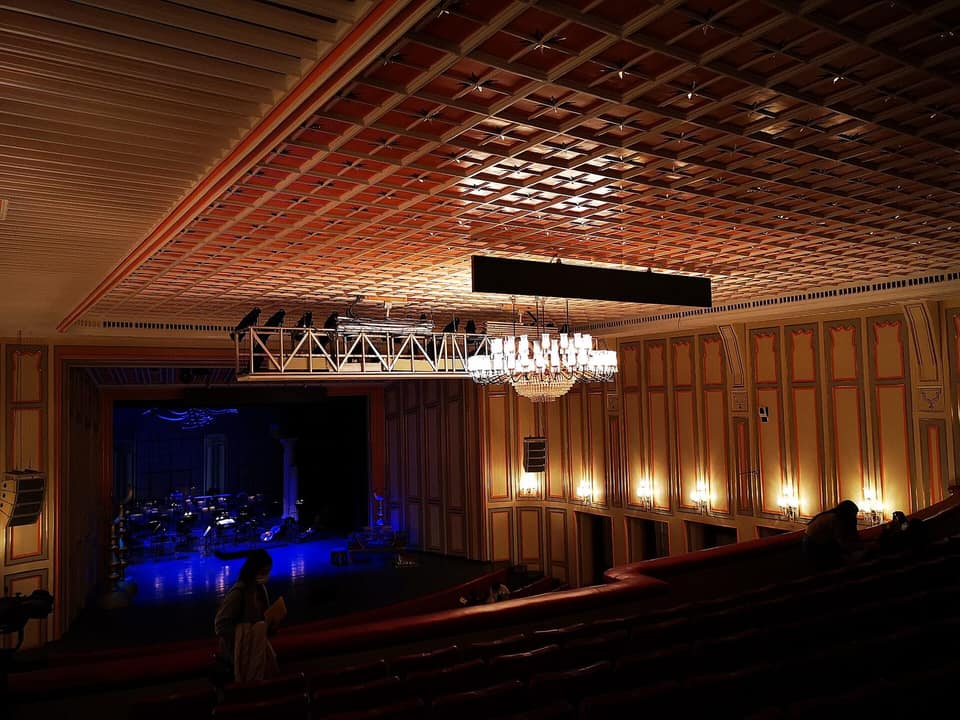
When you go to the Opera Stage, look at the outline of the building before entering the hall; it carries the traces of a structure that was born as an exhibition building and became a stage. In the hall, take a look at the coffered ceiling, the chandeliers and the panelled side walls; the minutes before the performance begins are the best time for this.
Ballet's journey to Ankara
The story of Turkish ballet reaches Ankara by a somewhat roundabout route. According to the strategic plan, the ballet school was founded in 1947 in a primary school in Yeşilköy, Istanbul, with the help of the ballet expert Dame Ninette de Valois, who was invited from England. The first dancers, trained by experts for three years, continued their education in the Ballet department opened at the Ankara State Conservatory in 1950. The department produced its first graduates in the 1956-1957 academic year.
The plan writes that in 1958 theatre and opera were divided into two separate directorates, and that the composer Necil Kazım Akses was appointed the first director of State Opera and Ballet. In 1970 the General Directorate of Ankara State Opera and Ballet and the Directorate of Istanbul State Opera and Ballet separated definitively from the theatre. Later the İzmir, Mersin, Antalya and Samsun directorates were founded; in 2009 the Ankara State Opera and Ballet Directorate was reorganised as a structure separate from the general directorate. Today the institution works with six directorates, and Ankara is the centre of this structure.
A new home for the symphony
For many years the Presidential Symphony Orchestra played in its historic concert hall on Talatpaşa Boulevard. The orchestra's new home, CSO Ada Ankara, entered service in December 2020. Located in the Atatürk Cultural Centre area between Ulus and Kızılay, the complex contains a large symphony hall and a chamber music hall known as the Blue Hall. The orchestra today continues its concerts in these halls and in the historic CSO hall. Before a concert, take a walk around the foyer; the wide foyer connecting the two halls is the new meeting point of the city's musical life.
How to plan a concert evening
The Opera Stage in Ulus and CSO Ada are close to each other, and both are part of the cultural axis around Gençlik Park. Before an evening performance you can explore the historic fabric of Ulus during the day and walk down to this axis towards sunset. Because programmes, tickets and dress conditions change with the season, follow up-to-date information through the official channels of State Opera and Ballet and the Presidential Symphony Orchestra. If you are going with children, look at the institutions' performances for young audiences; the State Opera and Ballet plan lists children's performances among the institution's priorities. Those who want to hear Turkish works can look for pieces by Turkish composers in the season programme; works such as Kerem hold a special place in the history of these stages.
A concert or ballet evening in Ankara is not just watching a performance. Sitting in the hall and thinking of an orchestra moving from Istanbul, of opera trials that began in the classrooms of a school, and of an exhibition building becoming a stage, is like listening to the city's century-long cultural story.
Sources
- General Directorate of State Opera and Ballet, 2024-2028 Strategic Plan, The Historical Development of Opera and Ballet in Türkiye, https://ktb.gov.tr/Eklenti/124645,dobgm-1pdf.pdf
- Marmara University Open Access, Riyaset-i Cumhur Musiki Heyeti, https://openaccess.marmara.edu.tr/entities/publication/b67bf901-3a79-4d8c-8d46-fb03f8144d7a
- Bilkent University Institutional Repository, History of the Great Theatre Building, https://repository.bilkent.edu.tr/items/1754d413-5ddf-4eef-8b52-af3f09e17b76/full
- Wikipedia, Presidential Symphony Orchestra, https://tr.wikipedia.org/wiki/Cumhurba%C5%9Fkanl%C4%B1%C4%9F%C4%B1_Senfoni_Orkestras%C4%B1
- Wikipedia, CSO Ada Ankara, https://tr.wikipedia.org/wiki/CSO_Ada_Ankara
- Wikipedia, Hacettepe University Ankara State Conservatory, https://tr.wikipedia.org/wiki/Hacettepe_%C3%9Cniversitesi_Ankara_Devlet_Konservatuvar%C4%B1
Comments
Be the first to comment