

From Şirket-i Hayriye to Şehir Hatları, the Story of the Istanbul Ferry
2026 is a round-numbered year in the history of the Istanbul ferry: it marks 175 years since the founding of the Şirket-i Hayriye, the company set up to run steamers on the Bosphorus.

Sign in to like and rate
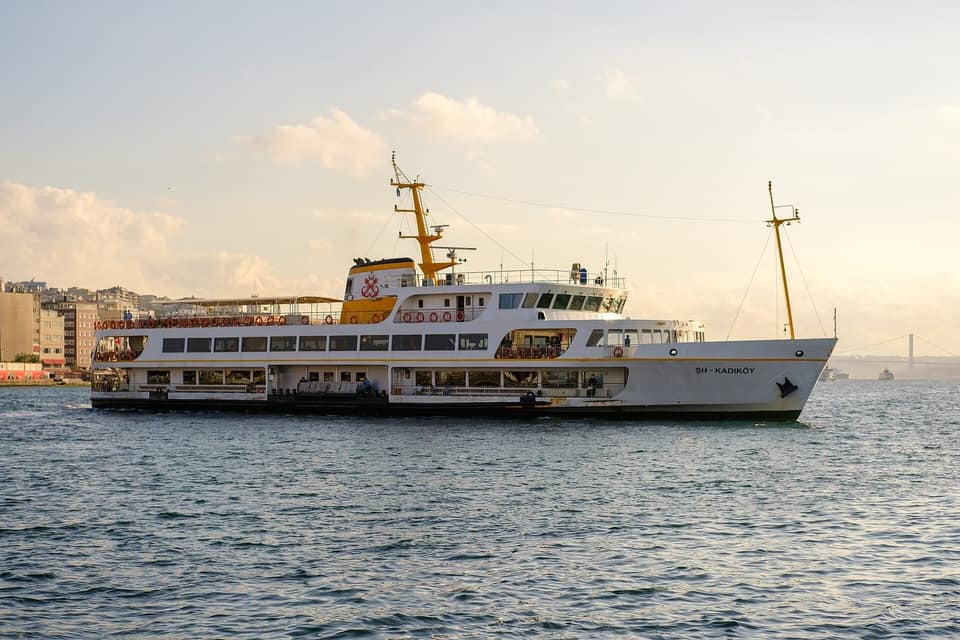
2026 is a round-numbered year in the history of the Istanbul ferry: it marks 175 years since the founding of the Şirket-i Hayriye, the company set up to run steamers on the Bosphorus. Şehir Hatları, the city's ferry company today, is celebrating the anniversary with events throughout the year. This article follows those 175 years, from journeys by rowing boat to today's white ferries, and tells you where you can still see what each period left behind.
The ferry has meant more to Istanbul than transport. In the assessment of Şehir Hatları, regular sailings sped up the transformation of the Bosphorus from a summer-house district into a place where people lived all year round, and the ferry played a large part in shaping the Bosphorus skyline we know today. That is why pier buildings, ferry names and the stories told about ferry captains have become part of the city's memory.
From Rowing Boat to Steamship
Until the middle of the nineteenth century, the main way to travel by water in Istanbul was the rowing boat. According to the history published by Şehir Hatları, passengers and goods were carried by kayık, pereme and barge between Istanbul and Mudanya, Istanbul and Üsküdar, Eminönü and Karaköy, on the Golden Horn and along the Bosphorus. The TDV Encyclopedia of Islam describes the six-oared peremes on the Bosphorus and the market boats whose income was endowed to charity. Senior officials travelled to their waterside mansions in double-oared boats, and even the size of the boat and the number of oars allowed to each rank were fixed by regulation.
The steamship entered this world in the 1830s. According to Şehir Hatları, British and Russian-flagged steamers began carrying passengers in Istanbul in 1837. Some time later the Ottoman state banned foreigners from this business, and in 1838 it put into service Eser-i Hayır in Istanbul and Mesir-i Bahri on the Marmara, among the first Ottoman-flagged steamers built at the imperial shipyard, the Tersane-i Amire.
The institutional roots of the Marmara line go back to 1844 and the Hazine-i Hassa Steamship Administration under the Ministry of the Navy, which ran steamers from Sirkeci to the Princes' Islands, Pendik and Yeşilköy. The pier history of Şehir Hatları records that the first steamer service to Kadıköy ran in 1846. The Bosphorus, however, stayed with the rowing boat a while longer. According to the TDV encyclopedia, a steamer from the shipyard was assigned to officials living on the increasingly popular Bosphorus after the Tanzimat reforms, but its morning and evening trips fell far short of demand.
The Founding of the Şirket-i Hayriye
The solution came from Keçecizade Fuad Paşa and Ahmed Cevdet Paşa. According to the TDV Encyclopedia of Islam, the company had two aims: to set an example of the joint-stock company, the model that had created great wealth in Europe, and to make it easier for Bosphorus residents to travel to and from the city. After Sultan Abdülmecid approved the proposal, an imperial decree gave the company a twenty-five-year concession and monopoly to run steamers between Istanbul and the piers to be built on both shores of the Bosphorus. The Golden Horn was left outside the concession. The company is remembered as the first joint-stock company founded in the Ottoman Empire, and Şehir Hatları gives its founding date as 17 January 1851.
The capital was first set at 45,000 lira, divided into 1,500 shares of 30 lira each; when this proved insufficient, 500 more shares were issued. Among the shareholders were Sultan Abdülmecid and his mother, Bezmialem Valide Sultan. The encyclopedia adds that Grand Vizier Mustafa Reşid Paşa encouraged officials and investors to buy shares, and that many officials went into debt with moneylenders to do so. In a society unused to joint-stock companies the early years were not easy. The operation was leased out for a while, and in 1854 the company's first board of directors was formed.
The first ferries came from England. According to Şehir Hatları, No. 1 Rumeli, No. 2 Tarabya, No. 3 Göksu, No. 4 Beylerbeyi, No. 5 Tophane and No. 6 Beşiktaş were wooden paddle steamers built in 1852 at East Cowes on the Isle of Wight. The sources give different dates for the start of service. The TDV encyclopedia writes that four steamers brought from England began sailing from the spring of 1852, while Şehir Hatları states that these first six ferries entered service in 1854.
Funnel Numbers and Ferry Names
The Şirket-i Hayriye's ferries were known by their numbers as much as by their names. Each ferry carried a number on its funnel, and the company kept its records by these funnel numbers. According to Şehir Hatları, of the company's seventy-seven car and passenger ferries, sixty-six were built in England, six in France, two in Germany and one in the Netherlands, while two were built at the company's own yard in Hasköy. Most ferries were ordered in pairs, as twins of each other.
The first ferries were named after Bosphorus villages. Later, names of mostly Arabic and Persian origin were preferred, words describing the ferry's beauty, speed or comfort: Asayiş (public order), Terakki (progress), Sürat (speed), Rahat (comfort), Selamet (safety), Şükran (gratitude), İhsan (kindness). The names given to two small ferries that entered service in 1903 sum up the taste of the time: Tarz-ı Nevin meant "the new style" and Dilnişin "pleasing to the heart". Naming ferries after Bosphorus neighbourhoods also continued later on.
Some ferries acquired personalities of their own in the memory of Istanbul's people. No. 18 Asayiş and its twin No. 17 Bahariye were built in England in 1865. According to Şehir Hatları, the company had the design drawn up by Mehmet Efendi, chief architect of its Hasköy works, and even sent him to England to supervise construction on site. In 1908 two Frenchmen wanted to turn Asayiş into a floating cinema to show films in the villages of the Bosphorus, the Princes' Islands and Bakırköy, but the sultan did not give permission. The ferry Bosphorus passengers loved most is said to have been No. 38 Şükran, built in England in 1890.
From Paddle Wheel to Propeller
All of the company's first ferries were paddle steamers. According to the Şehir Hatları record, of the seventy-seven ferries, forty-eight were side paddle steamers, fifteen single-screw and fourteen twin-screw. Paddle steamers were elegant but aged a little more every year; according to the TDV encyclopedia, a decision was taken in 1900 to move over to screw-driven ferries.
The first propeller-driven ferries entered service in 1903. No. 47 Tarz-ı Nevin and No. 48 Dilnişin were built in Glasgow in Scotland. The saloons of these two small ferries were centrally heated and lit by electricity, and the steering wheel, until then turned by hand, was for the first time steam-assisted. Both remained in service until 1967.
The company's Hasköy yard on the Golden Horn was founded in 1861 and took on the maintenance and repair of the ferries. Some ferries brought from England in pieces were also assembled there: Meymenet, Nüzhet, Refet and Amed in 1872, İşgüzar and Mirgün in 1881. According to Şehir Hatları, Kocataş, built at Hasköy in 1937, was the first passenger ferry of the Republican era to be built in a Turkish shipyard.
Suhulet and the Car Ferry
The company's most brilliant period was the time of Hüseyin Haki Efendi, its director from 1866 to 1895. According to the TDV encyclopedia, the number of ferries rose from sixteen to forty-six in these years, and Suhulet, for which Hüseyin Haki had English engineers prepare the drawings, entered service. Suhulet, meaning "ease", was the company's first car ferry. On its first run between Kabataş and Üsküdar, its cargo was gun carriages.
The sources differ on when Suhulet entered service. The TDV encyclopedia gives 1870; Şehir Hatları writes that the ferry, built in England in 1869, entered service in 1872. It was a metal-hulled side paddle steamer and worked for many years alongside its twin, Sahilbent. Suhulet was retired in 1961 and Sahilbent in 1967. According to Wikipedia, Suhulet was 45.7 metres long and could make seven miles an hour.
The car ferry meant a great deal to Istanbul. Şehir Hatları recalls that before there was a bridge across the Bosphorus, Kabataş Pier was the hub for carrying passengers and vehicles to Harem, Kadıköy and the Bosphorus. Car ferry ramps still stand in the pier area at Kabataş today.
Piers, Waiting Rooms and the Bridge
The steamers arrived, but there were no piers. According to Şehir Hatları, in the early years ferries could not come alongside the shore, and passengers were ferried out to them in small boats, which was both tiring and dangerous. The company therefore decided to build piers where the steamers could berth, with covered buildings for passengers. The first pier the company built on the Bosphorus was Üsküdar Pier. Piers followed on the European shore from Beşiktaş to Sarıyer, and on the Asian shore at Anadolu Hisarı, Kanlıca and Beykoz.
According to the TDV encyclopedia, the first piers had no covered waiting rooms; these were added later, and in 1912 the waiting rooms on the Galata Bridge were lit by electricity. According to Şehir Hatları, by 1914 almost every pier had a covered waiting area. Small details of the piers tell us about daily life at the time. Bebek Pier received separate waiting rooms for women and men in 1890, a wall clock was added in 1894, and the passenger saloon was heated by a stove. Ortaköy Pier got its clock in 1910. As for tickets, a ticket-office system was introduced from 1881.
For a long time the centre of the city's ferry life was the Galata Bridge. Floating piers moored on both sides of the bridge were the main departure point for almost every line; those on the Eminönü side generally served the Bosphorus lines, those on the Karaköy side the Asian shore, the Princes' Islands and Yalova. This is why timetables used expressions such as "departure from the Bridge" or "Bridge to Kadıköy". According to Wikipedia, the first pier on the Galata side opened on the bridge itself in 1919. When a storm destroyed it in 1959, the forerunner of today's Karaköy Pier was built east of the bridge.
Captains, Moonlight Cruises and the Beggar Ferry
The Şirket-i Hayriye's captains were figures everyone on the Bosphorus knew. According to the stories collected by Şehir Hatları, the company's first captain was a Frenchman named Louis Goujan, and the first Muslim captain was Rıza Ömer Kaptan of Beykoz, who started out as a boatswain. Some of the stories are clearly exaggerated, and the source says so itself: captains are said to have taken a tray of coffee held out from a mansion as they passed, or to have berthed without breaking an egg dangling from a rope. What is certain is the trust people placed in these captains.
Ferries that called at pier after pier were nicknamed "beggar ferries", since the endless getting on and off stretched out the journey. Şeref Kaptan's habit of answering cheers from students at the waterside schools with the ferry's whistle became, according to Şehir Hatları, a tradition among students that lasted until the mid-1980s.
In the 1930s the ferry also became a way of having fun. To win back falling passenger numbers, the company organised moonlight cruises, the first on 4 August 1936. A group of musicians played on a raft decorated with flowers and lights; when far more people turned up than expected, the company put fourteen ferries into service and the convoy stretched from Bebek to Kanlıca, then on to Yeniköy, Beykoz and Büyükdere. Şehir Hatları still organises moonlight cruises today.
In one of its busiest years, 1913, the company carried 18,613,453 passengers according to the TDV encyclopedia. That same year 887 people worked on its ferries, piers, workshops and offices.
War Years and Nationalisation
The ferries also served in wartime. According to the TDV encyclopedia, they carried troops and ammunition in the Russo-Ottoman War of 1877-1878, the Tripolitanian War of 1911 and the Balkan Wars. In the First World War some carried wounded for the Ottoman Red Crescent, and ten ferries were sunk by enemy action or mines. Among the captains' stories collected by Şehir Hatları is that of Eyüp Kaptan, who on 26 October 1915 skilfully steered No. 66 Boğaziçi, carrying more than a thousand passengers from Beykoz, clear of a mine drifting on the current.
In the early years of the Republic the company's income fell. The TDV encyclopedia lists the move of the capital to Ankara, new transport such as trams and buses, and the city's falling population as reasons. With the hardships of the Second World War on top, the company applied in 1943 to be bought by the state. In 1944 a purchase price of 2,550,000 lira was agreed, and the decision was confirmed by Law No. 4697 of 24 January 1945. After a life of almost ninety-five years, the Şirket-i Hayriye was transferred with all its assets to the General Directorate of State Maritime Lines and Ports.
This brought ferry operations in Istanbul under one roof. According to Şehir Hatları, the Marmara line operator had passed through the names Fevaid-i Osmaniye, İdare-i Aziziye, İdare-i Mahsusa, the Ottoman Seyr-i Sefain Administration and the Akay Administration since 1844, becoming the City Lines Administration in 1937. The Golden Horn Ferry Company, which had run the Golden Horn line since 1858, joined it in 1941 and the Şirket-i Hayriye in 1945.
From Garden-Type Ferries to İDO
In the post-war years new ferries changed the look of the fleet. Fenerbahçe and Dolmabahçe were built at the William Denny and Brothers yard in Dumbarton, Scotland, and entered service in Istanbul in 1953. Both belonged to the so-called "garden type" of passenger ferry. Paşabahçe was built in Italy and set off for Istanbul from Taranto on 22 June 1952 under its own power rather than under tow. These ferries worked for many years, mainly on the Princes' Islands, Kadıköy and Yalova lines.
In this period the City Lines Administration operated under the Maritime Bank, founded in 1952, and later under Turkish Maritime Lines (TDİ). In 1987 the Istanbul Metropolitan Municipality founded İDO, Istanbul Sea Buses, to relieve the city's traffic by sea, and ten sea buses bought from Norway entered service in 1987 and 1988. In 2005 the City Lines Administration was transferred to the Istanbul Metropolitan Municipality by decision of the Privatisation High Council, with İDO carrying out the takeover. In 2010 the municipality founded İstanbul Şehir Hatları Turizm Sanayi ve Ticaret AŞ, and the ferries and piers passed to the new company. İDO was later privatised.
In this new era Şehir Hatları commissioned new passenger ferries whose design was chosen by a vote of Istanbul's residents, and restored its older ferries and historic piers. Today ferry maintenance and new shipbuilding continue at the Haliç Shipyard on the Golden Horn.
Seeing the Historic Pier Buildings
The easiest traces of ferry history to see are the pier buildings, and several now welcome visitors in a new role.
In Kadıköy, the old pier building on Rıhtım Caddesi dates from 1926; a marble panel on the sea front reads "Kadıköy 1926". The Istanbul Tourism Platform of the metropolitan municipality notes that the architect Vedat Tek also drew up a design for Kadıköy Pier but that it was not built, so the architect of the present building is unknown. The towers on the sea front of this building, which shows the features of the First National Architecture movement, were once topped with onion domes; they were removed during repairs in 1959. In 2022-2023 the building was restored by İBB Miras, the municipality's heritage department, and given a new life as the Kadıköy Pier Library.
The story of Beşiktaş Pier begins with a wooden pier built by the Şirket-i Hayriye in 1851. The company commissioned the present two-storey building from the architect Ali Talat Bey in 1913, and tile panels on the entrance front give the date of construction. The upper floor served as a wedding hall until the 1950s. This building too was restored by İBB Miras in 2022-2023 and turned into the Beşiktaş Pier Library.
Moda Pier was built by Vedat Tek between 1916 and 1919, and its inscription reads "Moda 1335". Haydarpaşa Pier is also Vedat Tek's work. On the cut-stone building right in front of Haydarpaşa Station, a tile panel on the sea front bears the Hijri date 1334, and the tiles are the work of Mehmet Emin Usta of Kütahya. Ferry services to Haydarpaşa Pier stopped in 2014; you can see the building from the Kadıköy side or from a passing ferry.
The small piers of the Bosphorus carry their own stories. The first wooden pier at Anadolu Hisarı was built in 1851; it was rebuilt in 1905 and painted by Hasan Usta, head painter of the Hasköy yard. Beykoz Pier was built of wood in 1851 and renovated by Kirkor Usta in 1903. The construction dates of the Kanlıca, Çengelköy and Kandilli piers are not known for certain; all three are registered cultural assets and have been restored to their original appearance.
Where the Historic Ferries Are Today
If you want to see a retired ferry up close, head to the Rahmi M. Koç Museum on the Golden Horn. The ferry Fenerbahçe was taken out of service on 23 December 2008 and has been on display at the museum ever since; in 2021 it was restored at the Haliç Shipyard and returned to the museum. Seeing this 76.8-metre ferry up close is a good way to grasp the scale of the garden-type ferries. Check the museum's opening days and hours on its official website.
Paşabahçe, meanwhile, is back at sea. Taken out of service in 2010, the ferry returned to service in 2022 with new engines after a thorough renovation that began at the Haliç Shipyard in 2020. According to Wikipedia, it is also the only ferry to have had a song written about it. According to the Şehir Hatları 175th-anniversary announcement, ferries such as Moda, Kızıltoprak and İsmail Hakkı Durusu have also been restored and returned to service alongside Paşabahçe. Which line you will find them on changes over time; follow Şehir Hatları announcements for special sailings.
Tea, Simit and Seagulls on the Ferry
Tea on deck, a simit in hand and the gulls following in the ferry's wake are among the most familiar images associated with the ferry; the fact that a TRT Haber talk show hosting well-known guests aboard a ferry is called "Vapurda Çay Simit Sohbet", tea, simit and conversation on the ferry, shows as much. Şehir Hatları, too, when describing its piers, lists ferries, the waves of the lodos wind and the cries of seagulls among the details that remind us we live in Istanbul.
If you want to turn this culture into a day out, here are some suggestions.
- Start at the old pier building in Kadıköy, look into the pier library, then take the ferry to Beşiktaş and see the pier library there. That way you see two pier buildings from two different periods on the same day.
- On the Bosphorus line, watch for the small piers on the Asian shore. The wooden pier buildings at Anadolu Hisarı, Kanlıca, Çengelköy and Kandilli are among those that best preserve the scale of the Şirket-i Hayriye era.
- In Kadıköy you can see Haydarpaşa Pier and Moda Pier on foot; both were designed by Vedat Tek.
- To see a retired ferry, visit the Rahmi M. Koç Museum; for a trip on a restored one, check the Şehir Hatları announcements.
- For special sailings such as moonlight cruises and for current timetables, check the official Şehir Hatları website; times and routes change with the seasons.
On your next ferry trip, look at the dates and inscriptions on the fronts of the pier buildings. Most of the 175-year story is still right there, in front of your eyes.
Sources
- TDV Encyclopedia of Islam, Şirket-i Hayriyye entry, https://islamansiklopedisi.org.tr/sirket-i-hayriyye
- TDV Encyclopedia of Islam, Boğaziçi (Bosphorus) entry, https://islamansiklopedisi.org.tr/bogazici
- Şehir Hatları, History, https://sehirhatlari.istanbul/tr/kurumsal/tarihce-58
- Şehir Hatları, Şirket-i Hayriye Overview, https://sehirhatlari.istanbul/tr/kurumsal/genel-bakis-102
- Şehir Hatları, Şirket-i Hayriye Ferries, https://sehirhatlari.istanbul/tr/kurumsal/sirketi-hayriye-vapurlari-393
- Şehir Hatları, Şirket-i Hayriye Piers, https://sehirhatlari.istanbul/tr/kurumsal/sirketi-hayriye-iskeleleri-394
- Şehir Hatları, Şirket-i Hayriye Captains, https://sehirhatlari.istanbul/tr/kurumsal/sirketi-hayriye-kaptanlari-395
- Şehir Hatları, Social Impact of the Şirket-i Hayriye, https://sehirhatlari.istanbul/tr/kurumsal/toplumsal-etkisi-391
- Şehir Hatları, A 175-year journey, https://sehirhatlari.istanbul/tr/haberler/istanbulun-en-keyifli-seyrinde-175-yillik-yolculuk-3681
- Istanbul Tourism Platform (İBB), Kadıköy Pier, https://turizmplatformu.istanbul/mekan/kadikoy-iskelesi
- Istanbul Tourism Platform (İBB), Beşiktaş Pier, https://turizmplatformu.istanbul/mekan/besiktas-iskelesi
- Istanbul Tourism Platform (İBB), Moda Pier, https://turizmplatformu.istanbul/mekan/moda-iskelesi
- TRT Haber, Vapurda Çay Simit Sohbet, https://www.trthaber.com/program-bolumleri/vapurda-cay-simit-sohbet/
- Turkish Wikipedia, Suhulet, https://tr.wikipedia.org/wiki/Suhulet
- Turkish Wikipedia, Haydarpaşa Pier, https://tr.wikipedia.org/wiki/Haydarpaşa_İskelesi
- Turkish Wikipedia, Karaköy Pier, https://tr.wikipedia.org/wiki/Karaköy_İskelesi
- Turkish Wikipedia, Fenerbahçe (ferry), https://tr.wikipedia.org/wiki/Fenerbahçe_(vapur)
- Turkish Wikipedia, Paşabahçe (ferry), https://tr.wikipedia.org/wiki/Paşabahçe_(vapur)
- Turkish Wikipedia, Istanbul Sea Buses, https://tr.wikipedia.org/wiki/İstanbul_Deniz_Otobüsleri
Comments
Be the first to comment