

From Radika to Şevketibostan, the Aegean Greens of İzmir Cuisine
The green half of the plate If two things define the İzmir table, one is olive oil and the other is ot, the local word for wild and garden greens.
 Radar Türkiye24 Kasım 2026
Sign in to like and rate
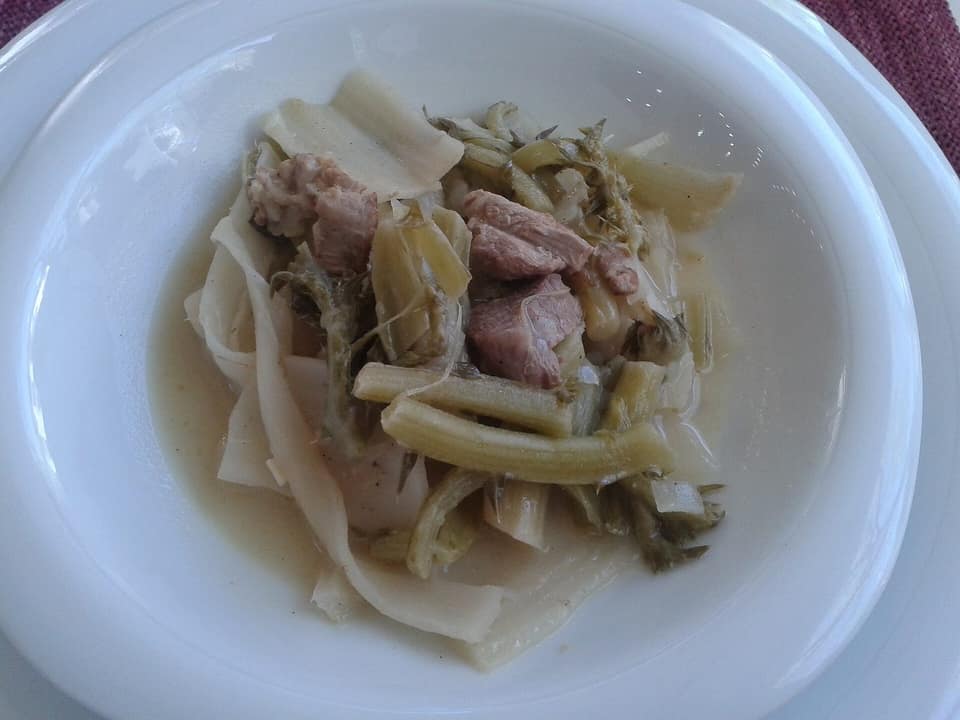
The green half of the plate
If two things define the İzmir table, one is olive oil and the other is ot, the local word for wild and garden greens. The İzmir Provincial Directorate of Culture and Tourism writes that, as across the wider Aegean, olive oil lies at the foundation of İzmir's culinary culture, while herbs hold a special place of their own in this cuisine. When spring arrives, the neighbourhood markets of the city centre and the districts fill with fresh greens. Radika, turp otu, cibez, arapsaçı, ebegümeci, şevketibostan and ısırgan are laid out side by side on the stalls. These greens reach the table as salads, as meze or as cooked dishes. Knowing how each green is cooked and where it can be found is the shortest way to get to know İzmir through its table.
One hundred and eleven greens
The wild greens of the Aegean are far more numerous than most people imagine. A review published in 2012 in the journal Acta Societatis Botanicorum Poloniae by a researcher from the Buca Faculty of Education of Dokuz Eylül University identifies 111 plant taxa eaten as wild greens in the Aegean Region. These taxa belong to 26 different families. The largest group is the daisy family with 21 taxa, followed by the borage family with 19, the carrot family with 15 and the mint family with 7. According to the study, the most common way of eating these greens is as a salad, and 79 taxa reach the table this way. The author reads this dominance of salads as a sign of the close link between the local diet and the Mediterranean way of eating. The same study also notes that interest in wild greens has been growing again in recent years.
The cuisine of the coast, the cuisine of the interior
The Provincial Directorate of Culture and Tourism divides İzmir cuisine into two main strands. Along the coast, in places such as Urla, Karaburun, Seferihisar, Foça, Çeşme and the city centre, there is a Mediterranean-style cuisine in which vegetables, greens, olive oil and fish from the gulf come to the fore. In the interior, in districts such as Bergama, Kınık, Kiraz, Menemen and Ödemiş, the cuisine rests on meat, milk and wheat and carries traces of settled and nomadic Turkmen tradition. Tire is one of the places where these two strands meet. Among the communities that shaped the city's cooking, the directorate lists settled and nomadic Turks, Greeks, Levantines, Sephardic Jews, people from Western Thrace and from islands such as Crete, Chios and Lesbos, Macedonians, Bosniaks and Albanians. This crowded past lies behind the remarkable variety of ways in which greens are cooked here.
Recipes that came from Crete
The academic study stresses that İzmir's long history of receiving migrants from many places has enriched the way greens are used. The influence of migrants from Crete is especially strong. According to the author, the ways of eating şevketibostan, istifno and radika, and the recipes for them, most probably reached the region with Cretan migrants. Istifno, known botanically as Solanum nigrum, is called locally by its Greek name. Its fresh shoots and leaves are boiled and then made into a salad with fresh courgette, olive oil and garlic. The study notes that the use of this plant declines towards the inner Aegean, which can be explained by the fact that Cretan migrants did not settle there. The same study writes that greens brought from Central and Eastern Anatolia, such as işgın and çiriş, are also sold in İzmir's markets, mostly bought by people who moved from those regions. In this way the İzmir market brings together the greens not only of the Aegean but of Anatolia as a whole.
A shared Mediterranean table
İzmir's greens link the city's table to the other shores of the Mediterranean. According to the academic study, black bryony and wild asparagus are among the most widely eaten wild plants in the Aegean, and their young shoots are mostly fried with onion and egg. The same two plants are hardly eaten at all in the parts of Türkiye outside the Mediterranean climate. In contrast, in Mediterranean countries and islands such as Spain, Italy, Croatia, Crete, Sardinia and Sicily they are used in soups, omelettes and boiled dishes. The author notes that some researchers believe black bryony is mentioned in the work of Dioscorides, the physician and botanist of antiquity, but that there is no consensus on this point. This link shows that the green table of İzmir is less a local habit than part of the shared culinary memory of the Mediterranean basin.
Boil, add lemon, drizzle olive oil
The most classic way of preparing greens in İzmir is very simple. According to the Provincial Directorate of Culture and Tourism, the greens are first cleaned, dipped in boiling water until they soften and then placed on a plate. At serving time, lemon and extra virgin olive oil are poured over them. The academic study records the same method for many greens. Garlic is added to some, while vinegar is used with others. Another common way is to sauté the greens with onion and crack eggs over them. Wild asparagus, black bryony and wild fennel are often cooked this way. Pastries are another important use for greens, and wild leek-like greens and radika are folded into börek.
An İzmir dictionary of greens
Radika is also known as dandelion. According to the academic records, it is boiled and made into a salad with olive oil, garlic and lemon, and it is also added to pastries and green salads. Visit İzmir draws attention to its slightly bitter taste and to the leaves that are gathered from the wild in spring.
Şevketibostan is one of the best-known greens of İzmir cuisine. The academic study writes that the bark of the root and the young leaf stalks of the plant are cooked with lamb, and that this dish comes from Cretan cuisine. According to Visit İzmir, şevketibostan grows in the winter months, from January to the end of March. Because it is thorny, cleaning it takes real effort.
Arapsaçı, wild fennel, is recognised by its anise-like scent. GoTürkiye writes that it is mostly sautéed with olive oil and onion, and added to lamb dishes, to börek and to a dish made with broad beans and courgette. The academic study also records it cooked with lamb, with eggs and in pilaf.
Deniz börülcesi, samphire, grows on the shore where the tide reaches, after the water has withdrawn. Its fresh shoots are boiled and made into a salad with olive oil, lemon and garlic. Visit İzmir writes that its taste is salty and sour and advises against adding salt while cooking it.
Cibez, also called cücük locally, is described as a wild kind of cabbage. After boiling, it is dressed with olive oil and lemon. Turp otu, wild radish, is boiled and made into a salad with olive oil, garlic and lemon, or it is sautéed with eggs. Ebegümeci, mallow, is cooked with minced meat or with olive oil. A bright green soup is made from the young leaves of ısırgan, stinging nettle. GoTürkiye advises handling nettle with gloves because of the fine hairs on its leaves.
Acı soğan, bitter onion or wild hyacinth, grows around Alaçatı according to Visit İzmir. Because it is very bitter, it is boiled twice and then eaten with olive oil and lemon. İzmir kekiği, a wild oregano, is a plant whose fresh leaves are eaten at breakfast. The academic study writes that in and around Beydağ the leaves are eaten fresh at breakfast, while in many of the city's open markets they are sold dried.
Gathering takes knowledge
Not every green is harmless. The academic study points out that black bryony, Tamus communis, one of the most widely eaten wild species in the Aegean, is counted among the toxic plants. The least harmful part of the plant is its young shoots, and traditionally it is eaten only after cooking. High toxicity has also been found in the unripe green berries of istifno. These plants are boiled to remove their bitterness and harmful substances. Gathering greens in the wild therefore requires knowing the plant with certainty. Rather than picking a plant you do not recognise, the safest way is to buy from market stalls and from sellers who know their greens well.
Where to find them, when to go
The season for greens is mainly late winter and spring. The Provincial Directorate of Culture and Tourism writes that fresh greens fill the markets of İzmir and its districts in spring. The directorate's gastronomy guide highlights the traditional restaurants and markets around Kemeraltı, Alsancak and Basmane in the city centre, and the Tire Tuesday Market and the Seferihisar Local Products Market in the districts. The directorate's list of festivals also includes the Alaçatı Herb Festival. Because festival and market days can change from year to year, check the current dates in the announcements of the relevant municipality.
For those who want to follow olive oil along with the greens, the Klazomenai archaeological site in Urla is a good stop. The Provincial Directorate of Culture and Tourism states that the structure here, which worked about 2,600 years ago and is presented as the oldest olive oil workshop in Anatolia, retains its original form and is open to visitors. The directorate also records that South Aegean olive oil is among the products with a geographical indication.
Before you sit down at the table
When asking for a dish of greens in İzmir, at a restaurant or in a home, it helps to look at the season. Şevketibostan is easier to find in winter, radika and nettle in spring, and samphire in the summer months. When you come across a green at the market whose name you do not know, asking the seller how it is cooked often opens the door to a new recipe.
Sources
- İzmir Provincial Directorate of Culture and Tourism, Gastronomy Tourism, https://izmir.ktb.gov.tr/EN-348311/gastronomy-tourism.html
- İzmir Provincial Directorate of Culture and Tourism, İzmir Cuisine, https://izmir.ktb.gov.tr/EN-240810/izmir-cuisine.html
- Visit İzmir, Delicious Herbs of İzmir, https://www.visitizmir.org/en/Icerik/92
- GoTürkiye, Aegean Herbs in Turkish Cuisine, https://goturkiye.com/blog/aegean-herbs-in-turkish-cuisine
- Dogan, Y., Traditionally used wild edible greens in the Aegean Region of Turkey, Acta Societatis Botanicorum Poloniae 81(4), 2012, https://bibliotekanauki.pl/articles/58389.pdf
Comments
Be the first to comment