

From Pişmaniye to Dartı, the Registered Flavours of Kocaeli
A Register of Flavours Kocaeli brings industry to mind first, but the province's table is as well documented as its factories.
 Radar TürkiyeNovember 24, 2026
Sign in to like and rate
A Register of Flavours
Kocaeli brings industry to mind first, but the province's table is as well documented as its factories. The geographical indication portal of the Turkish Patent and Trademark Office lists sixteen records for Kocaeli. Three of them are Hereke carpets and three are handmade products such as cloth, baskets and dolls; the remaining ten records are products that reach the table. Pişmaniye, simit, the bayram çöreği, the simit dolması, buffalo yoghurt and dartı are the first that come to mind on this list. Olives, hazelnuts, artichokes and watermelons are also registered together with the names of their districts. This article follows this map of flavours, from the provincial centre to the coastal districts and Kandıra on the Black Sea side, as the registration documents describe it.
First, two terms need to be distinguished. According to TÜRKPATENT's explanation, a designation of origin is used when all or the essential qualities of a product derive from the natural and human factors of a particular geographical area. In that case production, processing and all other operations must take place within that area. For an indication of source, it is enough for at least one of production, processing or the other operations to take place in the defined area. On the Kocaeli list, İzmit Pişmaniyesi and Kandıra Manda Yoğurdu are designations of origin, while most of the other flavours are registered as indications of source.
İzmit Pişmaniye
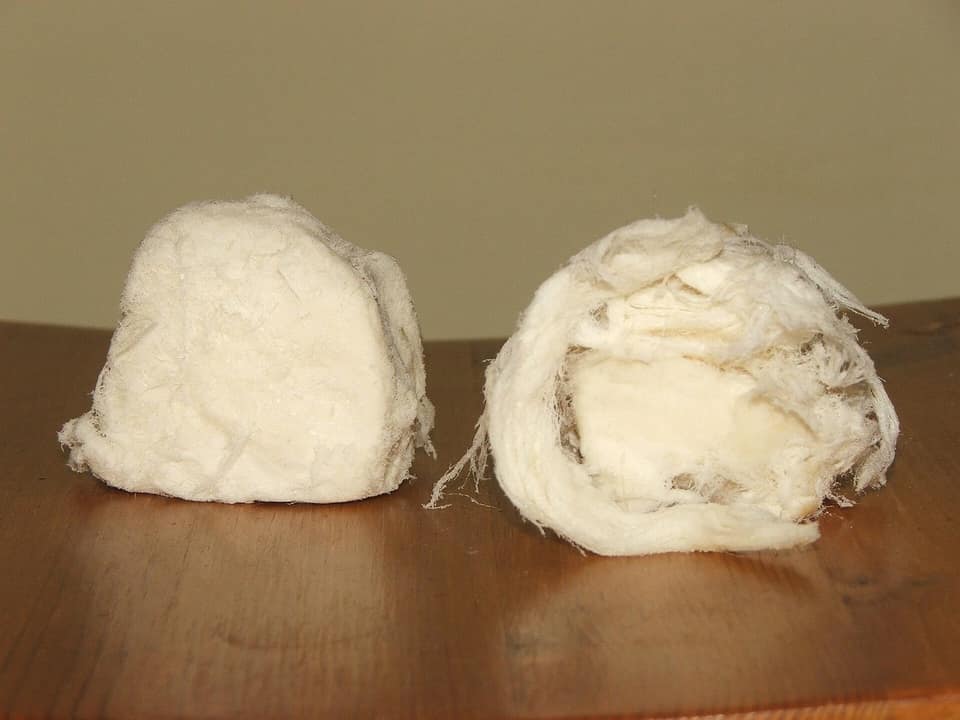
The province's best known sweet is pişmaniye, and its registration is also among the oldest. According to the TÜRKPATENT record, the application for İzmit Pişmaniyesi was made on 11 September 2000, and the product was registered as a designation of origin under number 34 on 21 May 2002. The registering body is the Union of Chambers of Tradesmen and Craftsmen of Kocaeli. An article by İlke Tepeköylü of Kocaeli University treats pişmaniye as the greatest urban symbol of İzmit. According to the article, masters who settled in and around İzmit at the beginning of the 17th century brought pişmaniye making to the city, and the knowledge was passed down among masters from generation to generation. The same study notes that with the pişmaniye festival, first held in 2009, the sweet also took its place in the city's cultural calendar.
The book Kocaeli Mutfağı, published by the Kocaeli Metropolitan Municipality, describes the home method step by step. Sugar is boiled with water, citric acid is added, and the syrup is cooked until it thickens and reaches the point of setting. This thick syrup, locally called mablak, is poured onto an oiled tray and, before it hardens, is pulled and worked by hand until it turns light yellow. Flour is lightly toasted in a separate pan; the mablak is shaped into a ring and placed on the flour. According to the book, four people sit around the table, each pulling the mablak from the edge to stretch it, and this pulling and folding is repeated about eighteen or nineteen times. In the end the mablak turns into fine threads and is left in cool, open air until it becomes crisp. The book specifically stresses that this work is not done in a warm room and that the setting must be cool. The local saying reported by Tepeköylü also captures the effort: whoever makes it regrets it once, whoever does not regrets it a thousand times.
İzmit Simit
The city's second signature is the simit. İzmit Simidi was registered as an indication of source on behalf of the Kocaeli Chamber of Commerce on 10 September 2019, and its geographical boundary is the İzmit district. According to the document, the simit is twisted and ring shaped, covered in sesame, crisp outside and soft inside. The dough is kneaded for a long time; the document states that this duration matters for the flavour. The piece cut from the dough is split in two, twisted along about thirty centimetres and formed into a ring. The rings are dipped first into grape molasses thinned with water and then into sesame. After a short rest they are baked in a stone oven in a few minutes. The document also notes that if the rest is too long the inside of the simit will be hollow, and if it is too short the simit will be thin. Even the colour of the sesame, turning from yellow to brown as it bakes, is among the inspection criteria.
Gebze Bayram Çöreği
The bun that carries Gebze's name is based, in the document's words, on the tradition of the settled Turkmens of the area, known as Manavs. It was registered as an indication of source on behalf of the Gebze Chamber of Commerce on 28 May 2021. According to the document, the bun is made only on the eves of the bayram holidays and is also popularly known as the fingered bun. Its dough contains rye flour and sourdough starter alongside wheat flour. Its main distinguishing feature is its spices: aniseed, cinnamon, cloves and mastic. Nigella seeds, sesame and walnuts are sprinkled on top. The document states that giving the bun its distinctive shape requires skill; the two ends of the dough are pulled and turned in opposite directions to give the final form. The same bun also appears among the pastries of the provincial cuisine in the book Kocaeli Mutfağı. For those who pass through Gebze before the holidays, this bun is a traditional gift taken when visiting.
Karamürsel Simit Dolması
The registered flavour of Karamürsel, on the southern shore of the gulf, is a filled bread fried in butter. Karamürsel Simit Dolması was registered as an indication of source on behalf of the Municipality of Karamürsel on 10 July 2023, and is also known locally as dolmalık pide. According to the document, the dough is given the shape of a long simit, coated with a mixture of flour and bran, and baked in a stone oven without browning, so that it stays pale. The long simits taken from the oven are cut into pieces, and each piece is split lengthwise and filled. For the filling, the document gives as examples a rich cow's milk cheese known locally as kırık peynir, or a mixture of ekşimek and parsley. Ekşimek is an ingredient obtained by adding a few drops of lemon juice or vinegar to cow's milk. The filled pieces are dipped first into a mixture of milk and water, then into milk beaten with egg, and fried on both sides in butter.
Kandıra Buffalo Yoghurt and Dartı
Kandıra is the province's northern district opening onto the Black Sea, and two registered dairy products come from here. Kandıra Manda Yoğurdu was registered as a designation of origin on behalf of the Kocaeli Chamber of Commerce on 26 September 2023. According to the document, it is a firm, white yoghurt made from the milk of buffaloes raised in the district. The even distribution of rainfall across the seasons, the rich vegetation of the pastures and the many wetlands support buffalo breeding. Because the yoghurt is made from milk whose fat has not been removed, it has a thick layer of cream. In traditional production the milk is poured from a height to make it foam, and it is cultured with yoghurt set aside from the previous batch, locally called kara maya. The perforated strainer placed over the milk is known locally as gözef.
Kandıra Dartısı was registered as an indication of source on behalf of the Kocaeli Provincial Directorate of Culture and Tourism on 6 May 2022. According to the document, dartı is a dairy product obtained by cooking the raw cream of cow's milk. The cream is boiled over low heat while being stirred constantly, the fat separates, and the thick part at the bottom is browned until it turns from light yellow to brown. When it cools, a two layered structure forms, with fat on top and sediment below. The document states that dartı is not eaten cold and must always be heated before eating. It is eaten with bread at breakfast; it is used as a sauce on pilaf, pasta and keşkek, and as fat in pastries. The book Kocaeli Mutfağı describes the place of keşkek with dartı at wedding tables and gives many recipes, from noodles with dartı to spinach greens with dartı.
From Garden to Table
Kocaeli's registered flavours come not only from the kitchen but also from the garden. Karamürsel Samanlı Zeytini was registered in 2024; according to the document it is an early ripening, thin skinned and fleshy table olive. Because it has little bitterness it becomes mild in a short time, and it is also locally called the sweet olive. Değirmendere Fındığı, grown in Gölcük, was registered in 2025 and, according to the document, is a flattened, elongated hazelnut eaten fresh. Darıca Enginarı is among the newest records, registered in 2026; the document highlights its early, first of the season character. Kandıra Karpuzu is also a product associated with the district's transitional climate and fertile soil. All of these products have their season; when going to the market, the best approach is to ask local growers what comes out in which month.
Travel Notes
Because each of these flavours belongs to a district, it is hard to gather them all in a single day. In İzmit, pişmaniye and simit are the registered flavours of the provincial centre. Since the Gebze bayram çöreği is made only on the eves of the holidays, it is necessary to check the calendar before going. In Karamürsel, according to the document, simit dolması is served plain or with salad, parsley and tomatoes. In Kandıra, dartı is eaten at breakfast, while buffalo yoghurt is made from the milk of buffaloes raised in the district. When buying dartı, remember the warning in the document: it is kept in the refrigerator but is not eaten without heating. Tepeköylü's article stresses that pişmaniye is a symbolic product that those leaving the city buy as a souvenir and gift. For registered products, the geographical indication emblem and the registered name of the product appear on the packaging or at the point of sale; the documents describe this form of use clearly.
Sources
- TÜRKPATENT Coğrafi İşaretler, Coğrafi İşaret Nedir, https://ci.turkpatent.gov.tr/sayfa/co%C4%9Frafi-i%C5%9Faret-nedir
- TÜRKPATENT Coğrafi İşaretler, İzmit Pişmaniyesi, https://ci.turkpatent.gov.tr/cografi-isaretler/37896
- TÜRKPATENT Coğrafi İşaretler, İzmit Simidi, https://ci.turkpatent.gov.tr/cografi-isaretler/38595
- TÜRKPATENT Coğrafi İşaretler, Gebze Bayram Çöreği, https://ci.turkpatent.gov.tr/cografi-isaretler/2845
- TÜRKPATENT Coğrafi İşaretler, Karamürsel Simit Dolması, https://ci.turkpatent.gov.tr/cografi-isaretler/7445
- TÜRKPATENT Coğrafi İşaretler, Kandıra Manda Yoğurdu, https://ci.turkpatent.gov.tr/cografi-isaretler/2482
- TÜRKPATENT Coğrafi İşaretler, Kandıra Dartısı, https://ci.turkpatent.gov.tr/cografi-isaretler/2446
- TÜRKPATENT Coğrafi İşaretler, Karamürsel Samanlı Zeytini, https://ci.turkpatent.gov.tr/cografi-isaretler/3324
- TÜRKPATENT Coğrafi İşaretler, Darıca Enginarı, https://ci.turkpatent.gov.tr/cografi-isaretler/13108
- Kocaeli Büyükşehir Belediyesi, Kocaeli Mutfağı, 2023, https://www.kocaeli.bel.tr/webfiles/fotograf/yayinlar/211-kocaeli-mutfagi-yoresel-yemekler-20230802-092107-kocaelibel_yayinlar-KOCAELI_YEMEK_KITABI_web.pdf
- Tepeköylü, İ., Kent İmgesinin Kültür Ekonomisine Dönüşüm Örneği, İzmit ve Pişmaniye, 2016, https://dergipark.org.tr/en/download/article-file/288220
Comments
Be the first to comment