

From Agamemnon to Şifne, the Hot Springs of İzmir
Warmth from below ground İzmir first brings the sea to mind, but the province also has hot waters that rise to the surface from underground.
 Radar Türkiye24 Kasım 2026
Sign in to like and rate
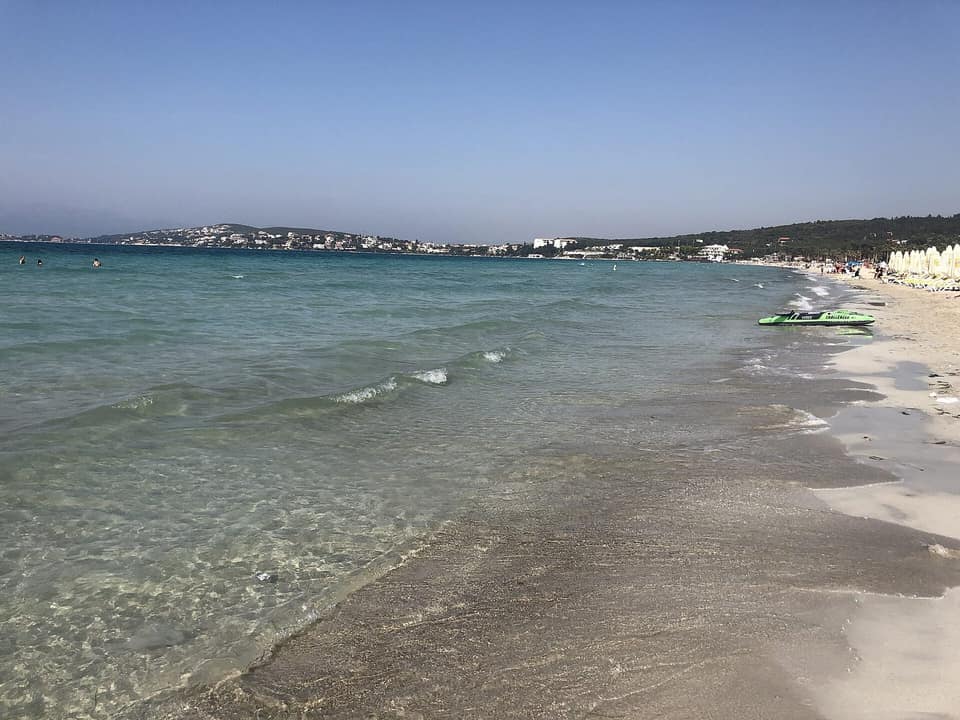
Warmth from below ground
İzmir first brings the sea to mind, but the province also has hot waters that rise to the surface from underground. The İzmir Provincial Directorate of Culture and Tourism writes that thermal springs in the city have been used for health and rest since prehistoric times. According to the directorate, springs such as Balçova Agamemnon, Allianoi, Asklepion, Karakoç and Çeşme Şifne have been places where people sought healing since antiquity, and this tradition continues today. The temperature of the springs in the province ranges from 27 to 153 degrees Celsius. The directorate counts their high flow rates and their closeness to the surface among İzmir's most important advantages in thermal tourism. The springs are spread over a wide area, from Balçova on the western side of the city to the villages of Bergama, and from the beach at Çeşme to the edge of the marshes at Menemen.
Balçova and the legend of Agamemnon
İzmir's best-known hot spring is the Agamemnon Hot Springs in the district of Balçova, west of the city centre. The Provincial Directorate of Culture and Tourism writes that the spring takes its name from Agamemnon, king of Mycenae, that it has been used as a healing centre since ancient times, and that it is mentioned in Homer's epics and in the work of the geographer Strabo. According to the legend related by Visit İzmir, Agamemnon sent his wounded soldiers to these waters in the 1200s BC, and the soldiers soon recovered. It is also said that part of the army of Alexander the Great was treated here. The directorate, however, specifically notes that there is no physical evidence for this tale.
The spring was forgotten over time and later rediscovered. According to the directorate, the hot springs were found again by a Frenchman named Elfont Mil, after which the buildings were renewed and developed. Visit İzmir writes that after İzmir came under Ottoman rule in 1415 the spring was repaired and used again, and that state support continued in the Republican period. In the 1980s the Special Provincial Administration reorganised the baths and pools, opening first a hotel section and then a treatment centre. According to the directorate, the water is about 63 degrees and contains sodium bicarbonate and chloride.
Water that heats a neighbourhood
Balçova's hot water does not only feed the spa; it also heats the surrounding homes. According to a paper presented at the Chamber of Geological Engineers, the Balçova-Narlıdere geothermal field is the first field in Türkiye where work began on using geothermal energy by scientific methods. After geological and geophysical surveys carried out in the field in the early 1960s, the General Directorate of Mineral Research and Exploration began drilling shallow geothermal wells in 1963. In 1983 the thermal hotel facilities began to be heated with a downhole heat exchanger, and in the same year the teaching and research hospital of Dokuz Eylül University also moved to this system. District heating began in 1996.
According to the figures given in the paper, the system has the capacity to heat 3.5 million square metres of indoor space with about 160 megawatts of thermal power, and it is described as one of the largest geothermal district heating systems in the world. The system includes production, reinjection and observation wells, a pipeline network of about 400 kilometres, nine heat centres and pumping stations. Once its energy has been extracted, the fluid is sent back underground through reinjection wells to protect the reservoir. The same paper also mentions the geothermal field in Seferihisar as a second area of work.
Beach and spring side by side in Çeşme
The Çeşme peninsula is one of the places where hot water meets the sea. The Provincial Directorate of Culture and Tourism writes that the Çeşme Hot Spring lies by the sea near the İzmir-Çeşme highway and that its water is about 58 degrees. The directorate stresses that having a beach and a hot spring at the same spot is something very rarely found in the world. The water contains sodium, potassium and magnesium chlorides.
Northeast of Ilıca, on the shore of Şifne Bay, lies the Şifne Hot Spring. According to the directorate, its water is about 38 degrees and contains sodium chloride and calcium. There are places to stay, food courts, a large family pool and baths here. The directorate notes that the spring is also known by the name Reisdere. On the road to the peninsula, at kilometre 41 of the İzmir-Çeşme highway in the İçmeler area, lie the Malkoç springs, whose water contains carbon dioxide and sodium chloride.
The hot villages of Seferihisar
The countryside of Seferihisar also holds several hot springs. The Provincial Directorate of Culture and Tourism writes that the water of the Cumalı Hot Spring, near the village of Kovacık about 15 kilometres southeast of the district centre, is between 55 and 65 degrees, salty and rich in carbon dioxide. The water of the Karakoç Hot Spring, near the village of Kavakdere about 17 kilometres southeast of the centre, contains carbon dioxide, sodium chloride and bicarbonate and is also used as drinking water. The directorate counts Karakoç among the springs used since ancient times. The water of the Kelalan Hot Spring, about 20 kilometres east of the district, is very hot.
The king's spring in Bergama
Bergama is the city of Asklepion, the famous healing centre of antiquity, and there are many hot springs in its surroundings as well. According to the Provincial Directorate of Culture and Tourism, the Geyikli Hot Spring, about 4 kilometres from the district centre, was founded in the time of King Eumenes of Pergamon and was known as the Baths of Asclepius and the Spring of Beauty. Inside a domed building there are two marble-lined pools. The water is about 35 degrees and contains sodium bicarbonate and sulphur. According to legend, Cleopatra bathed in this water and became even more beautiful.
North of Bergama, the sulphurous hot water of the Haydar Hot Spring in the village of Ilıca in the Kozak area is used only in a single bathhouse, which, according to the directorate, is said to date from the Roman period. In the village of Paşa, about 15 kilometres north of the district, is the Paşa Hot Spring, whose water is low in both temperature and mineral content. About 15 kilometres east of Altınova is the Dereköy Hot Spring with its single bathhouse. The water of the Mahmudiye Hot Spring is about 26 degrees. The directorate writes that because it contains no calcium, local people used this water as a bleach.
Dikili, Menemen and Bayındır
On the northern coast, Dikili is also known for its hot waters. The Provincial Directorate of Culture and Tourism writes that the water of the Bademli Hot Spring, about 15 kilometres from the district centre, is about 45 degrees, while the water of the Nebiler Hot Spring, on the right-hand side of the Dikili-Ayvalık highway, ranges between 55 and 75 degrees. At Kaynarca, about 10 kilometres east of Dikili, boiling water rises in the middle of a reedy, marshy area about three kilometres across, and the place is known as Kaynarca Mud.
Northwest of Menemen, west of the Ilıcagöl marsh, the Biliçya Hot Spring is known for its sulphurous hot water and warm mud, and there is only a simple facility here. At the Deniz Hot Spring, also northwest of Menemen, the water boils inside a cave and was once channelled into a natural rock basin. Northeast of Bayındır, on the Turgutlu road, the water of the Ergenli and Dereköy springs is about 40 degrees. The Gülbahçe Hot Spring, about 15 kilometres from the centre of Urla, is used together with a bathhouse on the shore of Gülbahçe Bay, and the directorate gives its water temperature as about 17 degrees.
Each spring has its own chemistry
İzmir's hot waters differ from one another not only in temperature but also in the minerals they contain. In the records of the Provincial Directorate of Culture and Tourism, the water of Balçova is described as containing sodium bicarbonate and chloride, that of the Çeşme Hot Spring sodium, potassium and magnesium chlorides, and the waters of Cumalı and Karakoç in Seferihisar as carbonated and salty. The Geyikli and Haydar springs in Bergama and Biliçya in Menemen stand out for their sulphurous waters. For some springs the directorate also gives a radioactivity value. This value is recorded as 3.3 for Balçova, 1.5 for Geyikli and 5.3 for Şifne. The water of the Bademli spring in Dikili is noted to contain arsenic and hydroacetate. The directorate notes that Balçova draws visitors even from Norway. The ways in which the springs are used also differ from one another. Some springs have been preferred only for bathing, some for mud baths and some, such as Karakoç, for drinking. As the example of Mahmudiye shows, the properties of the water have also found uses in everyday life.
Notes for a visit
For those coming from the city centre, the easiest spring to reach is Balçova. The Çeşme and Seferihisar springs can be combined with a trip to the peninsula, and the Bergama and Dikili springs with a trip to the ancient cities of the northern coast. The Provincial Directorate of Culture and Tourism lists the conditions for which each spring has traditionally been used, but anyone thinking of taking a thermal cure should consult a doctor first. The opening days, hours and fees of the facilities can change from year to year. Check the current information on the official websites of the operating institutions.
Sources
- İzmir Provincial Directorate of Culture and Tourism, Hot Springs, https://izmir.ktb.gov.tr/EN-348268/hot-springs.html
- İzmir Provincial Directorate of Culture and Tourism, Thermal Tourism, https://izmir.ktb.gov.tr/EN-243157/thermal-tourism.html
- Visit İzmir, Agamemnon Hot Springs, https://www.visitizmir.org/en/Destinasyon/11112
- Chamber of Geological Engineers (JMO), Dünden Bugüne Balçova-Narlıdere ve Seferihisar Sahaları (conference paper), https://www.jmo.org.tr/resimler/ekler/5363882d3df4896_ek.pdf
Comments
Be the first to comment