

Ezine Cheese, from the Foothills of Kaz Dağı to the Table
In Türkiye, Ezine is one of the first names that comes to mind when white cheese is mentioned. The name belongs to a district, but it is also a production recipe protected by law.

Sign in to like and rate
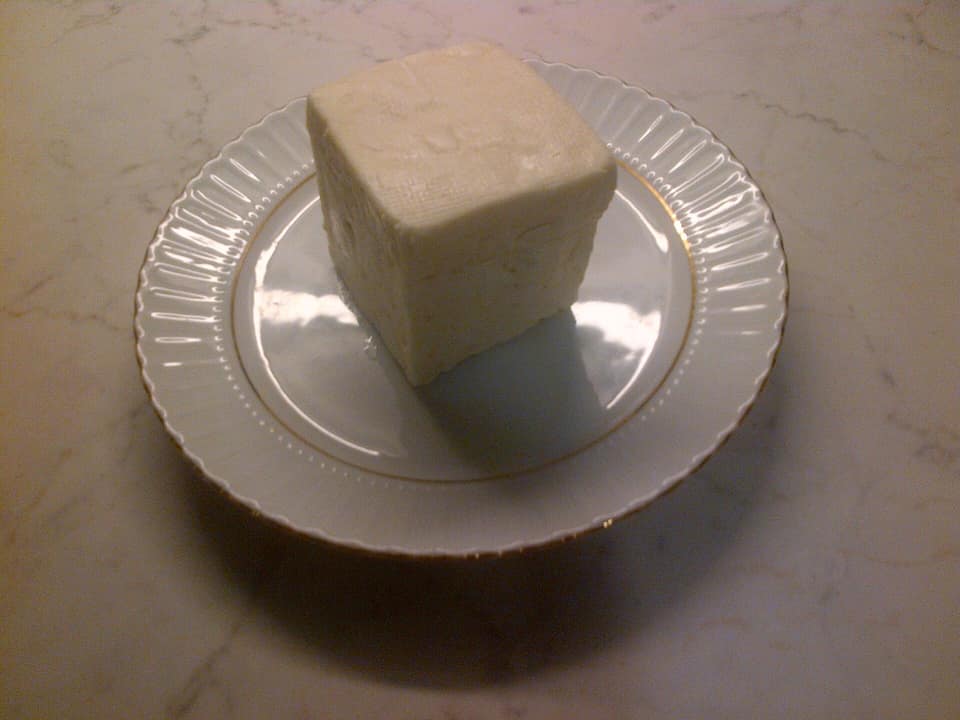
In Türkiye, Ezine is one of the first names that comes to mind when white cheese is mentioned. The name belongs to a district, but it is also a production recipe protected by law. Ezine cheese was registered in Türkiye as a designation of origin in 2006, and at the end of 2023 it entered the European Union's list of protected designations of origin. This article uses the registration document of the Turkish Patent and Trademark Office as a road map. It looks first at the land where the cheese is born, then at the animals and herbs the milk comes from, and then at how it is made and matured. At the end there are suggestions on how to recognise genuine Ezine cheese and what to look at when you go to Ezine.
A district on the Menderes plain
Ezine lies in the south of Çanakkale province, in the interior of the Troas peninsula. According to the Çanakkale Provincial Directorate of Culture and Tourism, the district stands on the plain watered by the Menderes stream, which rises on the northern slopes of the Kaz Mountains. After watering the Ezine plain, the stream flows into the Dardanelles. Summers are hot and dry, winters mild and rainy. The district has a coastline of 37 kilometres, and the wide areas along the coast are covered with olive groves. Ezine was formerly part of the Biga sanjak and became a district in 1886. The provincial directorate also notes that Ezine is a district that has stayed in people's minds and become a brand through its cheese.
Although the cheese takes its name from the district, the production area is not limited to a single district. The geographical boundary in the registration covers the districts of Ezine, Bayramiç and Ayvacık. To these are added the villages of Şerbetli, Etili, Ahlatlıburun, Küçüklü, Alibeyköy and Söğütalan in Çan district, and the villages of Karacaören, Kurşunlu, Şerbetli and Kirazlı in the central district. Ezine cheese is therefore the product of a wide rural area stretching between the Kaz Mountains and the Aegean.
The herbs of Kaz Dağı and three milks
The registration ties the cheese directly to this geography. According to the document, the vegetation and climate of the region are shaped by Kaz Dağı. The mountain gives the region plenty of rain, rich vegetation and abundant oxygen. Hundreds of aromatic plants grow in the pastures, above all sweet marjoram, wild oregano, sage, horse mint, lemon balm and thyme. The document states clearly that these plants eaten by the animals give the milk flavour and aroma. The announcement of the European Union Delegation to Türkiye also describes the region as having a transitional climate between the Mediterranean and Black Sea climates. In this semi-humid, rainy and windy region, the milk-giving animals are fed only on the region's own fodder.
The first thing that sets Ezine cheese apart from other white cheeses is its milk. The cheese is made from a blend of sheep, goat and cow milk. According to the registration, the blend is adjusted to the season, but its limits are strict. Sheep milk is between 35 and 45 percent, goat milk is at least 40 percent, and cow milk is at most 25 percent. The animals the milk comes from are also listed one by one in the document. The sheep are of the Tahirova, Sakız, Dağlıç and Sakız and Dağlıç cross breeds. The cows are Holstein, known in Turkish as Siyah Alaca, and the goats are of the Karakeçi, or hair goat, and Turkish Saanen breeds. Production begins in March, when sheep and goat milk is plentiful, and continues until the end of August.
The milk itself is not altered. According to the document, the milk used in the cheese contains no antibiotics or substances that prevent acidity, no fat is removed and no water is added. The milk is delivered to the dairy with its natural composition.
Rennet and sea salt
The recipe of Ezine cheese rests on a short list of ingredients. Apart from the blend of sheep, goat and cow milk, natural rennet and sea salt, no additive is used. The rennet is obtained from the stomachs of young ruminants still at the suckling stage, preferably calves. According to the document, the well-salted stomachs are pounded to the consistency of flour, kept in bottles and, when needed, dissolved in warm water and added to the milk. The salt comes from the sea. The document writes that sea salt prevents the cheese from melting and falling apart and lets it release its whey easily during maturing.
The making goes step by step as follows. The milk is first pasteurised, then curdled with rennet at between 32 and 34 degrees. No starter culture is used in Ezine cheese. The curd that forms is cut and left on its own so the whey can separate. Then, to speed up draining, it is placed in a pressing cloth and pressed. At this stage the curd knits together and forms the teleme. The teleme is cut into blocks and left in a brine prepared with sea salt. The blocks taken out of the brine are laid in a single row in tins, dry salt is sprinkled over them and they are left to rest for a while. After the released water is drained, cheese is stacked until the tins are full, brine is added on top and the tin is soldered shut so that no air gets in.
Waiting eight months
What really makes Ezine cheese what it is, is patience. According to the registration, the cheese tins are matured for at least eight months in cold stores at between 2 and 4 degrees. Maturing is checked visually, that is, sample tins are opened and closed to see how the cheese is doing. The maturing period of the cheese must always be stated on the label in months. The European Union announcement also stresses that this long wait in brine gives the cheese its characteristic sour and slightly sweet taste.
The document also describes how the cheese should look. Ezine cheese is a light yellow colour leaning towards white. It has a medium-hard texture that does not crumble, with a small number of small holes in its body. Its aroma combines a creamy note from the milk fat with a cooked-milk note from the heat treatment. Salty, sour and sweetish notes come together in its taste. It is sold either in tins of brine or taken out of the tin and vacuum packed.
Two registrations, from Ankara to Brussels
The first application to register Ezine cheese was made in February 2006. According to the registration document, the geographical indication was announced in the Official Gazette of 5 August 2006 and registered as a designation of origin under number 86, valid from that date. A designation of origin means that a product owes all its characteristics to the geography where it is born and that every stage of production must take place in that region. The registration was made in the name of an association that brings together the cheese's producers, and the document was updated in 2020 with an amendment notice.
The document also describes the inspection. Under the coordination of the association, a board made up of one expert each from the Çanakkale Commodity Exchange, the Çanakkale Provincial Directorate of Agriculture and Forestry and the Food Engineering Department of Çanakkale Onsekiz Mart University inspects the producers once a year and at any time when there is a complaint. The board checks where the milk comes from, the blend ratios, the animal breeds, the salt, the rennet, the maturing period and the label.
The second step came from Europe. According to the announcement of the European Union Delegation to Türkiye dated 26 December 2023, Ezine cheese was registered in the EU as a protected designation of origin and became Türkiye's first cheese to receive this status. The announcement also lists products from Türkiye registered earlier, and among them is Bayramiç Beyazı, another product of Çanakkale.
Recognising genuine Ezine cheese
The registration has a practical meaning. According to the document, the Ezine cheese logo and the designation of origin emblem appear on the product's packaging. If they cannot be placed on the packaging, the logo and emblem are kept clearly visible on the premises. The maturing period must be written on the label in months. When buying a cheese, looking first for this emblem and then for the maturing period is a good start.
This knowledge is not yet very widespread among consumers. A study published in 2025 in the Journal of Tekirdağ Agricultural Faculty surveyed 394 consumers in Istanbul, Ankara and İzmir in 2021. Of the participants, 75.9 percent said they bought Ezine cheese, but 58.1 percent did not know that Ezine cheese is a product with a geographical indication. When prices were equal, 65.2 percent of participants said they would choose Ezine cheese with a geographical indication. In other words, recognising the emblem is the shortest way to make a choice.
When you go to Ezine
Ezine lies on the way for those touring the Troas peninsula. According to the provincial directorate, Alexandria Troas, the great city of the Hellenistic and Roman periods, is within the district boundaries. The walls of Neandreia on the summit of Çığrı Dağı are also near the district's village of Yavaşlar. Ezine is also a district with the port that provides the sea link to Bozcaada. Starting a day with the ruins of Alexandria Troas and continuing it with breakfast or lunch in the district centre is the easiest way to taste the cheese where it is born.
When buying cheese, do not hesitate to ask the seller which milks it is made from and how long it has been matured. A tin in brine stands up well to a long journey, while a vacuum pack is practical for those who want to buy a small amount. Remember the season, too. Since production starts in March and ends in August and the cheese waits at least eight months, every block on the shelf was made at least one season earlier with milk from the pastures of Kaz Dağı. The full registration document is open to everyone on the geographical indications portal of the Turkish Patent and Trademark Office; once you read the cheese's story in that document, you will see better how long a road lies behind a single slice on the table.
Sources
- Turkish Patent and Trademark Office, Ezine Peyniri registration (No 86, designation of origin), https://ci.turkpatent.gov.tr/Files/GeographicalSigns/616998bb-ab63-4835-809b-f8a963661240.pdf
- European Union Delegation to Türkiye, Çanakkale's Ezine cheese recognised by the EU (26.12.2023), https://eeas.europa.eu/delegations/t%C3%BCrkiye/%C3%A7anakkalenin-ezine-peyniri-ab-taraf%C4%B1ndan-tan%C4%B1nd%C4%B1_tr
- Çanakkale Provincial Directorate of Culture and Tourism, Ezine, https://canakkale.ktb.gov.tr/TR-70538/ezine.html
- Yılmaz, Niyaz Altınok and Tomar, Consumers' Purchasing Behaviors of Product with Geographical Indication, The Case of Ezine Cheese, Journal of Tekirdağ Agricultural Faculty 22(2), 2025, https://dergipark.org.tr/en/download/article-file/3529701
- Wikipedia (Turkish), Ezine peyniri, https://tr.wikipedia.org/wiki/Ezine_peyniri
Comments
Be the first to comment