

Eskişehir Cuisine from Çibörek to Met Halva
The table of a wheat plain To understand Eskişehir's cuisine, you first have to look at the plain around it.
 Radar TürkiyeNovember 24, 2026
Sign in to like and rate
The table of a wheat plain
To understand Eskişehir's cuisine, you first have to look at the plain around it. GoTürkiye, the promotional portal of the Ministry of Culture and Tourism, describes the city as Anatolia's wheat warehouse since ancient times and notes that Eskişehir's table is known for its dishes made with flour. The same source adds that poppy seed is used very widely in cooking, and that poppy and walnut breads and poppy seed buns are among the city's well-known flavours. In this city, dough is the foundation not only of bread but of an entire cuisine that stretches from savoury pastries to halva.
A second layer is added to the bounty of the plain: migration. From the nineteenth century onwards, Eskişehir welcomed communities arriving from Crimea, the Caucasus and the Balkans. An academic study by Begüm İlbay, published in 2020, stresses that Caucasian, Crimean and Balkan migrants in particular had a great influence on Eskişehir cuisine. According to the same study, the Crimean Tatars, who began arriving after the Crimean War, were the first migrant community to settle in the city. This guide separates those layers one by one and offers a practical look at what to eat in Eskişehir today and how.
Çibörek, the city's signature dish
The dish that comes to mind first when Eskişehir is mentioned, çibörek, has its roots in Crimean Tatar cuisine. The Türkiye Culture Portal defines çibörek as a pastry identified with Eskişehir and openly ties it to Crimean Tatar culture. According to the recipe on the portal, the dough is kneaded from flour, salt and water until it becomes soft. The filling is made from minced meat, finely grated onion, salt, black pepper and a little water. The filling is spread over half of a rolled-out round of dough, the dough is folded over into a half-moon shape, the edges are sealed, and the pastry is fried in very hot oil until lightly golden.
The story of its name is also interesting. As İlbay explains, in Kipchak and Tatar Turkish "çı" or "şı" means delicious, while börek means pieces of dough filled with meat. Çibörek can therefore be read literally as delicious pastry. Although it is often called "çiğ börek" in everyday speech, its official name in the registration record is Eskişehir Çiğböreği (Çibörek).
Traditional çibörek is made with minced meat. The Culture Portal notes that mushroom, cheese and potato versions also exist; still, choosing the minced meat version on a first try means getting to know the dish in the form closest to its origins. The pastry is served hot and is traditionally eaten by hand. It is usually accompanied by cold, frothy ayran.
Flavours protected by geographical indication
Eskişehir's local products are also protected by official registration. According to the Geographical Indications Portal of the Turkish Patent and Trademark Office, the application for Eskişehir Çiğböreği (Çibörek) was filed on 19 April 2010 and registration was completed on 26 November 2012. The registration was made by the Eskişehir Chamber of Commerce, and the product is recorded as a designation of origin in the group of dishes and soups. İlbay's study also quotes the definition in the registration document: a dough of flour, water and salt is rested and rolled out in small pieces, filled with a mixture of minced meat, onion, salt, water and black pepper, and cooked in hot oil.
The portal lists other products registered in the province of Eskişehir as well. Eskişehir Met Helvası was registered on 30 November 2017 and Eskişehir Simidi on 4 April 2022; both were registered by the Eskişehir Chamber of Commerce. The district of Sivrihisar is the busiest address on the list: Sivrihisar Muska Baklavası, Sivrihisar Höşmerim Tatlısı, Sivrihisar Dövme Sucuğu, Sivrihisar Arabaşı and Sivrihisar Kelem Dolması are among these records. One of the most recent entries is Kızılinler Bal Kabağı, a squash registered in 2025.
A registration record officially defines the recipe of a dish and the place where it is made. For the traveller, the practical meaning is this: the flavours that carry these names are the product of a specific place and method, and the best way to taste them is in their own landscape.
Met halva and a street game
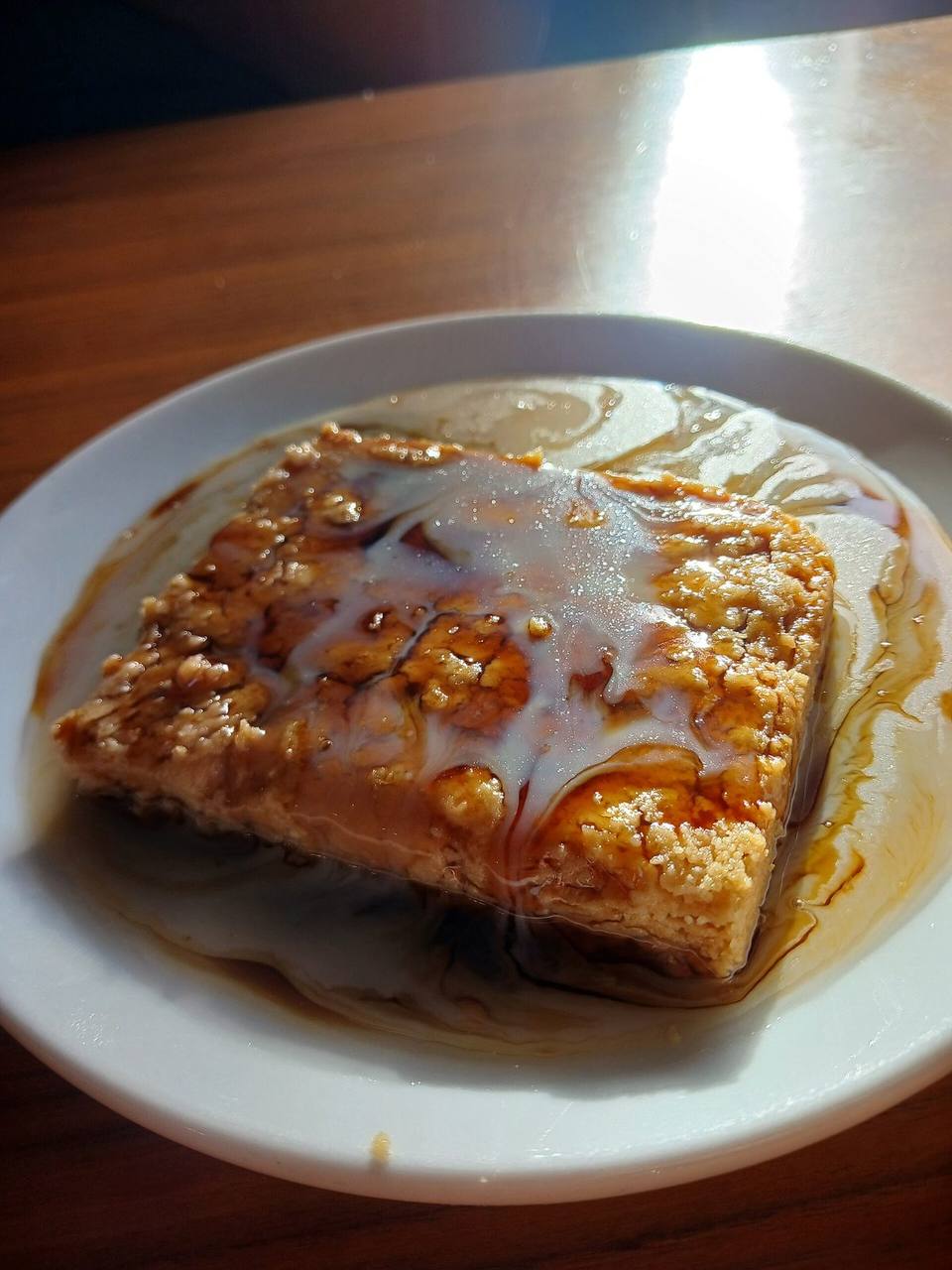
Met helvası holds a special place in Eskişehir's sweet identity. The Culture Portal explains that the name comes from a game called "met", played with a stick and a knucklebone. According to tradition, on long winter nights the losing side would make halva, and the sweet grew out of this custom. GoTürkiye repeats the same story and writes that the geographical indication of met halva formally recognises the place this sweet holds in the city's cultural memory.
Met halva is made from flour, fat, sugar, lemon and water. There are cocoa and vanilla versions, and its taste and texture recall pişmaniye, the Turkish floss halva. Its fine, fibrous structure, which dissolves quickly in the mouth, sets it apart from ordinary halvas. The Culture Portal notes that met halva can be found in many places in the city centre, which also makes it one of the easiest flavours to take home with you.
Eskişehir's halva table does not end with met halva. The Culture Portal and GoTürkiye also list nougat halva, summer halva with walnuts, tahini halva and kürek helvası among the city's traditional sweets. According to GoTürkiye, soapwort is used in making kürek helvası. Tasting these halvas side by side is an enjoyable way to see how differently the same ingredients behave when handled with different techniques.
Balaban and the traces of migrant cuisine
At the kebab table, Eskişehir's own name is balaban. According to GoTürkiye's description, chopped pide bread is soaked in hot broth, topped with a yoghurt and tomato paste sauce, and then grilled balaban meatballs and tenderloin skewers are placed on top. The plate is finished with parsley, tomatoes, grilled peppers and sizzling butter. The same source notes that the word balaban means very big in Tatar. Since it is a filling dish, it is best enjoyed at lunchtime, without hurrying.
The traces of migrant cuisine are not limited to çibörek and balaban. GoTürkiye notes that the rich Circassian cuisine is accompanied by many dishes of Balkan origin, naming among them dızmana, kalakay, kelem wraps, liver wraps, wedding meatball soup and göceli tarhana soup. Most of these dishes live on at home tables.
The table of Sivrihisar
Sivrihisar, to the southeast of the city, is a culinary stop in its own right. According to GoTürkiye, Sivrihisar Kelem Dolması takes its name from the cabbage leaves that wrap the filling and is a winter dish prepared through long, slow cooking. Sivrihisar Arabaşı reflects the culture of sharing on winter nights, with a rich, spicy soup served together with dough. Muska Baklava takes its name from its triangular shape, which resembles an amulet, and is known for its thin layers and balanced syrup.
Sivrihisar Höşmerim Tatlısı is a dessert whose aroma and colour are determined by roasting, with a texture somewhere between halva and pudding. According to the records of the Turkish Patent and Trademark Office, the registrations for höşmerim and kelem dolması were made by Sivrihisar Municipality. GoTürkiye also mentions gombo soup, served in the district on special occasions and at the end of wedding meals, and dövme sucuk, a sausage made from the meat of cattle raised in Sivrihisar and its villages. According to the same source, the Sivrihisar Dövme Sucuk Festival has been held since 2017.
Fruit of the plain
Eskişehir's farming calendar is also reflected on its table. GoTürkiye writes that Mihalıççık is the last district in Türkiye where cherries are harvested in the year. Those who visit the city at the end of the cherry season can look for these late cherries in local markets. The registration of Kızılinler Bal Kabağı as a geographical indication also shows that the plain's wealth of fruit and vegetables has entered the official records.
Why çibörek is so loved
What çibörek means to visitors arriving in the city has also been studied academically. İlbay carried out a face-to-face survey with 269 domestic tourists who came to five çibörek restaurants in Eskişehir. According to the study, the motives behind tourists' çibörek consumption fall under four headings: experience, interpersonal communication, psychological relaxation and learning. In other words, people eat çibörek not only to satisfy their hunger, but to try a new flavour, share a memory with their travel companions and get to know the culture of the city they are visiting. The study also found that those who had heard about çibörek from people they know placed more importance on experience and relaxation.
Practical suggestions
For a one-day visit to Eskişehir focused on its cuisine, the following order works well. Starting the day with a simit is a good chance to get to know the geographically registered Eskişehir Simidi. At lunch you can choose çibörek or balaban; since both together may feel heavy, it is more comfortable to spread them over different meals. In the afternoon, met halva, nougat and summer halva can be tasted at a halva shop.
A day trip to Sivrihisar can be set aside to try the district's own flavours, such as höşmerim, muska baklava and arabaşı, on the spot. Since festival and event dates change from year to year, check current information from official sources before you go. With dishes such as çibörek and balaban, presentation and prices vary from place to place; choosing places popular with local people is often a good guide.
Sources
- GoTürkiye, Ministry of Culture and Tourism, Taste the Flavors of Eskişehir, https://goturkiye.com/eskisehir/taste
- Türkiye Culture Portal, Çibörek, https://www.kulturportali.gov.tr/turkiye/eskisehir/neyenir/ciborek
- Türkiye Culture Portal, Met and Nougat Halva, https://www.kulturportali.gov.tr/turkiye/eskisehir/nealinir/met-ve-nuga-helvasi
- Turkish Patent and Trademark Office, Geographical Indications Portal, Eskişehir Çiğböreği (Çibörek), https://ci.turkpatent.gov.tr/cografi-isaretler/detay/38024
- Turkish Patent and Trademark Office, Geographical Indications Portal, Eskişehir Met Helvası, https://ci.turkpatent.gov.tr/cografi-isaretler/detay/38026
- Turkish Patent and Trademark Office, Geographical Indications Portal, geographical indications in Eskişehir province, https://ci.turkpatent.gov.tr/cografi-isaretler?cityId=26
- İlbay, B., Determination of Çibörek Consumption Motives of Domestic Tourists Traveling to Eskişehir, 2020, https://dergipark.org.tr/tr/pub/atrss/article/673503
Comments
Be the first to comment