

Batman and Oil, from Raman Dağı to the Birth of a City
Anyone arriving in Batman usually knows the city by a single word, yet behind that word lies a story of less than a hundred years.

Sign in to like and rate
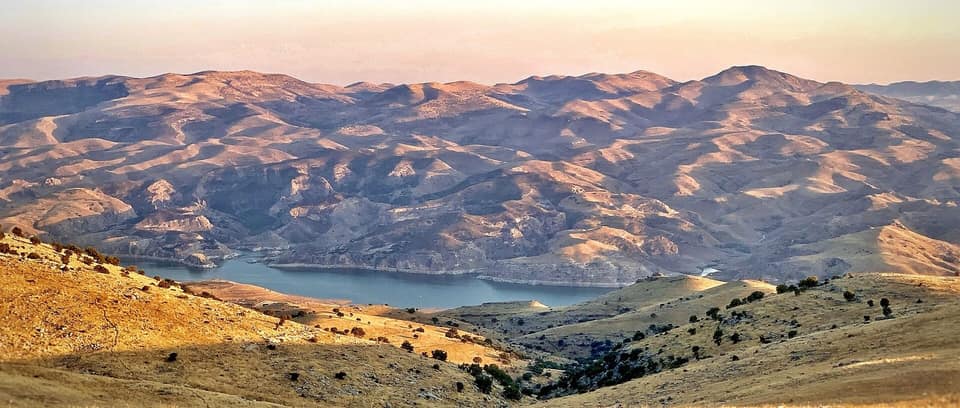
Anyone arriving in Batman usually knows the city by a single word, yet behind that word lies a story of less than a hundred years. Today Batman is one of the large cities of Southeastern Anatolia, with a population of more than half a million, but in the early years of the Republic it was a small village on the plain north of the Tigris. What turned it into a city was the oil that came out of the dry, bare ridges to its south, Raman Dağı. Drawing on the work of the Provincial Directorate of Culture and Tourism, Batman Municipality and historians from Batman University, this article follows that transformation step by step and then suggests how you can read the traces of the story when you visit.
A plain between three rivers
The city centre of Batman stands on the Batman Plain, between the Tigris and its two large tributaries, the Batman and Garzan streams. The Provincial Directorate of Culture and Tourism writes that the plain is ringed by the Raman, Garzan and Aydınlık mountains and that the centre lies 560 metres above sea level. The same source notes that the name Batman has been linked with the stream since the Middle Ages, and that travellers such as Evliya Çelebi mention settlements on the banks of the Batman stream in their notes. Excavations at Hallan Çemi Höyüğü near Kozluk show how far back settlement on these rivers goes; the directorate speaks of a history of ten thousand years.
According to the history page of Batman Municipality, the place where the city centre stands today was, in the early years of the Republic, the village of İluh, with about twenty households and attached to the Beşiri district of Siirt. An article by Fahri Özteke of Batman University on the city's growth through oil reports that the Batman stream flooded the area badly in 1926, 1927 and 1935, and that the old sub-district centre nearby was ruined as a result. Before oil, then, İluh was an ordinary plain village living from farming and livestock and wary of floods.
Raman-1 and Raman-8, two separate turning points
Two well names come up again and again in Batman's oil story, and knowing the difference between them helps you read the story correctly. The oil page of the Provincial Directorate of Culture and Tourism states that oil exploration in Türkiye began in 1933, that the first oil deposit was struck at the Raman-1 well in 1940, and that the first oil in an economic sense was obtained from the Raman-8 well in 1948. In other words, Raman-1 is the well that proved oil was there, while Raman-8 is the well where commercial production began.
A paper by Tekin İdem of Batman University on the exploration work on Raman Dağı fills in the details. When drilling in the Midyat district of Mardin produced no results, the search moved to the İluh sub-district of Beşiri, and the drilling that started on 24 July 1939 reached oil at the Raman-1 well on 20 April 1940. Some of the wells opened afterwards gave nothing, but once the Raman-8 and Raman-9 wells yielded more than one hundred and thirty tonnes of oil a day, it became certain that Raman Dağı was an oil region. Özteke's article adds that oil was reached at Raman-1 at a depth of 1048 metres and that the search was carried out under the direction of the Mineral Research and Exploration Institute, founded in 1935.
The first distilling and the refinery opposite the station
Oil had been found, but processing it was another problem. According to İdem, the oil was first processed in a small refinery set up in the Meymuniye Gorge and then in the Batman Trial Refinery. Özteke reports that for the first plant at Meymuniye an old distilling plant lying idle in İstanbul was dismantled and carried to Raman. The same article says that a trial refinery opened opposite the railway station towards the end of 1948, and that an asphalt road of about twenty five kilometres was built to carry crude oil from Raman by truck. İdem's paper stresses that local people worked on building this road and on bringing water from the Tigris to the oil camp, so that families who had lived from farming gained a new source of income.
By then the railway had also reached the city. The Provincial Directorate of Culture and Tourism writes that the railway between Haydarpaşa and Kurtalan arrived in the centre of Batman in 1944. With oil, station and refinery side by side, İluh became one of the busiest places in the region. İdem points out that İluh, a sub-district of only four hundred and nine people in the early 1940s, turned into a province within fifty years.
With the petroleum law of 1954 the Turkish Petroleum Corporation was founded and took over the presence of Mineral Research and Exploration in Batman; the directorate's page also describes this handover. According to Özteke, construction of the modern refinery was completed at the beginning of summer 1955 and the plant began working at full capacity in 1956. The settlement built around the refinery, known locally as the site, formed a fabric separate from the old core of the town. In the directorate's description of the city centre, the refinery and regional directorate sites are still listed among the names of neighbourhoods today.
From village to province, a leap of half a century
The work that came with oil brought a large wave of migration into the town. Batman Municipality's history records that the population reached 4,713 in the 1955 census and that the municipal organisation was set up the same year. The settlement took the name of the stream flowing beside it and became Batman, and in 1957 it was made a district centre. With Law No. 3647 of 16 May 1990 it became the seventy second province of Türkiye; the Provincial Directorate of Culture and Tourism notes that the same arrangement attached the districts of Hasankeyf, Gercüş, Beşiri, Kozluk and Sason to the new province. According to the figure given by İdem, the province had a population of 168,779 in the year it was founded.
The directorate's general information page likens this migration to a gold rush and describes how the habits brought by people from different places came to live side by side in the city. Özteke also writes that working at the refinery became a sought-after job, which is why many families from different parts of the country settled in Batman. The city's social life was shaped by oil as well; the same article reports that director Atıf Yılmaz shot his film Toprağın Kanı in Batman.
The journey of the oil did not stop at the city. According to Özteke, on 4 January 1967 a crude oil pipeline of about five hundred kilometres was opened between Batman and Dörtyol on the Mediterranean coast, and oil from Raman began to be carried by tanker to other refineries. Drawing on figures from Batman Governorship, the same article notes that most of the crude oil processed in the city today is used for making asphalt.
What the fields say today
Raman Dağı is still a working oil field. According to the 2020 figures on the page of the Provincial Directorate of Culture and Tourism, Batman had twenty actively producing fields and 723 oil wells, with a daily output of 17,963 barrels. The same table shows that 63.4 per cent of the regional directorate's crude oil production that year came from fields within the borders of Batman province. The fields attached to the regional directorate spread beyond Batman into Diyarbakır, Mardin, Siirt and Şırnak.
The story of these lands with oil is in fact much older. The official description of Hasankeyf Museum states that the prehistoric section of the museum displays obsidian and flint tools found in surface surveys in the Tigris Valley and on Raman Dağı. So the human trace on the ridges of Raman begins thousands of years before the oil wells.
Where you can read this story
The oil fields and the refinery are working industrial plants; there is no official notice saying they are open to visitors. Do not try to enter or approach the wells, pipelines or plant areas, and check for prohibition signs before taking photographs. The city itself tells the story best. According to an old description quoted by Özteke, Batman was long spoken of as two parts: the site built around the refinery after 1955 and the old lower town called İluh. Walking through the city you can still read this duality; the railway station and the refinery opposite it show by themselves why the first investments gathered at this spot.
The Provincial Directorate of Culture and Tourism writes that the Raman mountains encircle the old village of İluh from the south; in other words, the mountain lies right beside the city. Its ridges, however, are protected as an oil field, so do not think of it as a hiking destination. If you want to see the mountain, stay on public roads and do not turn onto the service roads that lead into the oil field.
To complete the story, a trip to Hasankeyf is worthwhile. Hasankeyf Museum displays finds from the Ilısu Dam rescue excavations and the stone tools from Raman Dağı; the museum appears as open on the ministry's page, so check the current visiting hours there. Batman Museum, by contrast, currently appears as closed on the ministry's museum page, so check its status there before you go.
Practical notes
- Batman can be reached by air and by rail; check the current timetables with official sources.
- Summers are hot and dry; spring and autumn are more comfortable seasons for walking around the city.
- Around the oil plants, do not fly drones over plant areas and do not take photographs without permission.
- Readers curious to learn more about the city's history can look at the oil history studies in Batman University's open archive.
Sources
- Batman Provincial Directorate of Culture and Tourism, Batman ve Petrol, https://batman.ktb.gov.tr/TR-282192/batman-ve-petrol.html
- Batman Provincial Directorate of Culture and Tourism, Genel Bilgiler, https://batman.ktb.gov.tr/TR-56575/genel-bilgiler.html
- Batman Municipality, Tarihçe, https://www.batman.bel.tr/icerik/tarihce
- Batman University Open Archive, Tekin İdem, Raman Dağı'nda petrol arama çalışmaları ve ekonomik değerli petrol kaynaklarının keşfi, https://earsiv.batman.edu.tr/items/f776c306-e5ba-40bd-9746-95b41cecf69a
- Fahri Özteke, Petrol ile Evrilen Bir Cumhuriyet Şehri Batman, Van Yüzüncü Yıl University Journal of the Social Sciences Institute, https://dergipark.org.tr/en/download/article-file/3208599
- Museums and Archaeological Sites, Hasankeyf Museum, https://muze.gov.tr/muze-detay?SectionId=HKM02&DistId=MRK
- Wikipedia, Raman Dağı, https://tr.wikipedia.org/wiki/Raman_Da%C4%9F%C4%B1
Comments
Be the first to comment