

Bamsı Beyrek's Fortress, Bayburt in the Tales of Dede Korkut
You can come to Bayburt following a story. The fortress rising above the town is both a real defensive structure and a place named in the tales of Dede Korkut, one of the shared literary treasures of the Turkic world.
 Radar Türkiye6 Kasım 2026
Sign in to like and rate
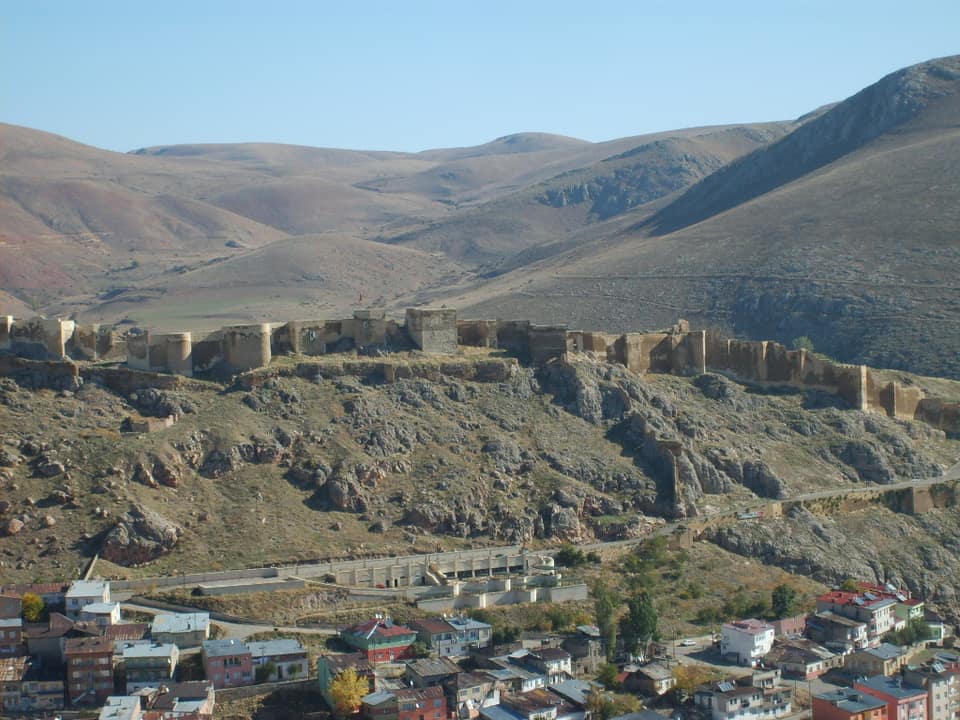
You can come to Bayburt following a story. The fortress rising above the town is both a real defensive structure and a place named in the tales of Dede Korkut, one of the shared literary treasures of the Turkic world. This article explains how stone and story interlock in Bayburt, what the fortress has witnessed over the centuries, and how you can approach this heritage today.
The mountain road and the fortress
To understand Bayburt Castle you first have to look at the geography. The Culture Portal entry says the fortress stands at a point reached by crossing the Zigana and Kop mountains. According to the same entry, it lies on the trade route linking the Black Sea to the Persian Gulf. In other words, this was a stop that caravans and armies crossing the high passes had to take into account. The fortress was built on steep, sheer rocks north of the town. Who built it is not known. It is recorded as existing in the time of the Bagratids, between 885 and 1044. The entry also notes that the fortress appears to have played a role in local struggles during the first centuries of the Common Era. In short, we have no exact founding date. What we have is a rock that served as a lookout over a very old settlement and road. If you notice the road rising and falling as you enter Bayburt, you will sense more clearly why the fortress stands where it does.
A history in layers
The fortress's history is not the work of a single period. The Culture Portal writes that Bayburt Castle remained under Roman, Armenian, Byzantine, Arab and Komnenos rule. During the Turkish period it was repaired many times, as the twenty Arabic inscriptions concentrated on the gates and on the towers facing the town show. Seventeen of these inscriptions date from the time of Tuğrul Şah, the son of the Seljuk ruler Kılıçarslan II and the governor of Erzurum. The source says they show that the fortress was almost rebuilt against attacks expected from the Empire of Trebizond. The fortress remained for a time in Akkoyunlu hands and passed to the Ottomans in 1514. One inscription dates from the reign of Suleiman the Magnificent, while two others cannot be read. Damaged from time to time by occupation and destruction, it was largely destroyed during the Ottoman-Russian War of 1828 and 1829. Evliya Çelebi, who visited Bayburt in 1647, wrote that there was a neighbourhood of 300 houses inside the fortress. So this was not merely a military fort, but a settlement where people lived.
Parasar's Bayburt Fortress in the tale
What makes Bayburt special on the literary map is its place in the Dede Korkut tales. According to the Culture Portal, in the tale titled The Story of Bamsı Beyrek, Son of Kam Büre, the fortress that Beyrek sets out to conquer in order to win fame is Bayburt Castle. The Dede Korkut page of the Bayburt municipality stresses the same link. It says that among the tales told in Turkish of Turkey, the largest number of variants of Beğ Böğrek, that is Bamsı Beyrek, has been recorded in Bayburt. The same page says Bayburt appears in the tales under the name Parasar's Bayburt Fortress. It states that this information appears in Orhan Şaik Gökyay's work on Dede Korkut and has also reached the present day by being told from mouth to mouth among the people. An important distinction is needed here. The fortress is a historical structure, known through inscriptions, repairs and sieges documented in sources. The story is a product of oral literature. It is best to read the two side by side without confusing them. When you stand before the fortress, you can think of the stone wall as history and of the name in the tale as the memory of the town.
The festivals that keep the tale alive
One reason the Dede Korkut tales remain alive in Bayburt is that this heritage is deliberately kept going in the town. According to the municipality's page, a festival was planned to bring social, cultural and scientific vitality to the province, and it was named after Dede Korkut. Thus, from 1995 onward, the Bayburt International Dede Korkut Culture and Art Festivals began to be held. The page reports participation from many Turkic geographies, among them Azerbaijan, Uzbekistan, Kyrgyzstan, Turkmenistan, Kazakhstan, Dagestan and Balkar-Karachay. It also says that visiting scholars presented papers on Dede Korkut and spoke of traces of him in their own regions. According to the same source, UNESCO recognised 1999 as the 1300th anniversary of Dede Korkut. Dede Korkut was also included in the UNESCO Representative List of the Intangible Cultural Heritage of Humanity through a joint application by Kazakhstan, Azerbaijan and Turkey. In Bayburt this inscription is regarded as an important part of the town's cultural heritage. Learning the festival calendar and programme from the provincial directorate of culture and tourism, or from official announcements, will help you time your visit.
The Çinimaçin name and the reproduced tiles
The fortress has one more name. According to the Culture Portal, because of the tile decorations made in the Anatolian Seljuk period, the fortress was also known historically as Çinimaçin Castle. The tiles that gave the fortress its name disappeared over time. However, within the restoration and excavation work started in 2017, tiles of different colours and sizes were reproduced faithfully and put back in place. The news item from the Bayburt Provincial Directorate of Culture and Tourism explains the method. The roughly 800-year-old tile decorations on the walls were reproduced starting from a single broken fragment of ten square centimetres left on the wall surface. The officials consulted tile sockets, ceramic fragments from the excavations and written sources to determine colours, sizes and patterns. Production was entrusted to Iznik. The work was carried out under the coordination of the Bayburt Governorship, by the Provincial Directorate of Culture and Tourism and the Bayburt Museum Directorate, over about two years. Rebuilding a wall's whole decoration from such a tiny piece shows how careful research conservation requires. Ask the provincial directorate before your visit about the present state of the work and what can be seen on site.
A short guide to reading the fortress
The Culture Portal gives the fortress's address as Halfikale, also called Kaleardı, neighbourhood and says access is by road. Visiting conditions are not stated on the official page. For this reason I recommend getting up-to-date information from the Bayburt Provincial Directorate of Culture and Tourism before you go. When you arrive, first look at the rocky nature of the site. The sheer rocks and the position above the town described in the sources can be read even from a distance. Then approach the walls and pay attention to the towers and the areas around the gates, because that is where the inscriptions are concentrated. The inscriptions are in Arabic and some cannot be read, so rather than trying to decipher each one, it is more rewarding to think about how many times the repairs were repeated. Look along the walls for tile sockets and the tiles that have been put back. Seeing the colour and pattern of the new productions beside the stone fabric of the structure makes an interesting comparison. Comfortable shoes with a firm sole are wise, and you should walk carefully on rocky ground. Daylight is best for photographs. Following the warnings and directions you see on site is important for your safety and for the structure's.
Putting the stone and the story side by side
The municipality's page describes Bayburt as one of the oldest places where Turks settled in Anatolia and as an important cultural centre in the Seljuk and Ottoman periods. Within this long continuity, the fortress is a focal point for defence, trade and storytelling alike. On one side there are inscriptions, sieges and repairs. On the other is a tale passed from mouth to mouth and told in different forms over centuries. Thinking of the two together in Bayburt offers a far richer view than seeing the town merely as a mountain-pass settlement. If you follow the events, museums and exhibitions that carry the Dede Korkut name in the town, you can trace the relationship between literature and place from different angles. You can combine your visit with the town's other historic stops and make the fortress the first or the last stop of the day. Whatever you decide, when you look at the fortress, listen first to the stone on the rock and then to the story told around that stone.
Sources
- Kültür Portalı, Bayburt Kalesi, https://www.kulturportali.gov.tr/turkiye/bayburt/gezilecekyer/bayburt-kalesi
- Bayburt İl Kültür ve Turizm Müdürlüğü, Bayburt Kalesi Çinilerine Kavuşuyor, https://bayburt.ktb.gov.tr/TR-273123/bayburt-kalesi-cinilerine-kavusuyor.html
- Bayburt Belediyesi, Dede Korkut, https://bayburt.bel.tr/sayfa/dede-korkut
- Vikipedi, Bayburt Kalesi, https://tr.wikipedia.org/wiki/Bayburt_Kalesi
Comments
Be the first to comment