

Antalya's Weaving Heritage, From Döşemealtı Carpets to Gılamık Silk
A heritage at the loom Antalya is known today for its sea, its ancient cities and its waterfalls, but in the mountains and plains of the province another quiet craft has continued for centuries, weaving.
 Radar Türkiye24 Kasım 2026
Sign in to like and rate
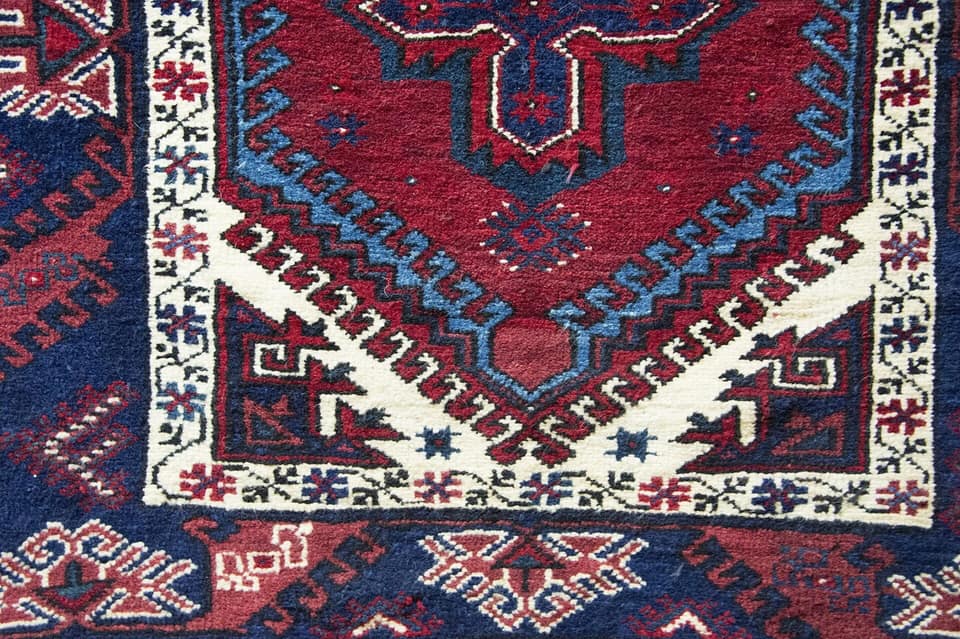
A heritage at the loom
Antalya is known today for its sea, its ancient cities and its waterfalls, but in the mountains and plains of the province another quiet craft has continued for centuries, weaving. Carpets, kilims and silk cloth were part of daily life, from the yörük tent to the village house. Between 2012 and 2014, folklore researchers of the Antalya Provincial Directorate of Culture and Tourism studied the province's traditional crafts on site and collected them in a book titled "Traditional Handicrafts and Crafts in Antalya". The book covers carpet weaving, kilim weaving, gılamık weaving and sericulture under separate headings. All four of these crafts are now registered for Antalya in the National Inventory of Intangible Cultural Heritage of Türkiye.
According to the directorate's inventory list, Döşemealtı carpet weaving entered the inventory in 2014, Alafaradın kilim weaving in 2017, Ormana gılamık weaving in 2022, and Barak kilim weaving and the traditional silk culture of the Alanya area in 2023. These dates also show that the province's weaving heritage is fed by different corners and different communities.
Döşemealtı, the villages below the paved road
The first name that comes to mind for carpets in Antalya is Döşemealtı. The directorate's book describes Döşemealtı as a wide plateau north of the city, about 20 kilometres from the centre. An article published in the journal Hars Akademi in 2022 also explains the origin of the name. The area takes its name from an old road built with paving stones in the Roman period, at the point where the first heights of the Taurus Mountains begin. In antiquity this road linked Pamphylia and Pisidia. Over time, the villages lying below the road came to be called "the villages below the paving", and the name Döşemealtı took hold.
According to the same article, Döşemealtı is a wide area made up of 23 villages at the foot of the Taurus. Kovanlık, Aşağıoba, Killik, Ekşili, Karataş and Karaveliler are counted among the centres of carpet weaving. The directorate's book also states that the main centre of Döşemealtı carpet weaving is Kovanlık. According to the article, each of the yörük communities living in the area has its own tradition of carpets and flat-woven rugs.
How to recognise a Döşemealtı carpet
The weft and warp of Döşemealtı carpets are sheep's wool. According to the book, this wool is coloured with natural dyes. The carpets most often show red, blue, navy, burgundy, green, black and white, while the ground colour is usually red, blue, burgundy or navy. The carpets are woven with the technique known as the Turkish knot or Gördes knot.
The loom on which the weaving is done is called ıstar in the region. The Hars Akademi article mentions upright and semi-upright looms called ıstar or ip ağacı. Carpets take different names according to their size. The book gives names such as yolluk and çeyrek, and the article adds the floor carpet to these.
Döşemealtı carpets are divided into types according to the composition of their field. The book lists types such as halelli, toplu, kocasulu, dallı, akrepli, bayraklı, ambarlı and dokuz toplu. The article adds the yıldızlı, albaysuyu, deve and terazi toplu motifs to these. When you stand in front of a carpet, looking at the large medallions in the field, the small repeating motifs in the border and the way the colours balance each other is the first step in understanding its type.
Where to see a Döşemealtı carpet today
The two sources paint a different picture on this point. The Hars Akademi article writes that no carpets had been woven in the villages it names for the previous thirty years and that the finest examples live on in collections. The directorate's book, on the other hand, states that traditional weaving continues, if only partly, in some villages, above all in Kovanlık. Both sources agree that this weaving has lost its former reach.
The right place to see the oldest examples of the Döşemealtı carpet is the Antalya Museum. Both the directorate's book and the article state that the finest and oldest examples of the region are displayed in this museum. In the museum, look closely not only at the carpets themselves but also at the way the colours have faded, the texture of the old wool and the rows of motifs in the borders. The article also records that Döşemealtı examples can be found in the carpet shops of Kaleiçi. The book explains that the Döşemealtı Carpet, Kilim and Handicrafts Research and Application Centre of Akdeniz University also works to keep this art alive.
Barak kilims in Kaş
Unlike a carpet, a kilim is a flat weave that gains its pattern not from knots but from passing the weft between the warp threads. According to the directorate's book, the main materials of a kilim are wool, cotton, goat hair or silk. Colours, motifs and techniques reflect the tradition of the region where it is woven, so kilims are mostly named after the place where they are made.
In Antalya, one branch of this tradition is in the Kaş district. According to the book, the Barak kilim, which was on the verge of disappearing, is coming back to life in the village of Boğazcık, formerly called Sahil Barak. The Baraks are a branch of the Turkmen clans that settled in Anatolia and, according to the book, have lived in the Kaş area for several hundred years. Good herders, the Baraks still weave from the wool and hair of their animals today. The best-known feature of the Barak kilim is that both of its faces can usually be used. Alongside kilims, the Baraks also keep crafts such as making bread bags, rawhide sandals and pack saddles alive.
Alafaradın kilims in Korkuteli
Another centre of kilim weaving is Büyükköy and Küçükköy in Korkuteli. The book explains that the kilim woven here is called the Alafaradın kilim and that a course for this weaving has been opened in the district centre. The origin of the name rests on a local story. According to the story, two cousins who settled on the high pastures of these two villages were both named Ali Fahrettin, and the word Alafaradın is a shortened form of this name. The story also recalls that the villages were home to herding families who went up to the high pastures in summer and returned to the village in winter. Alafaradın kilim weaving was recorded in the national inventory in 2017.
According to the book, green, orange, blue, navy and red are the colours most often seen in Anatolian kilims. Motifs can be grouped as animal, plant, geometric and symbolic. Because they are easy to weave, the most preferred are geometric shapes such as triangles, squares and rhombuses. Trying to tell these four groups apart in front of a kilim is a good way to read the language of its pattern.
Gılamık in Ormana, the fine texture of silk
Ormana, in the İbradı district, is known for its button-jointed houses, but a silk weave called gılamık also lives on here. According to the directorate's book, the word gılamık is used in Ormana to mean cocoon silk. The weave is also known by names such as kılamuk, gılamuk or kılamuklu.
Gılamık is woven on treadle-operated wooden looms called düzen or dezgah in the area. The book writes that fabrics about 90 centimetres wide can be woven on these looms, and that tools such as the spinning wheel, the reel and the shuttle are used to prepare the thread. The cocoon thread is wound with the wheel, softened in hot water and woven with silk thread between the bürümcük threads stretched on the loom. In this way shawls, tablecloths and bedspreads are produced. Among the patterns are names such as çataloluk, kızılağaç and söğüt.
In the past gılamık was used mostly for women's headscarves, and according to the book this use continues today. Because silk production has declined, cotton and linen can also be used in the weaving. The book also notes that the number of people who know this weaving is extremely limited and that efforts are being made to keep the art alive at a school. Ormana gılamık weaving entered the national inventory in 2022.
Silk in Alanya and Gazipaşa
Silk, the raw material of gılamık, also has a long history on Antalya's coast. According to the directorate's book, Antalya is among the first eight provinces of Türkiye in sericulture and silk weaving. The mild climate allowed earlier access to raw material, and the harbours of Antalya, Alanya and Side made it possible to market woven goods by sea. The book states that today this tradition is most widespread in Alanya and Gazipaşa. The traditional silk culture of the Alanya area was recorded in the national inventory in 2023.
Practical tips
The easiest starting point for getting to know this weaving heritage is the Antalya Museum. After seeing the museum's Döşemealtı carpets, you can try to recognise motif names by looking at the windows of the shops in Kaleiçi that display old carpets. If you are thinking of buying a carpet or kilim, asking about the material, the knotting technique and the region where it was woven is a good habit. The Döşemealtı villages are close to the city centre and, with their views of the Taurus foothills, are suitable for a short trip. Kaş, Korkuteli and İbradı require a longer journey and should be planned for a separate day. Check the museum's official website in advance for current visiting hours.
Sources
- Antalya Provincial Directorate of Culture and Tourism, Antalya'da Geleneksel El Sanatları ve Zanaatlar, https://antalya.ktb.gov.tr/TR-293914/antalya39da-geleneksel-el-sanatlari-ve-zanaatlar.html
- Antalya Provincial Directorate of Culture and Tourism, Somut Olmayan Kültürel Miras, https://antalya.ktb.gov.tr/TR-290817/somut-olmayan-kulturel-miras.html
- Antalya Provincial Directorate of Culture and Tourism, SOKÜM İl Envanteri 2026, https://antalya.ktb.gov.tr/Eklenti/152997,sok-m-il-envanteri-2026pdf.pdf?0
- Bekir Deniz and Öznur Aydın, Döşemealtı Halıları, Hars Akademi, 2022, https://dergipark.org.tr/tr/pub/hars/issue/68596/1082961
Comments
Be the first to comment