

Ancient Kyzikos on the Erdek Road, Traces of a Seafaring City
Where Kyzikos is and how to get there According to the Culture Portal, the ancient city of Kyzikos lies within the Erdek district of Balıkesir, where the Kapıdağ Peninsula joins the mainland.

Sign in to like and rate
Where Kyzikos is and how to get there
According to the Culture Portal, the ancient city of Kyzikos lies within the Erdek district of Balıkesir, where the Kapıdağ Peninsula joins the mainland. The Erdek District Governorate says the city sits in the southern part of the peninsula, at a locality called Düzler. Erdek Municipality places it on the slopes of Kapıdağ, where the Bandırma-Erdek highway passes. The Culture Portal states that the site lies 8 kilometres from Erdek along this highway. Visitors coming from Bandırma follow the road toward Erdek. Public transport services between Bandırma and Erdek can change, so check current information with the relevant institutions.
Kyzikos is an excavation site and visiting conditions can change with the excavation programme. Before you set out, check the current notices on the pages of the Erdek District Governorate, Erdek Municipality and the Culture Portal.
The founding and early history of the city
As reported by Erdek Municipality, research by Kurt Bittel shows that the history of the region reaches back to the Neolithic and Chalcolithic periods, that is the sixth and fifth millennia BC. The Dolionians are described as the oldest people living at Kyzikos, and the region is also known as Dolionia. The Erdek District Governorate says the Dolionians arrived by migration from Thessaly. The municipal page instead says they may have settled here from the slopes of Uludağ or from Thessaly. Because the sources differ on this point, it would not be right to state their origin as certain.
According to legend, the name of the city comes from King Kyzikos, associated with the Argonauts who stopped here on their voyage. This story should remain only a legend; the documented history of the city begins elsewhere. According to the Governorate page, the known history begins in the 8th century BC, when Miletos, one of the important cities of Ionia, founded a colony here. The same page adds that this colony was enlarged in 675 BC. In the 6th century BC the city paid tribute to the Lydians, and when Cyrus defeated Lydia it came under Persian rule. During the long period that began with the Ionian revolt the city changed hands nine times, but in the words of the page it escaped destruction each time thanks to its prudent policy.
In the middle of the 4th century BC Kyzikos gained its independence. The Governorate page describes joining the Second Athenian Naval League in 364 BC and declaring independence soon afterwards, while the municipal page gives independence as 364 BC. It is therefore more cautious to speak of the middle of the 4th century. When Alexander the Great entered Anatolia in 334 BC, the people of Kyzikos treated him in a friendly way. According to the Governorate page they were rewarded with administrative freedom, and two bridges were built to connect the city to the mainland.
A seafaring trade city with three harbours
The Culture Portal presents Kyzikos as one of the rare cities with three harbours. The strength of the city came largely from this maritime position. According to the Governorate page, in the period of independence Kyzikos held the sea trade of the region, and its coinage became a measure of value for other currencies. Erdek Municipality writes that in the 3rd century BC the city gained great importance because it lay on the trade routes of the Sea of Marmara. In the 2nd century BC it built good relations with Pergamon and, according to the same page, became a centre of science and culture. The Governorate page adds that in the Hellenistic period Kyzikos offered education to many princes.
The bibliography of the Culture Portal includes an academic article on the Hytos harbour of the city. This shows that the trade history of the port city is studied separately. According to the Culture Portal, the coins and other finds recovered in the excavations are displayed in the Balıkesir Bandırma Museum. Visiting the museum before or after the ruins is a good way to see the trade of the city through real objects. Check the museum's official page for current visiting arrangements.
The Roman period and the Temple of Hadrian
According to the Erdek District Governorate page, Kyzikos had to accept Roman rule in 85 BC. In 73 BC its resistance to the siege of Mithridates VI of Pontus earned the praise of the Romans, and the city obtained the right to independence. The city is said to have gained its real importance in the age of Hadrian. Emperor Hadrian visited the city a year after the earthquake of AD 123 and gave large aid for rebuilding, including financial support for the temple built in his name. At this time the city was rewarded with the title of Neokoria, which means centre of the imperial cult. When it again sided with Rome during the disorders of the 2nd century, Septimius Severus granted it this title a second time.
The Culture Portal writes that the city was surrounded by strong walls and that the Temple of Hadrian is thought to be the largest temple in Anatolia. The same page lists an amphitheatre, necropolis, metroon, bouleuterion, theatre, acropolis and agora among the notable structures of the city. The excavation news of Bandırma Onyedi Eylül University reports the discovery of a marble roof tile belonging to the temple measuring 105 by 85 centimetres and column drums of 2 metres 85 centimetres. The same report says that a Roman-period column capital of about 20 tons and 1 metre 90 centimetres was uncovered. These measurements give an idea of the scale of the temple, but for the dimensions of the building itself one should consult the excavation publications.
Earthquakes and the abandonment of the city
This walled city, rich in harbours, could not survive in the long run because it lay on an earthquake belt. The Culture Portal writes that the city was gradually abandoned because it is located in an earthquake zone. According to the Governorate page, in AD 297 Kyzikos became the centre of the province of Hellespontos, which included thirty-three cities. This period ended around AD 324 with Byzantion becoming the capital. In the earthquake of AD 543 in the reign of Justinian the city suffered great damage, and part of its people moved to Erdek. With the great earthquakes of AD 741 and 1064 the city was again seriously damaged and was left to its fate.
The account of Erdek Municipality draws a similar picture. As the harbours silted up and required maintenance, nearby Arteke, today's Erdek, with its natural harbour, came to the fore. So the weight of the settlement gradually shifted to Erdek on the coast. Today most of the splendid buildings of Kyzikos lie under the ground. The Governorate page notes that the city has reached our day after damage by people and nature.
Excavations and finds
According to the Erdek District Governorate, excavations were carried out at Kyzikos between 1988 and 1997. The work, interrupted in 1997, resumed in 2006 by a decision of the Council of Ministers under the scientific direction of Nurettin Koçhan. Since 2022 the excavations have continued under the direction of Ahmet Tercanlıoğlu. The same page stresses that only a small part of this huge city has been brought to light by excavation.
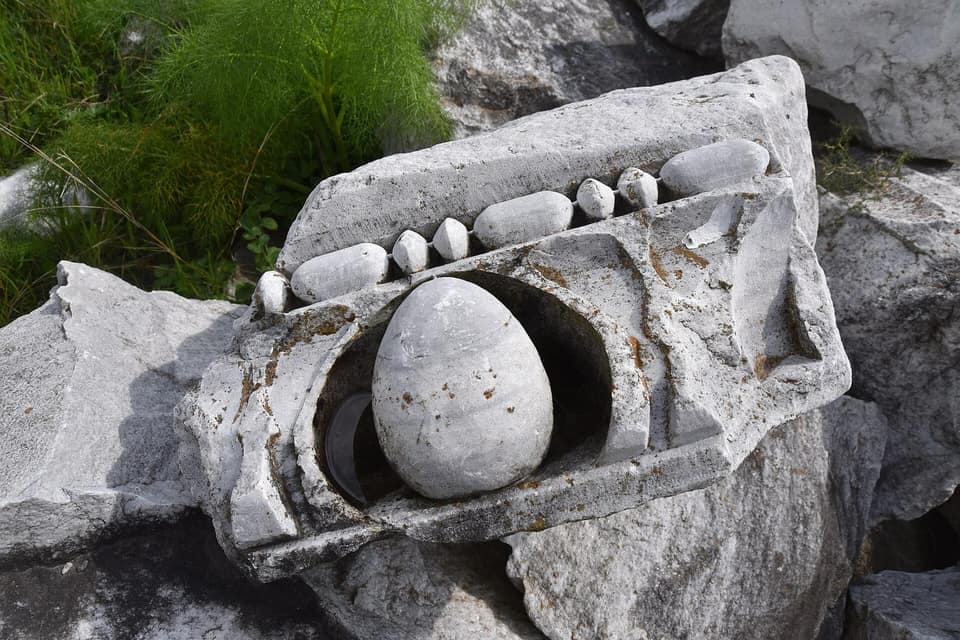
The 2020 news of Bandırma Onyedi Eylül University explains that the excavations are carried out with contributions from the General Directorate of Cultural Heritage and Museums of the Ministry of Culture and Tourism, the Erdek District Governorate and Erdek Municipality. The same report lists among the finds marble lion-headed water spouts, a pithos, which is a jar-shaped storage vessel, coins used by the people of Kyzikos, a king's head and a sarcophagus in which ten people were buried with gifts. Inscribed stones with information about the tomb and two wells that appear to have been used to obtain lime are also among the finds. For readers who want the excavation results in detail, the report recommends the 2011 book Kyzikos Tarihi ve Mimari Kalıntılar by Nurettin Koçhan.
What to look at and how to visit
Kyzikos is a large open-air site, so set out prepared. Shade may be limited, so a hat, water and sunscreen are useful. The ground can be uneven, so wear shoes with firm soles. Spring and autumn are generally more comfortable for long walks outdoors, while the midday heat of summer can be tiring. For photography, morning or late afternoon light falls more gently on the stones.
On your visit, first read any information boards and the official pages, then look at the remains. Every piece of structure you see is under excavation and protection. Do not climb on the stones, take fragments, or cross the marked limits of the excavation area. During the excavation season the work area may be closed to visitors, and in that case you should be content to look from a distance.
The meaning of Kyzikos lies less in a single building than in being able to imagine the whole city. The list of structures in the Culture Portal covers the theatre, agora, acropolis and harbours. Not all of them may be visible, but knowing the list sets the frame for your visit. The remains of the Temple of Hadrian and the column fragments are the main stop for most visitors. Then a visit to the Bandırma Museum to see the coins and other finds completes the picture.
A day in Erdek and Kapıdağ
After the ruins, going down to Erdek is a natural continuation. Erdek, where part of the people of Kyzikos moved, is still a coastal district known for its natural harbour. The culture and tourism section of Erdek Municipality offers separate introduction pages for the Kapıdağ Peninsula and for Zeytinli Island. While planning your day, look at these pages and check the visiting conditions.
If you use the Bandırma-Erdek line, find out the return times in advance. If you come by your own vehicle, you travel to the ruins and to Erdek along the same road. To see both the excavation site and the coast in one day, arriving at the ruins early in the morning is a good plan.
Sources
- Erdek Kaymakamlığı, Kyzikos Antik Şehri, https://www.erdek.gov.tr/kyzkos-antik-sehri
- Erdek Belediyesi, Kyzikos Antik Kenti, https://www.erdek.bel.tr/kyzikos-antik-kenti
- Bandırma Onyedi Eylül Üniversitesi Sanat Tarihi Bölümü, Kyzikos Antik Kenti Kazı Çalışmaları, https://itbf.bandirma.edu.tr/tr/sanat-tarihi/h/Kyzikos-Antik-Kenti-Kazi-Calismalari-Bolum-Baskanimiz-Prof-Dr-Nurettin-Kochan-Baskanliginda-Devam-Ediyor-4187
- Kültür ve Turizm Bakanlığı Kültür Portalı, Kyzikos Antik Kenti, https://www.kulturportali.gov.tr/turkiye/balikesir/gezilecekyer/kyzikos-antik-kenti
Comments
Be the first to comment