

A Century on Stage in Istanbul, from the Darülbedayi to the City Theatres
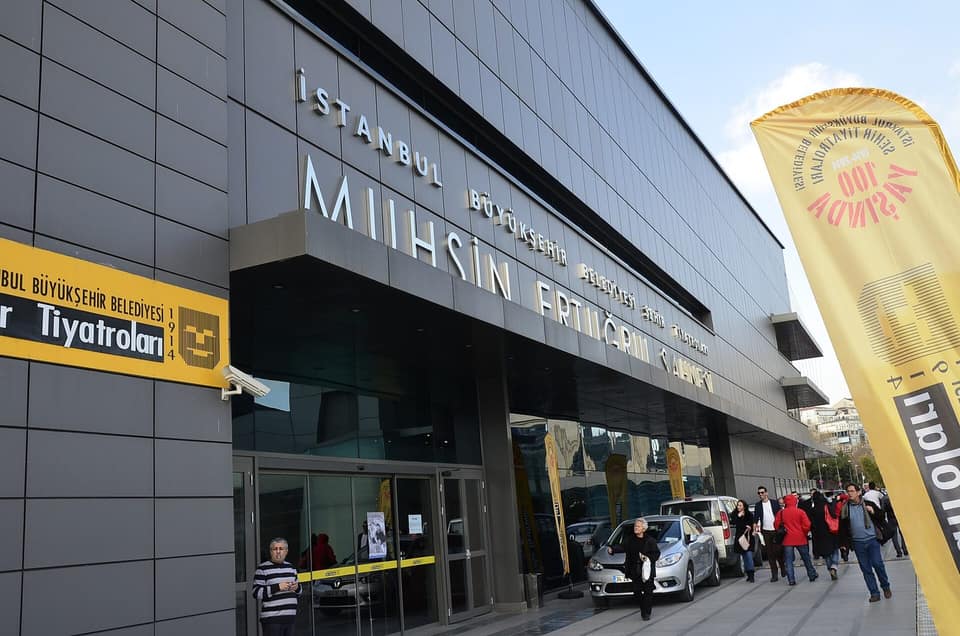
A stage of more than a hundred years Going to the theatre one evening in Istanbul means, even if you do not realise it, stepping into a story that is more than a century old.
 Radar TürkiyeNovember 24, 2026
Sign in to like and rate
A stage of more than a hundred years
Going to the theatre one evening in Istanbul means, even if you do not realise it, stepping into a story that is more than a century old. The article on theatre in the Republican period in the Great History of Istanbul from Antiquity to the 21st Century describes the Darülbedayi, founded in 1914 and known today as the Istanbul City Theatres, as the oldest institution of Turkish theatre and the only one that still survives. The history of the institution is also the history of a large part of Turkish theatre. Knowing this story, which runs from the founding to today's stages, makes an evening at a play a different experience.
The idea of a conservatory and André Antoine
The story begins with a city prefect. According to the Darülbedayi entry of the TDV Encyclopedia of Islam, the Mayor of Istanbul, Cemil Pasha (Topuzlu), brought the famous French theatre maker André Antoine to Istanbul and led the founding of a conservatory. Antoine arrived in Istanbul on 28 June 1914. The school he was to head would teach both theatre and music. Invited for three months with an allowance set aside from the municipal budget, Antoine ran the founding preparations, the curriculum and the entrance examinations.
197 people, 8 of them women, applied for the examinations. Among the candidates were names who would later become well known, such as Muhsin Ertuğrul, Peyami Safa, Halit Fahri (Ozansoy), Behzat Haki (Butak) and Raşit Rıza (Samako). However, with the outbreak of the First World War, Antoine had to leave Istanbul. His assistant Reşat Rıdvan, so that the venture would not come to nothing, organised an opening ceremony in November of the same year at which examples of Turkish and Western music were played. This beginning was not enough, and the institution soon closed. Under a thirty-seven-article regulation prepared at the request of the new mayor, the Darülbedayi was reorganised not only as a school but also as a theatre company giving performances.
The first curtain, 20 January 1916
According to the TDV entry, in this period, when the emphasis was more on preparing plays than on training actors, seven or eight plays were rehearsed at once at the Ferah Stage in Şehzadebaşı and at the Kuşdili Çayırı Theatre. The first performance was given on the evening of 20 January 1916. The play was Hüseyin Suat's (Yalçın) adaptation of a work by Emile Fabre, titled Çürük Temel. The first Turkish play staged by the Darülbedayi was Halit Fahri's verse drama Baykuş. Muhsin Ertuğrul directed this play, which met its audience on the evening of 2 March 1917, and also took the leading role himself.
Despite successful performances, the ten years between 1916 and 1926 were a period of crisis in which the institution constantly faced the danger of breaking up. The budget was insufficient, the number of actors was small and there were disagreements in the management. Believing that a theatre without a school could not develop, Muhsin Ertuğrul went to Germany at the start of 1920, was appointed director of the Darülbedayi when he returned in 1921, but after a dispute with the board he was removed from the institution for a while.
Women on stage
The arrival of actresses on stage holds a special place in the story of the Darülbedayi. The article in the Great History of Istanbul lists the problem of women appearing on stage among the issues that strained the institution in the early years of the Republic. According to the same article, the fact that Bedia Muvahhit took a role in the performance that Darülbedayi artists gave for Mustafa Kemal in İzmir on 31 July 1923 paved the way for Turkish women to appear on stage after the founding of the Republic. Actresses such as Neyyire Neyir, Cahide Sonku and Şaziye Moral appeared on Istanbul stages in the following years.
The 1927 turning point and the name City Theatre
According to the TDV entry, under Muhittin Bey (Üstündağ), who became mayor in 1926, the Darülbedayi was given a new working order, and at the start of 1927 Muhsin Ertuğrul, who had returned after completing his work abroad, was again placed at the head of the institution. The 1927-1928 season is regarded as a turning point in the institution's history in terms of both management and artistic work. In these years simple comedies gave way to the great plays of writers such as Shakespeare, Molière, Chekhov, Ibsen, Schiller and Pirandello. Hamlet was especially well received and ran for a long time. The internal regulations prepared by Muhsin Ertuğrul are remembered as the first document on discipline in the history of Turkish theatre.
The Municipalities Law that came into force in 1930 gave municipalities the means to build theatre buildings and to set up theatre companies, and the Darülbedayi was attached directly to the municipality. The institution took the name City Theatre in the early 1930s; the TDV entry mentions a decision taken in 1931, while the article in the Great History of Istanbul writes that from 1934 the institution was officially known as the Istanbul City Theatre. According to the same article, in 1930 Turkey's first theatre magazine, also called Darülbedayi, met its readers, and the magazine later continued under the titles Türk Tiyatrosu and Şehir Tiyatrosu.
The Tepebaşı years, children's theatre and operettas
The 1930s were the years in which the institution tried to grow its audience. According to the article in the Great History of Istanbul, children's theatre began on 1 October 1935 at the Tepebaşı Theatre with the play İlk Tiyatro Dersi, written by M. Kemal Küçük. In the same years, operettas by the brothers Ekrem and Cemal Reşit Rey, such as Lüküs Hayat (1933) and Deli Dolu (1934), drew audiences to the halls. By 1935 the City Theatre was performing on three separate stages: drama and comedy at the Tepebaşı Theatre, operetta at the French Theatre and children's theatre at the Tepebaşı Asri Cinema.
Because the institution had to stage a new play almost every week owing to small audiences, Muhsin Ertuğrul launched a campaign under the slogan "from 3 times to 100 times" to increase the number of performances. Reşat Nuri Güntekin's Yaprak Dökümü became the first Turkish play to pass its 100th performance, in the 1943-1944 season. In the 1945-1946 season Edmond Rostand's Cyrano de Bergerac became the first translated play to reach 105 performances. The Open-Air Theatre, whose foundation was laid in 1946, was completed in the short space of about a year and opened with Oedipus Rex directed by Muhsin Ertuğrul.
Theatre goes out to the neighbourhoods
In 1959 Muhsin Ertuğrul was once again placed at the head of the City Theatres. According to the article in the Great History of Istanbul, his first task was to bring theatre to a wide public. The Kadıköy Theatre opened in 1960, the Üsküdar and Fatih theatres in 1961, and in 1962 the Zeytinburnu Theatre and a summer theatre inside the walls of Rumelihisarı. Of these, the Fatih Theatre at Saraçhane continued its performances under the name Reşat Nuri, and the Üsküdar Theatre at Doğancılar under the name Musahipzade Celal. To draw young people to the theatre, student performances were held and ticket prices were reduced.
A new centre in Harbiye
The Tepebaşı Drama Stage, used since the Darülbedayi era, grew old over time. According to the article in the Great History of Istanbul, in 1969 the municipality had a new theatre building built in Harbiye, while the old building in Tepebaşı burned shortly afterwards and became completely unusable. The Muhsin Ertuğrul Theatre in Harbiye was the institution's main stage for many years. According to the same article, this building was demolished in 2008 as part of a project to redevelop the area, and the new theatre building in use today was built in its place.
One of the institution's longest-running plays also returned to the stage in these years. The 1930s operetta Lüküs Hayat was staged again in the period between 1984 and 1994 under the direction of Haldun Dormen and, according to the article in the Great History of Istanbul, took its place among the institution's legendary productions.
Where to watch today
The list of stages on the official website of the Istanbul Metropolitan Municipality City Theatres today includes the Harbiye Muhsin Ertuğrul Stage, the Fatih Reşat Nuri Stage and the Harbiye Cemil Topuzlu Open-Air Theatre, alongside stages located in cultural centres in various districts of the city. Since the list changes from time to time, the most reliable way to find out which play is on where is the current programme on the official website. Ticket prices and sales conditions should also be checked there.
If you want to spend an evening at a play together with this history, you can start in Harbiye. The Muhsin Ertuğrul Stage bears the name that appears in almost every period of the institution's history; the Open-Air Theatre in Harbiye is the stage that opened in the second half of the 1940s with Oedipus Rex. On the Historic Peninsula side, the Fatih Reşat Nuri Stage at Saraçhane is one of the stages born of the early 1960s idea of taking theatre out to the neighbourhoods. Looking through the repertoire announced at the start of the season is a good way to see the range, from classics to Turkish plays and from children's plays to musical productions. Arriving before curtain time, spending a little time in the foyer and entering the hall with a calm mind makes the evening more enjoyable.
Sources
- TDV İslam Ansiklopedisi, Darülbedayi, https://islamansiklopedisi.org.tr/darulbedayi
- Didem Ardalı Büyükarman, Cumhuriyet Dönemi İstanbul'unda Tiyatro, Antik Çağ'dan XXI. Yüzyıla Büyük İstanbul Tarihi, https://istanbultarihi.ist/286-cumhuriyet-donemi-istanbulunda-tiyatro
- İstanbul Büyükşehir Belediyesi Şehir Tiyatroları, Sahneler, https://sehirtiyatrolari.ibb.istanbul/sahneler
- Wikipedia (Turkish), İstanbul Şehir Tiyatroları, https://tr.wikipedia.org/wiki/%C4%B0stanbul_%C5%9Eehir_Tiyatrolar%C4%B1
Comments
Be the first to comment