

A Bedesten and a Han in Atpazarı, the Buildings of the Museum of Anatolian Civilizations
The Museum of Anatolian Civilizations is usually remembered for the objects in its display cases. Yet the first thing on display is the architecture you walk into.
 Radar Türkiye6 Kasım 2026
Sign in to like and rate
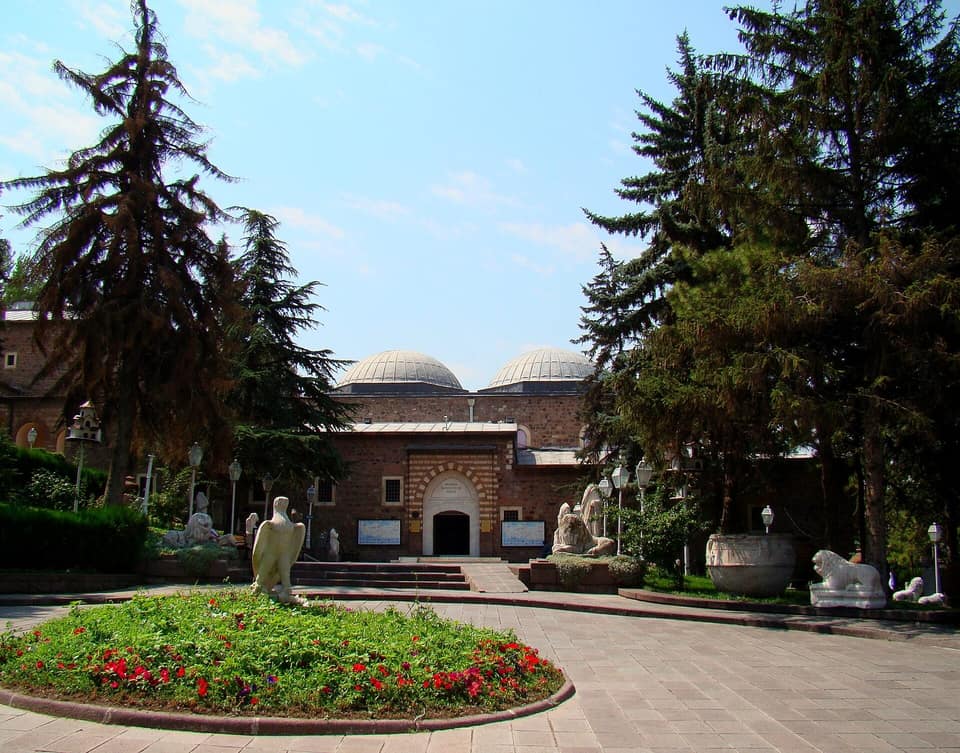
The Museum of Anatolian Civilizations is usually remembered for the objects in its display cases. Yet the first thing on display is the architecture you walk into. Two Ottoman buildings, a bedesten and a han, served the commercial life of the city for centuries before they became a museum. This article is not about the artefacts. It is about the walls, domes and courtyard that shelter them.
A district at the foot of the castle, Atpazarı
The museum stands in the Atpazarı district of Ankara. According to the Ankara Provincial Directorate of Culture and Tourism, the building lies on the southeastern edge of the outer wall of Ankara Castle. This location is no coincidence. Markets that grew right beneath the castle walls were the centre of trade and handicraft in old Ankara. You can reach the museum by walking uphill from Ulus, or while strolling around the castle. The Roman Bath and the Ulus area are not the subject here, but they are close stops you can keep in mind for the same day.
The site today consists of two separate buildings. The General Directorate of Cultural Heritage and Museums states that the museum is made up of the Ottoman period Mahmutpaşa Bedesten and Kurşunlu Han. They stand side by side but were designed for different purposes. One is a covered market, the other a place for lodging and trade. Knowing this difference helps you understand which space you are in as you tour the museum.
Mahmutpaşa Bedesten
A bedesten is the name given to the covered market building in which valuable goods were sold and stored in Ottoman towns. According to the General Directorate, the bedesten in Ankara consists of a rectangular covered hall with ten domes and an arasta of one hundred and two shops. An arasta is a market lane lined with shops. This plan fits the classical Ottoman bedesten layout. These measurements are given according to the sources, and if you wish to make your own count, you can follow the domes one by one.
One should speak cautiously about the date of the building. The Ankara Provincial Directorate writes that the bedesten is estimated to have been built by Mahmut Pasha, one of the grand viziers of the Mehmed the Conqueror period, between 1464 and 1471. The reason is that the building has no inscription. A range instead of an exact year is therefore normal. The muze.gov.tr page also presents the building as a work of the Ottoman period.
There is also a piece of information about the commercial past of the bedesten, related to Ankara's famous sof cloth. The General Directorate reports that sources mention the bedesten as the place where Ankara sof fabrics were distributed. So the space that now holds Hittite and Phrygian works was once where the city's best known cloth changed hands. Standing beneath the domes, you can picture this commercial past, but the scene you build should stay within what the source says.
Kurşunlu Han
The Kurşunlu Han next to the bedesten is a building with a courtyard. The General Directorate notes that the han has a plan with a courtyard, arcades and two storeys of rooms. An arcade here means the columned or pillared walkway surrounding the courtyard. The rooms line up behind these arcades on two levels. This is a plan frequently seen in caravan and merchant buildings.
The Ankara Provincial Directorate writes that the han was built as an endowment for the soup kitchen of Mehmet Pasha in Üsküdar. In other words, the han was a property operated in Ankara for the income of a charitable institution in Istanbul. This is a good example of how the Ottoman endowment system was tied to commercial buildings in Anatolian towns.
A find made during the 1946 repair also sheds light on the history of the han. According to the General Directorate, coins of Murad II were found during the repair, and they showed that the han existed in the first half of the 15th century. Coins are concrete clues for dating a building when no written record exists. Today, in the words of the Ankara Provincial Directorate, Kurşunlu Han is used as an administrative building, which means it is not part of the visitor tour. The bedesten, on the other hand, serves as the exhibition hall.
From fire to museum
The later story of the two buildings begins with a fire. The Ankara Provincial Directorate reports that the bedesten and the han were abandoned after the fire of 1881. The commercial heart of the city seems to have been left to its fate for a while after that date. The buildings regained value thanks to museum initiatives of the Republican period.
The muze.gov.tr page explains that the first museum in Ankara was founded in 1921, and that finds were collected in the Akkale Tower, the Temple of Augustus and the Roman Bath. In this early period the objects were kept in scattered places. The bedesten was later chosen as the permanent home for them. According to the General Directorate, the decision to repair the building was taken on the proposal of Hamit Zübeyr Koşay. A team headed by the German archaeologist H. Güterbock placed the objects inside the building.
The restoration took a long time. According to muze.gov.tr, work began in 1938 and was completed in 1968. In between, in 1943, the central space of the bedesten was opened to visitors. In other words, the museum opened its doors before the restoration was finished. A span of more than thirty years shows how much patience it takes to turn a historic building into a museum. The same official source also records that the museum was named European Museum of the Year in 1997.
The vizier who built it
The name behind the bedesten and the han is Mahmud Pasha. According to the TDV Encyclopaedia of Islam, Mahmud Pasha was an Ottoman grand vizier who died in 1474. The encyclopaedia records that he had the bedesten and han built in Ankara, and that they are used today as the Museum of Anatolian Civilizations. The construction range given as 869 to 876 in the Islamic calendar corresponds to 1465 to 1471. This range is also consistent with the date estimate given by the Ankara Provincial Directorate.
Mahmud Pasha's buildings are not limited to Ankara. The same source says he also had buildings in Istanbul, Bursa, Edirne and Sofia. A vizier commissioning commercial and public buildings in many cities reflects the empire-wide investment approach of the period. The bedesten in Ankara is one link of this wide network in Anatolia.
What to look at inside
The exhibition layout is chronological. According to muze.gov.tr, the upper hall contains sections running from the Palaeolithic period to the Urartians. If you proceed in order, you follow in a single line a journey from the Stone Age to the Iron Age kingdoms. This arrangement is convenient for those who want to see many periods in a short time.
There is an important warning. According to muze.gov.tr, the museum is open, but the Ankara Hall and the Classical Hall are closed to visitors because of maintenance and repair. Some halls may be closed during maintenance periods. I recommend checking the muze.gov.tr page for the current situation before your visit. The description of objects in this article is deliberately limited to the periods of the upper hall.
The museum garden is also worth seeing. The General Directorate reports that the garden holds Roman and Eastern Roman steles and sarcophagi, as well as Seljuk and Ottoman period gravestones. Because the stones stand outdoors, the reliefs on their surfaces look different as the light changes. If you plan to take photographs, choosing the low light of morning or afternoon brings out the depth of the reliefs.
Visit notes
Allow at least a few hours for the museum. Following the chronological order slowly and leaving time to rest between halls takes time. Combining the visit with the area around Ankara Castle is a natural plan, because the museum stands right beside the outer wall of the castle. Walking around the castle first and then entering the museum makes it easier to understand the place of the buildings in the city.
Opening hours, ticket prices and information on closed halls may change over time. Please check current information on the official website, muze.gov.tr. As a guide I can say this: do not forget to look up at the domes of the bedesten. Read the building as you read the objects. Because in this museum, one of the oldest and best preserved documents is the building you are standing in.
Sources
- Republic of Türkiye Ministry of Culture and Tourism, muze.gov.tr, Museum of Anatolian Civilizations, https://muze.gov.tr/muze-detay?DistId=AMM&SectionId=AMM01
- Ankara Provincial Directorate of Culture and Tourism, Anadolu Medeniyetleri Müzesi, https://ankara.ktb.gov.tr/TR-259775/anadolu-medeniyetleri-muzesi.html
- General Directorate of Cultural Heritage and Museums, Ankara Anadolu Medeniyetleri Müzesi Müdürlüğü, https://kvmgm.ktb.gov.tr/TR-44060/ankara-anadolu-medeniyetleri-muze-mudurlugu.html
- TDV Encyclopaedia of Islam, Mahmud Paşa, https://islamansiklopedisi.org.tr/mahmud-pasa
Comments
Be the first to comment